Which Plywood Is Best for Kitchen Cabinets: A Complete Design-Led Guide
Tips
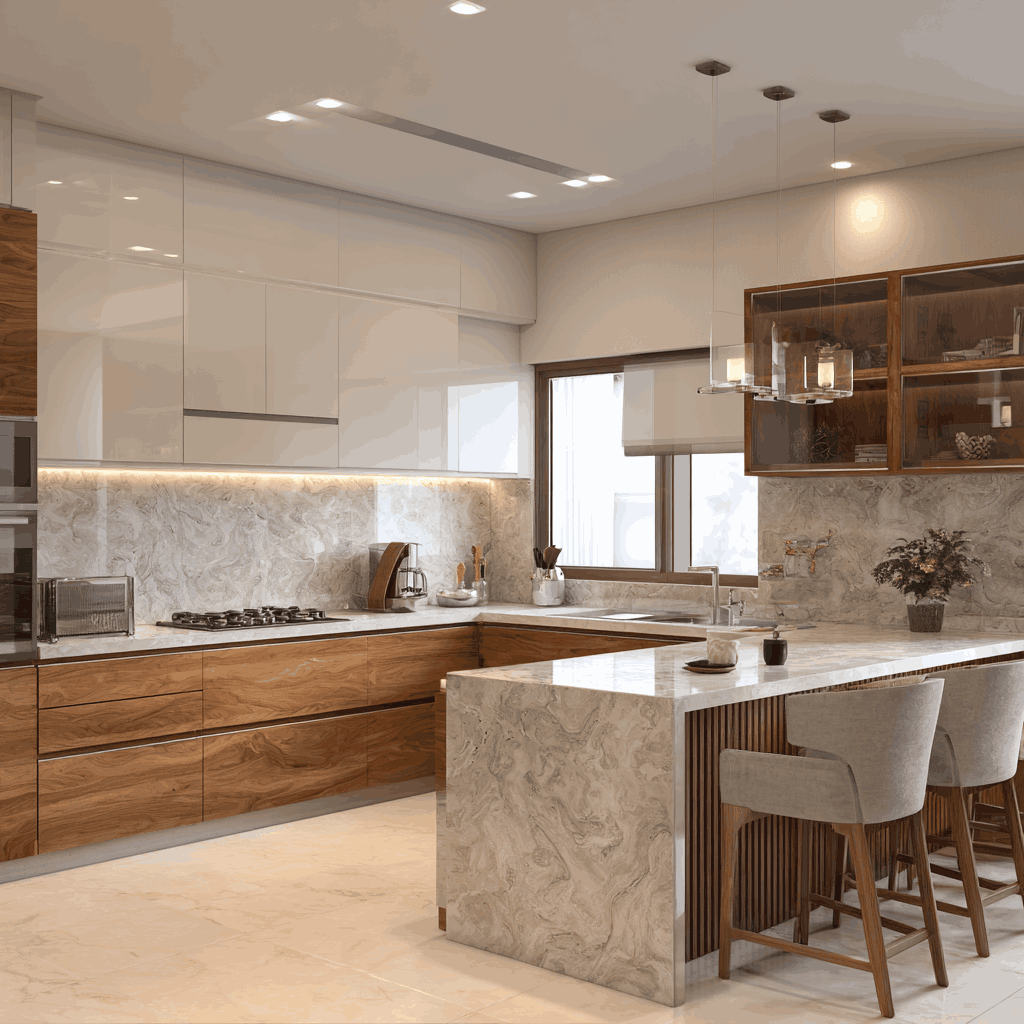





The kitchen is the most demanding space in a home. It is exposed daily to moisture, heat, steam, cleaning chemicals, and constant usage. This is why the question which ply is best for kitchen cabinets cannot be answered casually or based on general furniture standards.
From a professional interior design and architectural standpoint, kitchen cabinetry materials must be chosen based on performance under real kitchen conditions, not just appearance or short-term durability. What works for wardrobes, TV units, or bedroom furniture does not automatically work for kitchens.
This guide explains all commonly used boards and plywood types, ranks them by strength and suitability, outlines their limitations, and clearly explains what we use in kitchens and why.
Which Ply Is Best for Kitchen Cabinets
Kitchen cabinets face moisture, heat, steam, and daily wear, so material choice must be kitchen-specific.
No single board suits all parts of a kitchen. Material zoning is essential.
BWP plywood offers the highest moisture resistance and structural strength, making it ideal for wet-area carcasses.
MR plywood performs well in dry kitchen zones where direct water exposure is limited.
HDHMR boards provide high density and surface stability, making them suitable for kitchen shutters that require clean finishes and durability.
BWR plywood, while better than MR, does not offer the long-term reliability required for kitchens and is generally avoided.
MDF, HDF, and particle board are not suitable for kitchens due to poor moisture resistance and long-term performance issues.
The best kitchen cabinets result from using the right material in the right location, not from using the same board everywhere.
In essence:
The answer to which ply is best for kitchen lies in performance-based material selection, not shortcuts. Kitchens designed with BWP, MR, and HDHMR in the right zones last longer and perform better.
Why Kitchen Cabinets Need a Different Material Standard
Kitchen cabinets are exposed to:
Water splashes and humidity
Heat from cooking
Steam and condensation
Regular cleaning and wiping
Heavy storage loads
Because of this, kitchen cabinetry materials must be:
Moisture resistant
Structurally stable
Long-lasting
Compatible with precision finishes
This is where many material choices fail over time, even if they look good initially.
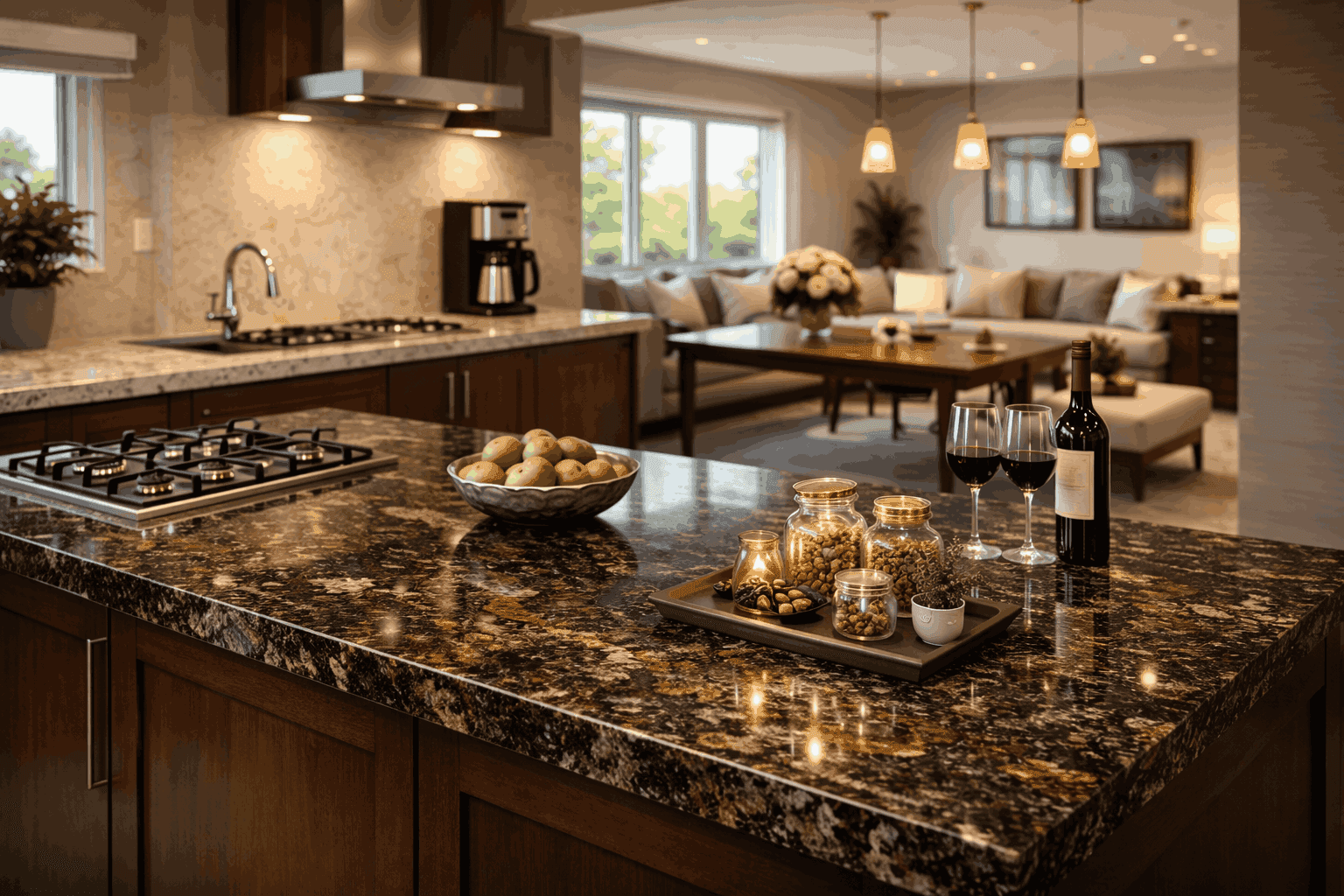
Understanding Kitchen Cabinet Components
Before comparing materials, it is important to separate where materials are used.
Kitchen cabinets consist of:
Carcass: the internal box structure (sides, base, shelves, back)
Shutters: the visible front panels
Each of these faces different stresses and therefore requires different material properties.
Strength Hierarchy of Common Boards and Plywood (From Strongest to Weakest)
From a kitchen-specific performance perspective, materials can be broadly ranked as follows:
BWP-grade plywood
HDHMR boards
MR-grade plywood
BWR plywood
HDF boards
MDF boards
Particle board
Now let us examine each in detail.
BWP Plywood (Boiling Water Proof)
Why BWP Is the Strongest Choice for Kitchens
BWP plywood is engineered to withstand prolonged exposure to moisture. It is designed for environments where water contact is unavoidable.
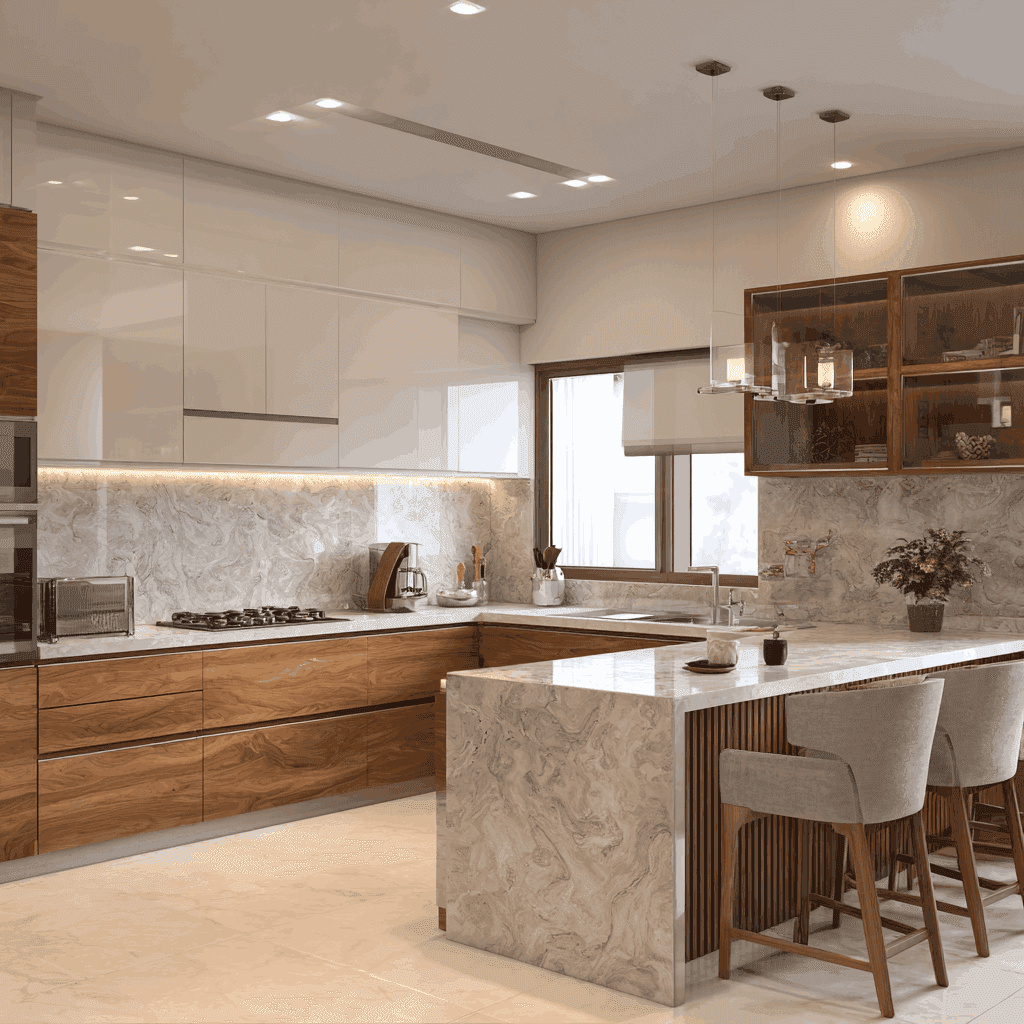
Key Characteristics
High moisture resistance
Strong structural integrity
Minimal swelling or warping
Long-term stability
Where It Performs Best
Sink base units
Areas near dishwashers
Wet zones inside the kitchen
Why We Use It
We use BWP plywood for kitchen carcasses in wet areas because:
Kitchens inevitably experience water exposure
Carcass failure compromises the entire cabinet
BWP provides long-term reliability
In short, if the internal structure fails, no shutter or finish can save the cabinet. That is why BWP is non-negotiable for wet-area carcasses.
HDHMR Boards (High-Density High Moisture Resistance)
Why HDHMR Is Ideal for Kitchen Shutters
HDHMR boards are engineered for precision, density, and surface stability. They offer excellent performance where finish quality matters most.
Key Characteristics
High density and strength
Smooth, uniform surface
Better moisture resistance than MDF and HDF
Excellent for detailed finishes
Where It Performs Best
Kitchen shutters
Drawer fronts
Visible cabinet faces
Why We Use It
We use HDHMR for kitchen shutters because:
Shutters require dimensional stability
They must hold finishes cleanly
They face frequent handling and cleaning
HDHMR allows for sharp edges, consistent alignment, and long-lasting surface quality, which is critical in modern kitchens.
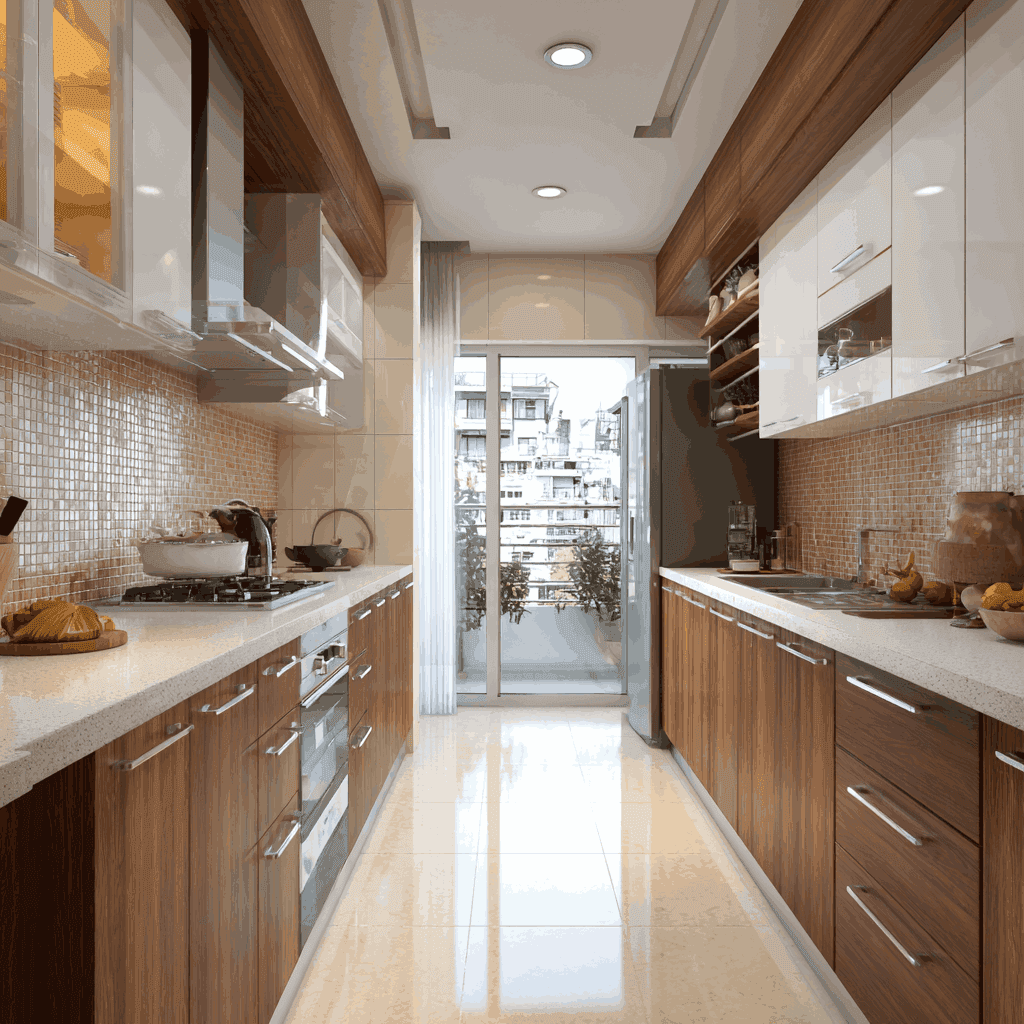
MR Plywood (Moisture Resistant)
Where MR Plywood Works Well
MR plywood offers reasonable resistance to humidity but is not designed for continuous water exposure.
Key Characteristics
Resistant to moisture, not water
Structurally stable in dry conditions
Reliable for internal use
Where It Performs Best
Dry-area kitchen carcasses
Upper cabinets away from sinks
Pantry units
Why We Use It
We use MR plywood for dry-area kitchen carcasses because:
Not all kitchen zones face the same stress
Using MR here is structurally sound
It maintains balance between performance and material efficiency
This zoning-based approach is a hallmark of professional kitchen design.
BWR Plywood (Boiling Water Resistant)
Why BWR Is Often Misunderstood
BWR plywood sits between MR and BWP in theory, but in practice, its performance varies significantly.
Key Characteristics
Better than MR in humid conditions
Not designed for continuous wet exposure
Performance depends heavily on manufacturing quality
Why We Avoid Using It
We generally do not use BWR for kitchens because:
Kitchens are wet zones, not just humid spaces
Long-term exposure can still lead to degradation
It does not offer the same reliability as BWP
In critical environments like kitchens, “almost suitable” is not good enough.
HDF Boards (High-Density Fibreboard)
Why HDF Is Not Suitable for Kitchens
HDF is denser than MDF but still fundamentally a fibre-based board.
Key Characteristics
High density
Smooth surface
Poor moisture tolerance
Limitations in Kitchens
Swells when exposed to water
Loses structural strength over time
Difficult to repair once damaged
Why We Avoid It
Despite its density, HDF is not suitable for kitchen cabinets because kitchens demand moisture resilience, not just surface hardness.
MDF Boards (Medium-Density Fibreboard)
Why MDF Is Popular but Problematic
MDF is widely used because it is easy to work with and provides a smooth finish.
Key Characteristics
Uniform surface
Easy for machining and painting
Low moisture resistance
Limitations in Kitchens
Absorbs moisture quickly
Swells and weakens
Prone to edge damage
Why We Do Not Use MDF in Kitchens
Even though MDF performs well in wardrobes and decorative panels, we avoid MDF in kitchens because:
Kitchens are inherently humid
Minor water exposure can cause permanent damage
Long-term reliability is poor
Particle Board
Why Particle Board Is the Weakest Option
Particle board is made from compressed wood particles and resin.
Key Characteristics
Low density
Low moisture resistance
Weak structural integrity
Why It Fails in Kitchens
Rapid swelling on water contact
Screw holding weakens over time
Short lifespan under kitchen conditions
Why We Never Use It
Particle board is unsuitable for kitchens in any capacity due to its poor performance under daily use.
Summary: What We Use and Why
Our Material Strategy for Kitchen Cabinets
BWP plywood for wet-area carcasses
MR plywood for dry-area carcasses
HDHMR boards for shutters
This approach is based on:
Material strength hierarchy
Kitchen-specific exposure conditions
Long-term performance, not short-term convenience
Common Mistakes Homeowners Make When Choosing Kitchen Plywood
Using the same material everywhere
Selecting boards based on familiarity rather than function
Ignoring moisture zones
Prioritising finish over structural strength
Good kitchens fail not because of design, but because of poor material decisions.
How Designers Decide Which Ply Is Best for Kitchen Use
Designers evaluate:
Exposure to moisture
Load-bearing requirements
Finish compatibility
Maintenance expectations
There is no single board that suits every kitchen component. The right answer lies in intelligent material zoning.
Final Thoughts: Which Ply Is Best for Kitchen Cabinets
The question which ply is best for the kitchen does not have a one-line answer. It depends on where the material is used and what stress it will face.
A well-designed kitchen uses:
The strongest materials where failure is unacceptable
The most stable materials where finish quality matters
Practical materials where conditions allow
This layered approach ensures kitchens that look refined, function effortlessly, and perform reliably for years.
At Tint Tone and Shade, material decisions are never arbitrary. They are based on performance, longevity, and real kitchen behaviour, not trends or shortcuts.
Frequently Asked Questions on Kitchen Plywood Selection
1. Why is plywood selection so important for kitchen cabinets?
Kitchens are exposed to moisture, heat, steam, and frequent cleaning. If the internal cabinet material fails, the entire kitchen structure is affected. Choosing the right plywood ensures long-term stability, hygiene, and performance.
2. Is there one plywood type that works for the entire kitchen?
No. A professional kitchen design uses different materials for different zones. Wet areas, dry areas, and shutters experience different stresses and must be treated separately.
3. Which ply is best for kitchen wet areas?
For wet areas such as sink units, BWP-grade plywood performs best because it is designed to handle prolonged moisture exposure without swelling or losing strength.
4. Can MR plywood be used in kitchens?
Yes, but only in dry areas of the kitchen. MR plywood resists humidity but is not designed for direct or continuous water exposure, which is why it is avoided near sinks and dishwashing zones.
5. Why is HDHMR used for kitchen shutters?
HDHMR boards offer high density and surface stability, making them ideal for shutters that require clean finishes, precise alignment, and durability under daily handling.
6. Why is BWR plywood not preferred for kitchens?
BWR plywood offers moderate moisture resistance, but kitchens demand stronger protection against water exposure. Over time, BWR may not provide the reliability required for kitchen environments.
7. Is MDF suitable for kitchen cabinets?
No. MDF absorbs moisture easily and swells when exposed to water or steam. Even minor moisture exposure can permanently damage MDF in kitchen conditions.
8. What about HDF boards in kitchens?
Although denser than MDF, HDF is still a fibre-based board and lacks adequate moisture resistance. It is not recommended for kitchen carcasses or shutters.
9. Why should particle board be avoided in kitchens?
Particle board has low moisture resistance and weak structural integrity. It swells quickly when exposed to water and loses screw-holding strength, making it unsuitable for kitchens.
10. Can MDF or particle board be used if the kitchen is rarely used?
Even low-use kitchens experience humidity and cleaning. Material failure can still occur over time, which is why these boards are avoided regardless of usage frequency.
11. Why not use the same plywood everywhere in the kitchen?
Different kitchen zones face different conditions. Using one material throughout often leads to overexposure in wet areas or unnecessary compromises in dry zones. Zoning ensures better performance and longevity.
12. How do designers decide which plywood to use?
Designers assess:
Exposure to moisture
Structural load
Finish requirements
Long-term performance
The decision is based on function first, aesthetics second.
13. Does using the right plywood really affect kitchen lifespan?
Yes. Most kitchen failures occur due to internal material breakdown rather than visible finish issues. Correct plywood selection significantly extends the kitchen’s usable life.
14. What is the most common mistake homeowners make when choosing kitchen plywood?
The most common mistake is choosing materials based on familiarity or recommendations meant for non-kitchen furniture, rather than kitchen-specific performance needs.
15. Is plywood choice more important than surface finish?
Yes. Finishes sit on top of the structure. If the internal material fails, the finish cannot compensate. Structural integrity always comes first in kitchen design.
Similar Topic