Pooja Room Interior Designers in Chennai
How to Guides




Pooja Room Interior Design Guide
A pooja room is an emotional and spiritual space, so design should prioritise calmness and clarity over decoration.
Even a compact 2.5 ft x 2 ft area can be transformed into a beautiful and functional pooja unit with smart planning.
The north-east corner is generally preferred for placement due to natural light and positive energy.
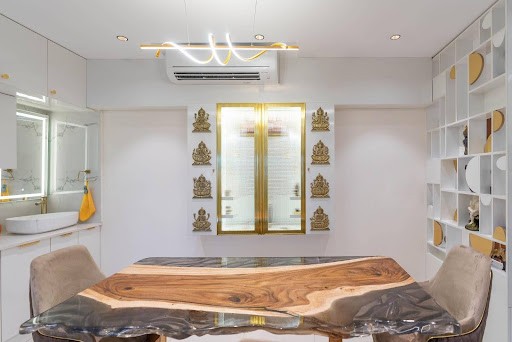
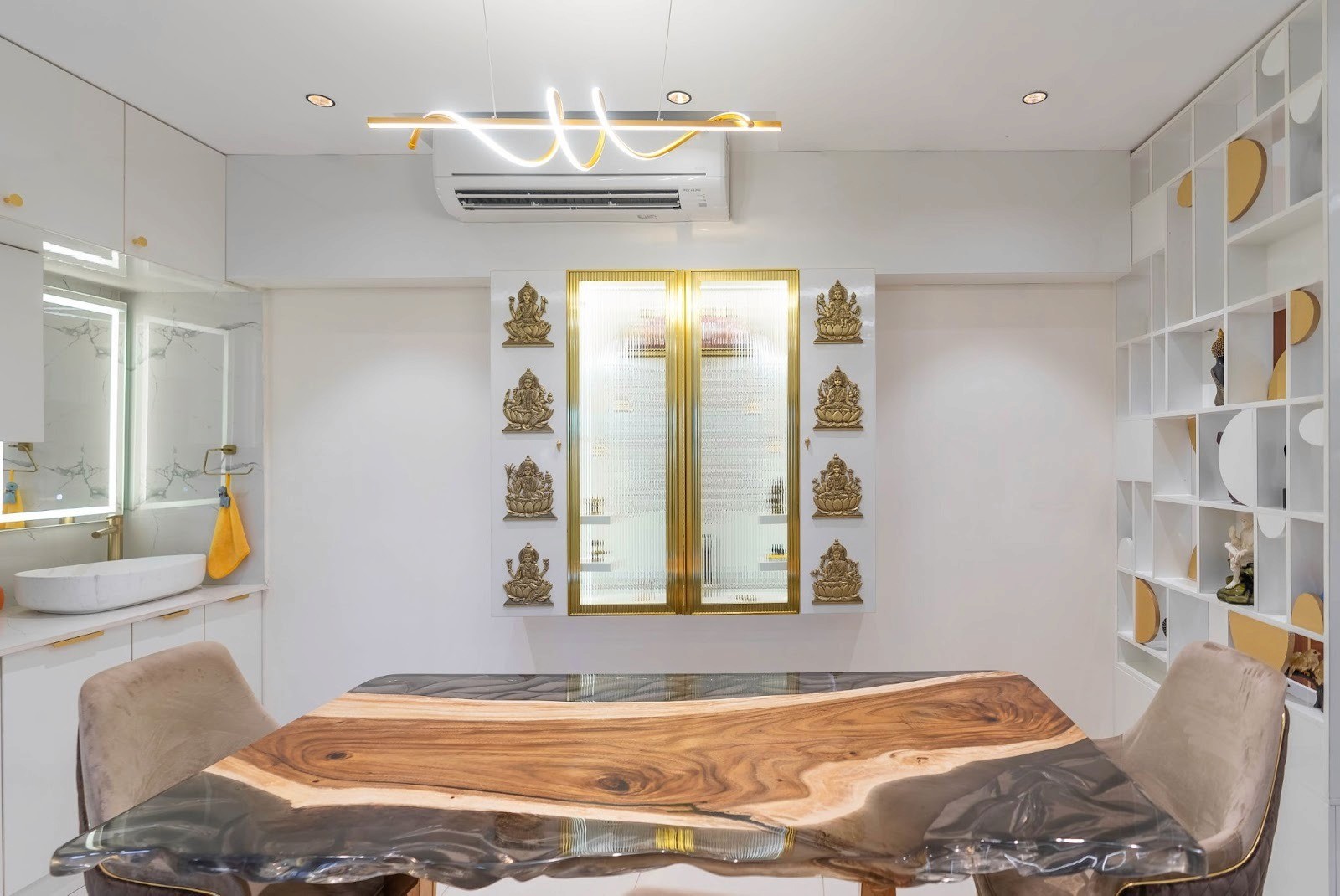
Space-saving door options like fluted glass, pocket, bi-fold, or CNC-cut shutters enhance both function and aesthetics.
Tiered idol arrangements keep the altar organised and visually balanced.
Built-in drawers and pull-out platforms improve daily usability without clutter.
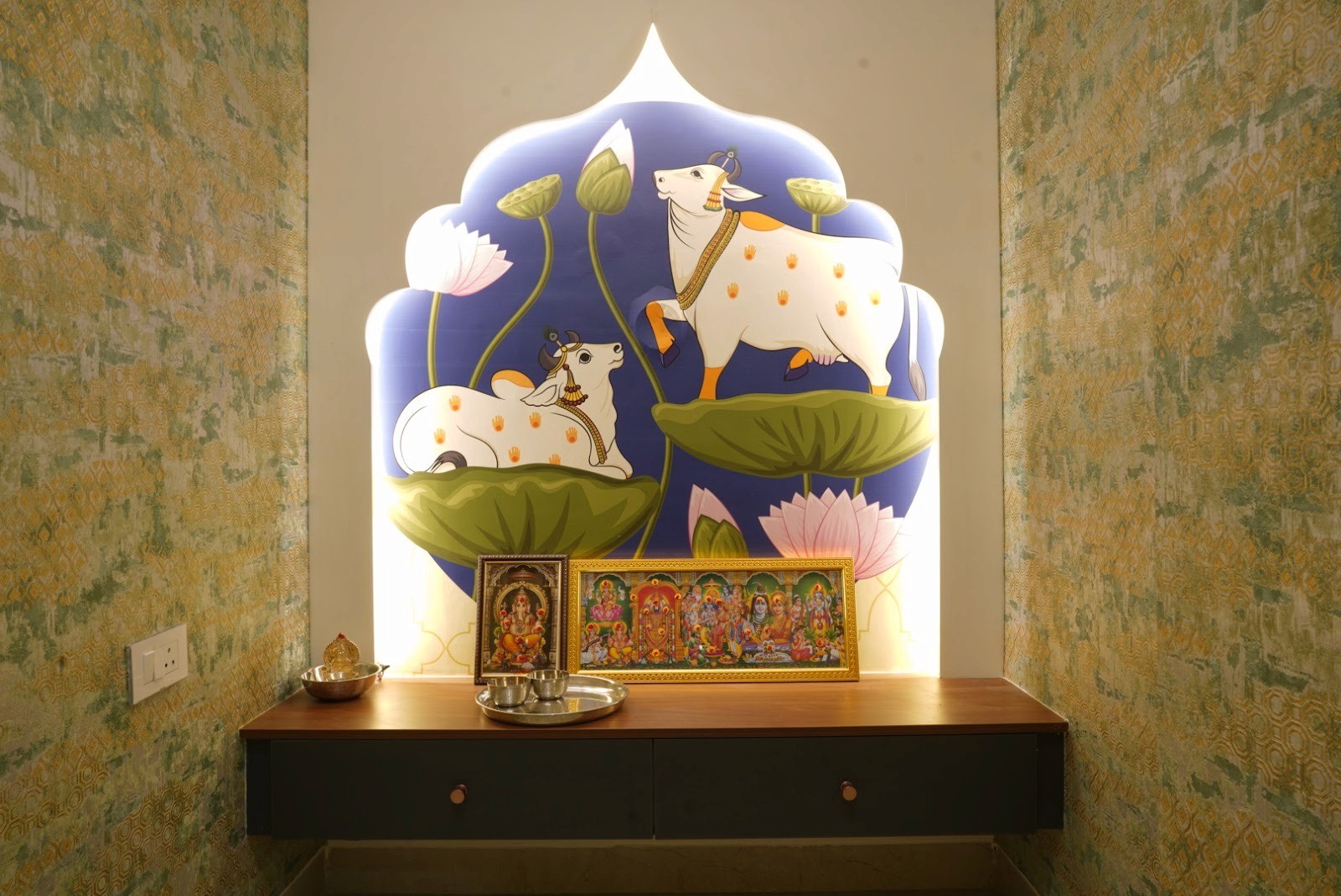
Soft backlighting and neutral finishes create a serene, timeless ambience.
In short:
Good pooja design is about simplicity, structure, and serenity, not size.
A pooja room is not just another space inside a home.
It is the most personal and spiritually significant corner. A place for stillness, prayer, gratitude, and daily rituals. While living rooms impress guests and kitchens handle routines, the pooja room quietly anchors emotional and spiritual comfort.
This is why designing it cannot be an afterthought.
As experienced pooja room interior designers in Chennai, we’ve seen that even the smallest space, sometimes as compact as 2.5 feet by 2 feet, can be transformed into a serene, elegant, and meaningful prayer unit when planned thoughtfully.
Size is rarely the limitation.
Planning is.
This guide walks through how professionals approach pooja room design, from placement and proportions to doors, storage, lighting, and finishes, so your space feels peaceful, organised, and timeless.
Why Pooja Room Design Needs Special Attention
Unlike other rooms, a pooja space is experienced emotionally first and visually second.
It should feel:
calm
uncluttered
sacred
well-lit
proportionate
If the unit feels cramped, messy, or visually heavy, it affects the entire experience of prayer.
Good design here focuses less on decoration and more on clarity and balance.
This is where professional planning makes a significant difference.
Ideal Placement of a Pooja Room
In most Chennai homes, space planning must work around apartments, compact layouts, and fixed structural walls.
Even within these constraints, placement matters.
Traditionally and practically, the north-east corner of the home is preferred. This direction receives gentle natural light and is often associated with positivity and calmness.
If a dedicated room is not possible, the pooja unit can be:
integrated into the living room
placed along a quiet wall
designed within a niche
or planned as a compact wall-mounted unit
The key is to avoid:
high traffic zones
noisy areas
cramped circulation paths
A pooja space should feel undisturbed.
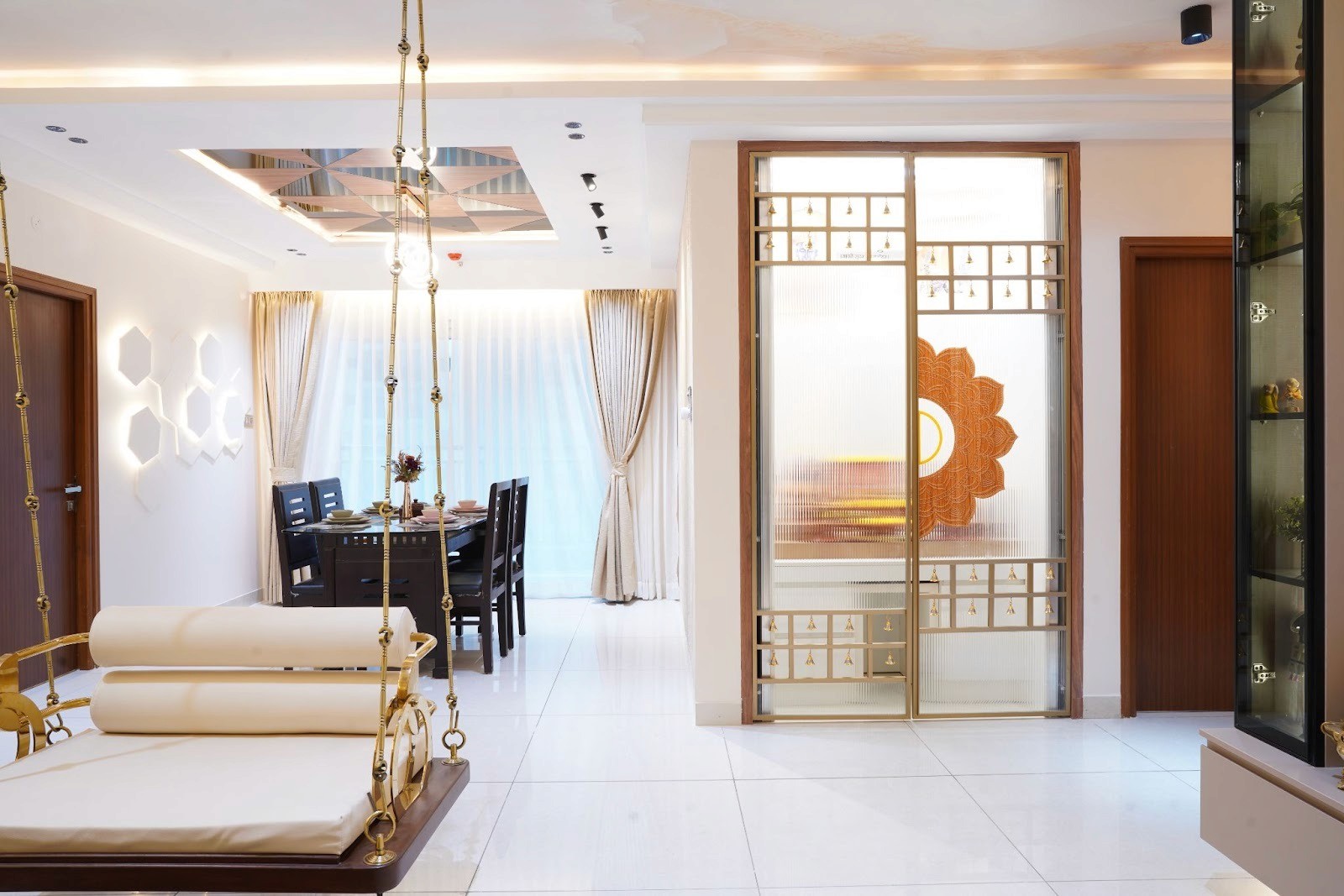
Minimum Space Requirement: Small Can Still Be Beautiful
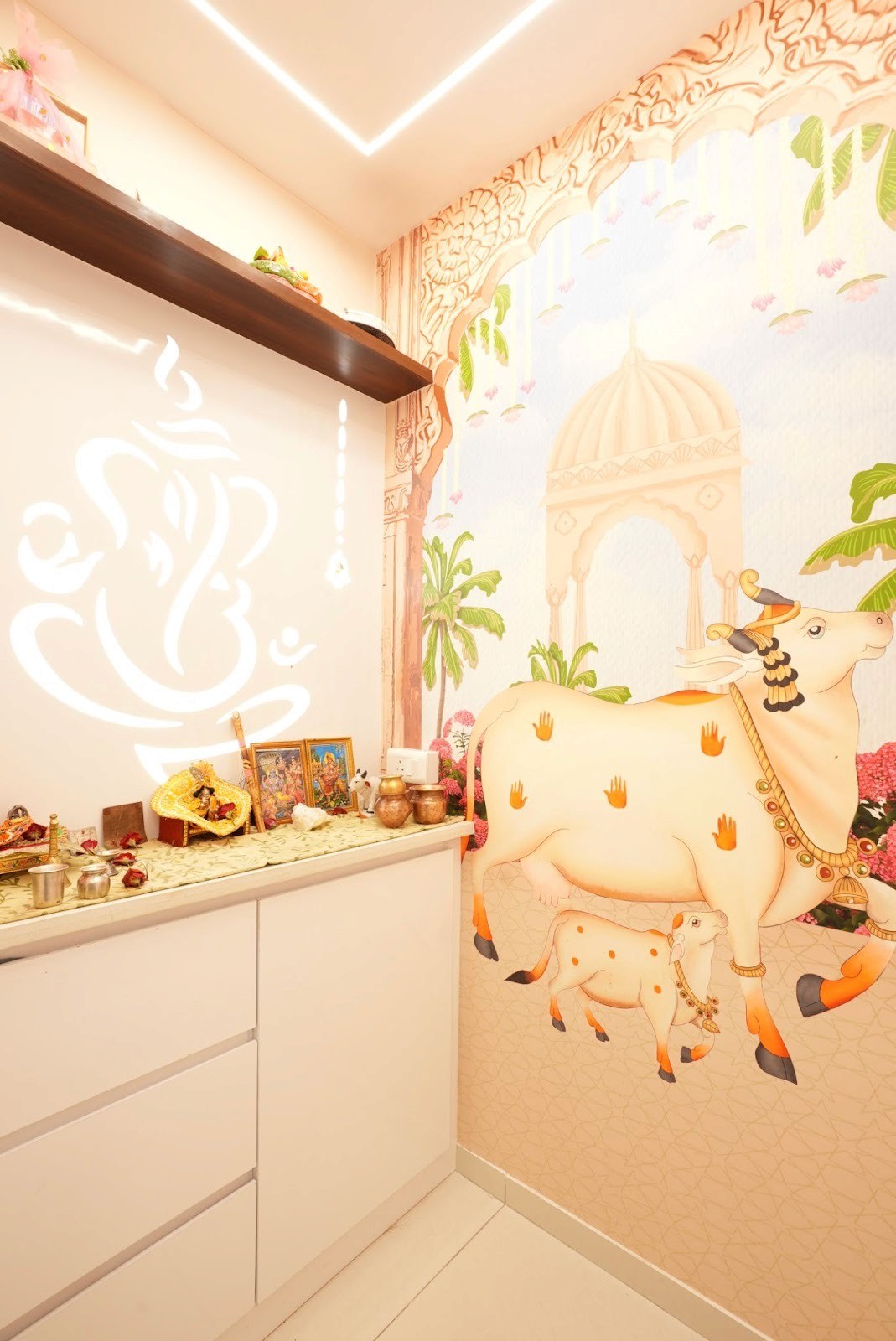
Many homeowners assume they need a separate room to create a pooja space.
In reality, even a 2.5 ft x 2 ft footprint is sufficient for a beautifully designed unit.
With proper planning, this compact size can comfortably include:
altar platform
tiered idol arrangement
drawers for essentials
soft lighting
shutters for enclosure
The trick is vertical design rather than horizontal expansion.
Going upward saves floor space while keeping the area organised.
This is exactly where experienced pooja room interior designers in Chennai bring value, by making small spaces feel intentional rather than temporary.
Step-by-Step Design Approach for a Pooja Unit
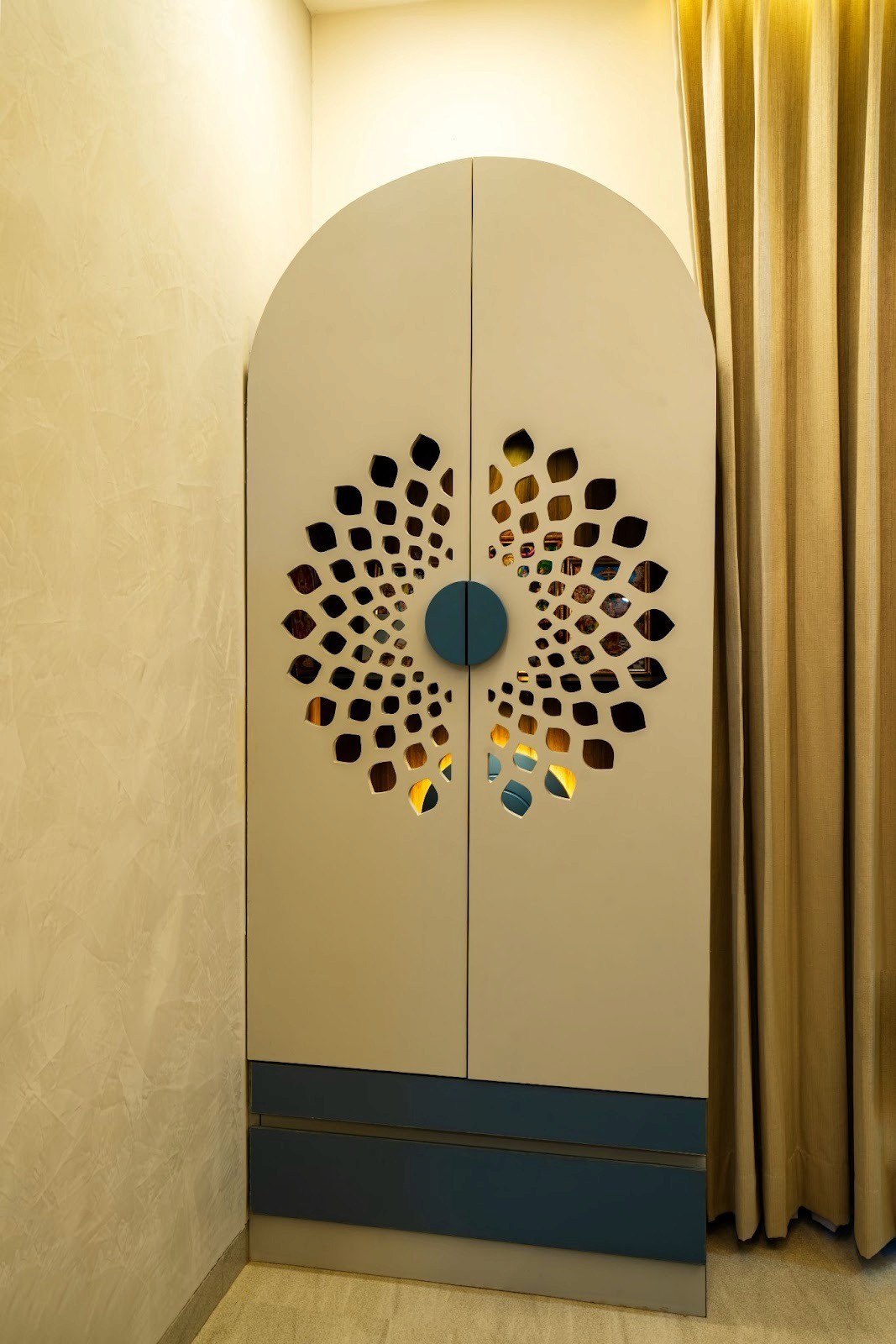
Professionals rarely start with decoration.
They start with structure.
Here’s how we typically approach pooja room planning.
1. Start with the Door Design
The door defines the first impression.
It sets the tone between everyday life and the sacred space.
Well-designed shutters create privacy, reduce dust, and enhance visual elegance.
Popular options include:
Fluted Glass Shutters
Fluted or ribbed glass softly diffuses light while partially concealing the interior. When paired with small traditional bells, it creates a subtle, elegant charm.
This option feels:
light
modern
graceful
Perfect for contemporary homes.
Pocket Doors
Pocket doors slide into the wall, saving valuable space. They work beautifully in compact apartments where swing space is limited.
They:
reduce visual clutter
maximise usable area
feel clean and minimal
Bi-Fold Units
Bi-fold shutters fold neatly to the side and allow the pooja unit to open fully during prayer.
Ideal when you want:
flexibility
wider access
compact operation
CNC Cut Pattern Doors
For homeowners who prefer a traditional aesthetic, CNC-cut designs add intricate detailing and cultural character.
These patterns:
feel ornate
add heritage appeal
create beautiful shadow play with lighting
Perfect for classic or temple-inspired interiors.
2. Plan a Tiered Idol Arrangement
Random placement of idols can look cluttered.
A tiered arrangement feels structured and spiritually balanced.
Layering helps:
maintain visibility
avoid overcrowding
make the altar look organised
3. Include Smart Storage Below the Altar
Storage is often overlooked in pooja spaces.
But daily rituals require multiple essentials.
Items like:
incense sticks
lamps
matchboxes
oil bottles
flowers
pooja books
Without proper storage, these items end up cluttering the altar.
Built-in drawers or cabinets below the platform keep everything organised and hidden.
4. Add a Pull-Out Table for Ritual Use
A pull-out surface is one of the most practical additions.
It provides a temporary platform for:
offerings
plates
lamps
festive decorations
5. Use Soft and Layered Lighting
Lighting defines the emotional quality of the space.
Harsh lighting feels uncomfortable.
Soft lighting feels divine.
Recommended approach:
warm backlit panels behind idols
soft concealed lights
gentle spot lighting
Backlighting highlights the deities and creates depth, giving the unit a serene glow.
Light should enhance calmness, not dominate attention.
6. Choose Calming Colours and Finishes
The pooja room should feel timeless.
Neutral and natural tones work best.
Common choices include:
white
ivory
soft beige
light wood
muted stone textures
These finishes:
reflect light
reduce visual noise
create serenity
Design Styles That Work Well in Chennai Homes
Minimal Contemporary
Clean lines, light finishes, soft lighting. Ideal for modern apartments.
Traditional Temple-Inspired
CNC cut details, carved patterns, warm tones, layered textures.
Wooden Warmth
Natural wood textures with soft lighting create a homely and grounded feel.
Wall-Mounted Compact Units
Perfect for small homes where space efficiency is critical.
Each style can be customized based on home architecture and personal preference.
Frequently Asked Questions
1. What is the minimum space required for a pooja unit?
Even a small footprint of around 2.5 ft by 2 ft can comfortably accommodate a well-designed pooja unit when planned vertically.
2. Where should a pooja room ideally be placed?
Traditionally, the north-east corner is preferred. If that is not possible, choose a quiet, low-traffic zone within the home.
3. What type of doors work best for compact pooja spaces?
Space-saving options such as pocket doors, bi-fold shutters, or fluted glass doors work well. CNC-cut shutters suit more traditional styles.
Similar Topic