Quartz Price Per Square Foot Guide
How to Guides
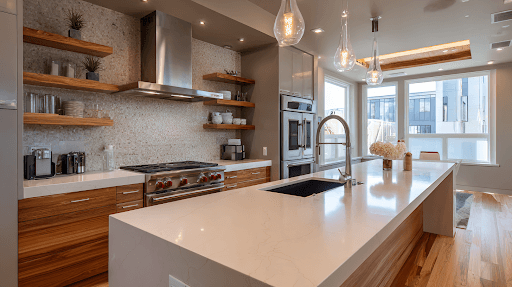




When homeowners begin planning a kitchen or countertop upgrade, one of the first searches they make is “quartz price per square foot.” It is a natural starting point. Surfaces occupy large areas, and material choice significantly influences both design and investment decisions.
But here’s something experienced designers know.
Quartz is not selected purely based on price. It is selected based on performance, longevity, finish quality, and how it supports daily living.
Two quartz countertops that look similar in photos can vary greatly in value depending on fabrication complexity, installation requirements, finish type, and overall design intent. That’s why focusing only on numbers rarely tells the full story.
This guide explains what truly affects quartz pricing, what influences overall project value, and how to make smarter decisions when choosing quartz surfaces for Indian homes.
Quartz Countertops Explained Simply
Quartz remains a preferred choice for modern kitchens due to durability, low maintenance, and visual consistency.
Pricing is influenced by design complexity, finishes, thickness, detailing, installation logistics, and total surface area, not just the slab itself.
Straight layouts and simple edges are more efficient, while custom shapes and specialty finishes require more fabrication.
Quartz offers strong long-term value compared to natural stone because it is non-porous, stain-resistant, and easier to maintain.
Ideal for Indian kitchens that experience heavy cooking, daily cleaning, and frequent use.
In essence:
Quartz is less about “price per square foot” and more about lifecycle performance, reliability, and everyday practicality.
Why Quartz Remains a Preferred Choice for Modern Homes
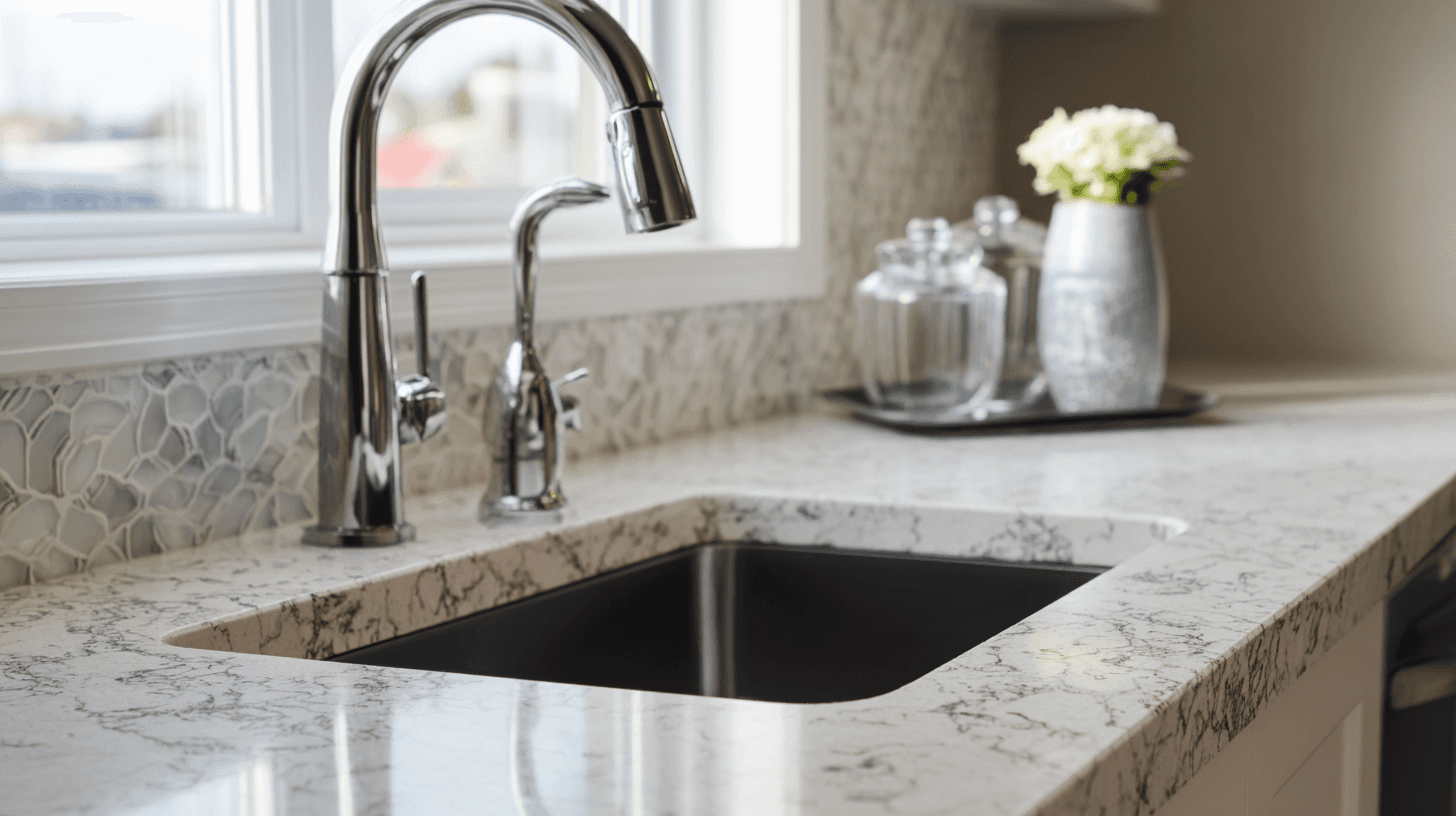
Quartz has become one of the most widely specified countertop materials in contemporary kitchens and bathrooms.
Not because it is trendy, but because it offers:
visual consistency
high durability
low maintenance
stain resistance
long-term reliability
Unlike natural stones, quartz is engineered. This controlled manufacturing process gives designers predictability in colour, pattern, and finish.
The result is a surface that feels modern, refined, and easy to live with.
So when people ask about quartz price per square foot, what they’re often really asking is:
Is quartz worth the investment?
In most practical kitchens, the answer is yes.
What Actually Influences Quartz Pricing
Instead of looking for a flat number, it’s more useful to understand the factors that shape quartz costs.
Because quartz pricing is never just about the slab.
It’s about the entire system.
1. Design Complexity of the Countertop
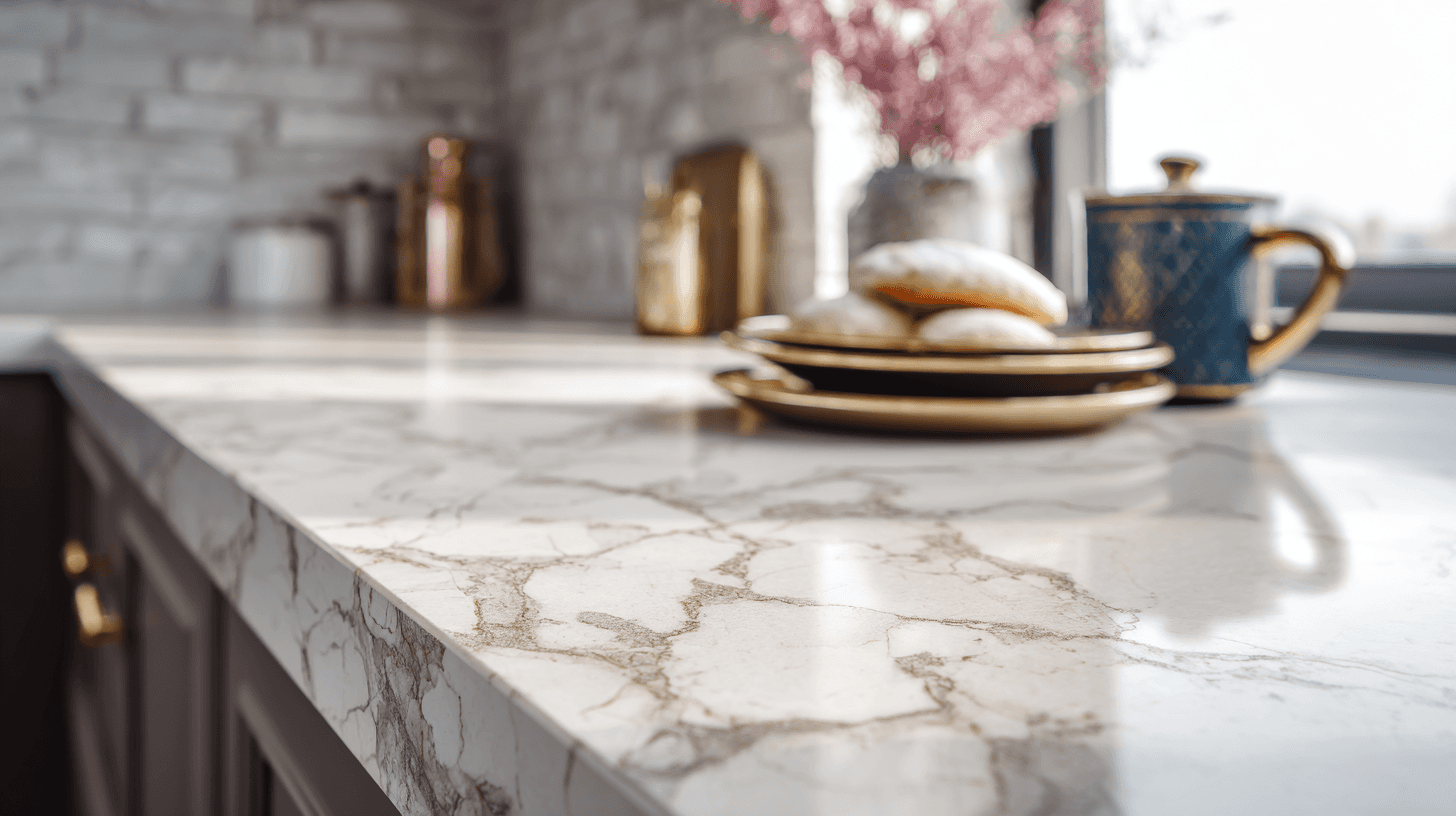
Straight counters are simpler to fabricate.
Complex layouts increase effort.
Elements that affect fabrication include:
multiple cut-outs
corner joints
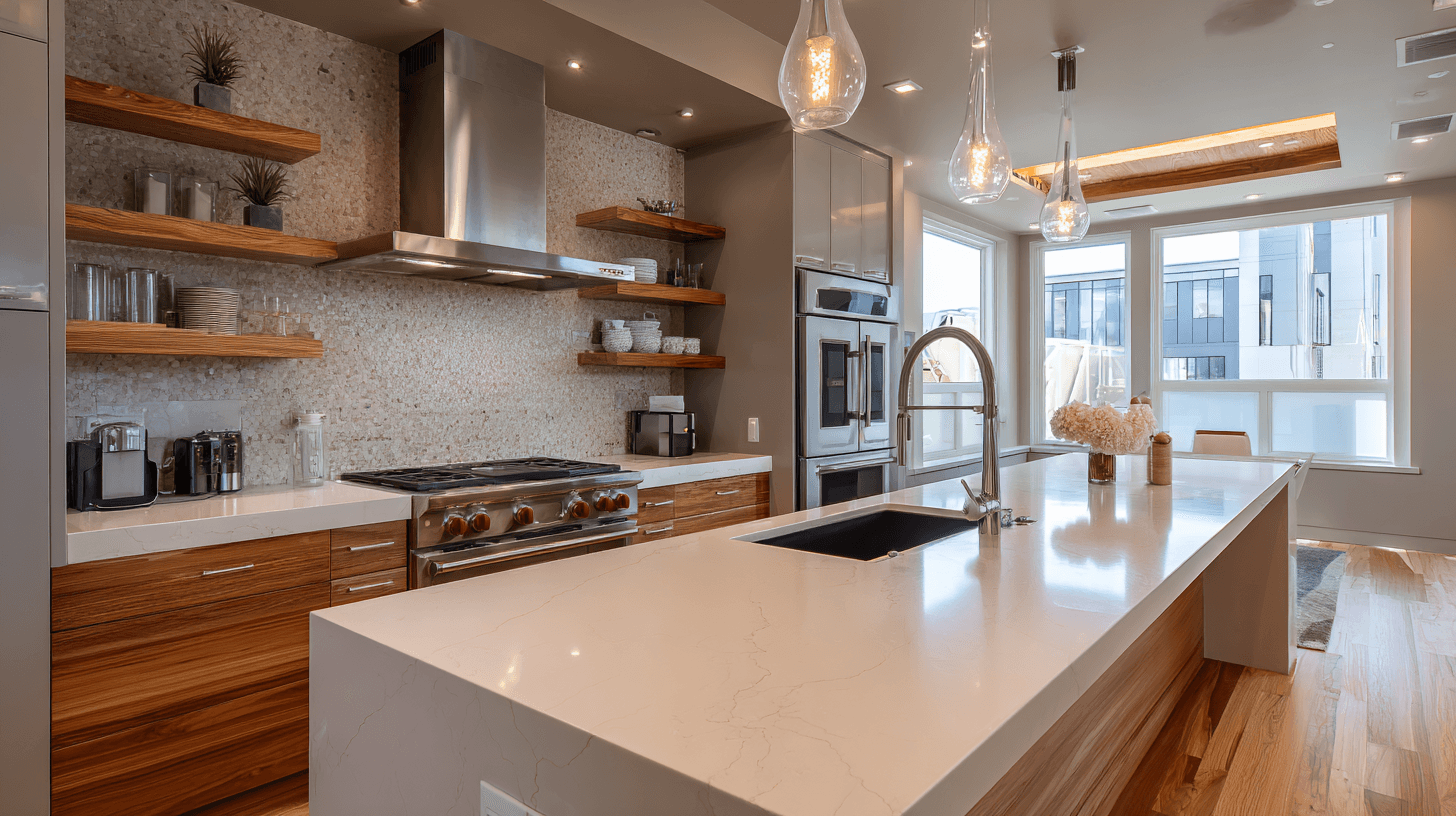
waterfall edges
island returns
integrated backsplashes
curved or custom shapes
The more intricate the design, the more planning and precision required.
Which naturally impacts overall investment.
2. Slab Finish and Surface Texture
Quartz is available in different finishes, each with its own fabrication process.
Common finishes include:
polished
matte or honed
textured
concrete-look
marble-look
Highly refined or specialty finishes often require additional processing.
Smoother, classic finishes are usually more straightforward.
From a design perspective, finish affects not just price but also how the space feels.
Glossy surfaces reflect light. Matte surfaces feel softer and contemporary.
3. Thickness and Visual Mass
Thicker or built-up edges create a stronger visual presence.
However, they require:
additional material
more fabrication
stronger support structures
While thicker profiles look luxurious, they naturally increase material use and complexity.
Many modern kitchens achieve elegance through proportion rather than bulk.
Design restraint often delivers better results than excess.
4. Installation Conditions
Every home is different.
Site conditions influence installation effort.
Examples include:
upper floors with limited lift access
narrow staircases
tight kitchens
long carry distances
complex wall alignments
Quartz slabs are heavy and require careful handling.
Logistics can significantly influence the overall scope of work.

5. Edge Profiles and Detailing
Edges might seem minor, but they change fabrication time considerably.
Simple straight edges are efficient.
More detailed profiles such as stepped or layered edges require extra finishing.
From a modern design standpoint, clean minimal edges often look more contemporary anyway.
So simpler detailing usually aligns with both aesthetics and practicality.
6. Area Coverage
Larger kitchens obviously require more surface area.
But interestingly, smart planning can reduce waste.
Designers often:
optimise slab usage
avoid unnecessary joints
reduce cut-offs
plan layouts efficiently
Good planning improves both material efficiency and final results.
Quartz vs Other Surfaces: Value Perspective
When people search quartz price per square foot, they’re usually comparing it with other materials.
Instead of thinking in terms of cost alone, it helps to think in terms of lifecycle value.
Compared to Natural Stone
Quartz offers:
more consistent appearance
lower maintenance
no regular sealing
better stain resistance
Natural stones can be beautiful but require periodic care.
Quartz simplifies everyday living.
Where Quartz Works Best in Indian Homes
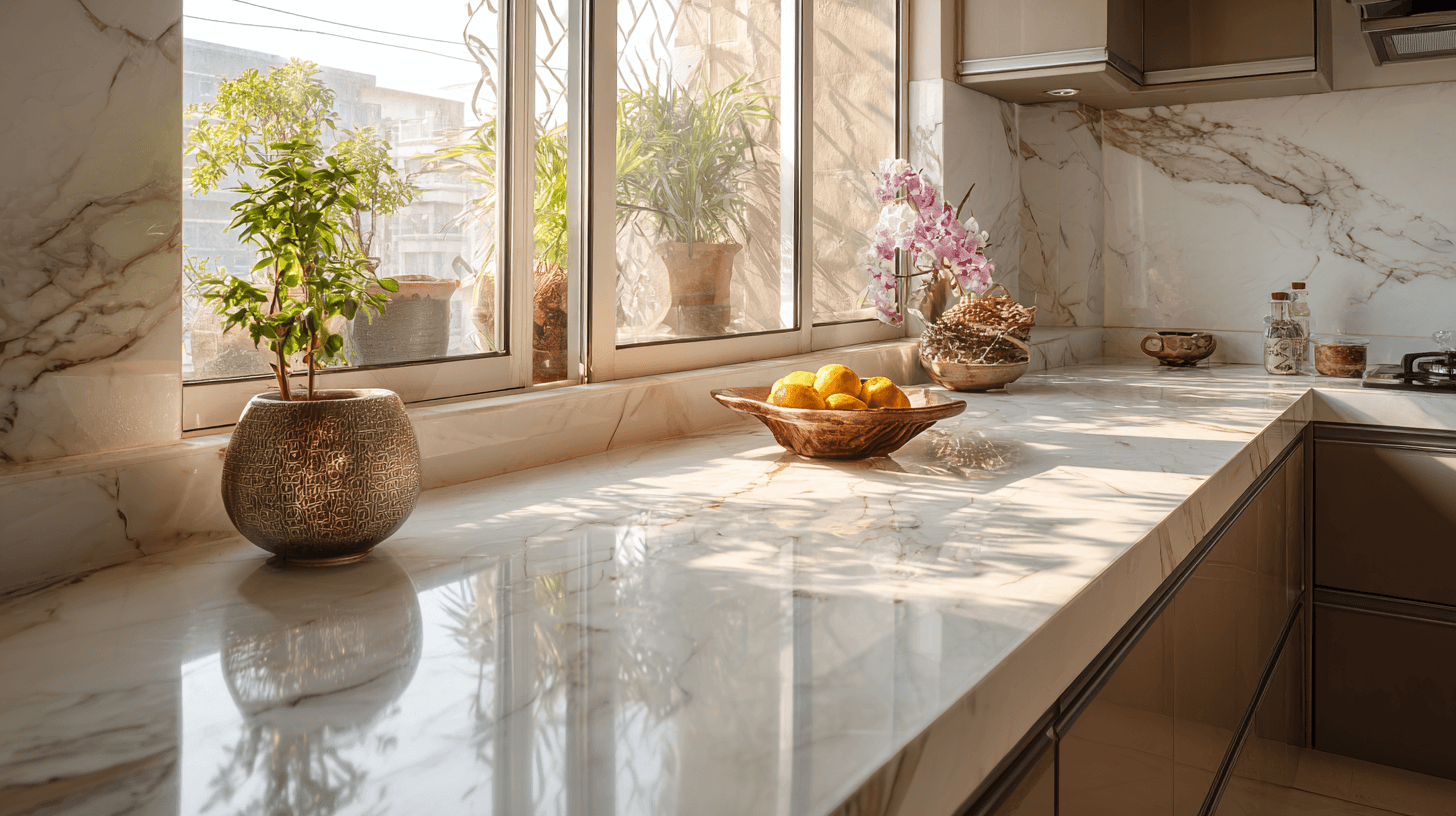
Indian kitchens are demanding.
They see:
heavy cooking
oil splashes
heat
daily cleaning
constant use
Quartz handles this extremely well.
Which is why designers confidently recommend it for:
kitchen countertops
islands
breakfast counters
utility counters
vanity tops
Its non-porous nature makes cleaning easier and reduces staining concerns.
Design Tips When Choosing Quartz
Instead of asking only about quartz price per square foot, ask these better questions.
Choose Colour Based on Light
Light kitchens → darker quartz adds contrast
Dark kitchens → lighter quartz keeps things open
Small kitchens → soft neutrals feel spacious
Avoid Overly Busy Patterns
Highly dramatic patterns can dominate small kitchens.
Subtle movement ages better and feels more timeless.
Keep Edges Simple
Minimal profiles look modern and reduce fabrication complexity.
Think Long-Term
Choose finishes and colours that will still feel relevant years later.
Quartz is durable. Your design should be too.
Final Thoughts
Searching for quartz price per square foot is understandable.
But the real decision is not about numbers.
It’s about value.
Quartz offers consistency, durability, and ease of maintenance that few other surfaces match. When planned properly, it becomes a long-term investment that improves everyday life rather than just the look of a kitchen.
The best results come from aligning design, fabrication, and functionality together.
Because a countertop should not just look good on day one.
It should perform beautifully for years.
Frequently Asked Questions
1. Is quartz expensive compared to other materials?
Quartz is positioned as a mid-to-premium surface, offering strong durability and low maintenance that justify its long-term value.
2. Does quartz require sealing?
No. Quartz is non-porous and typically does not require sealing.
3. Is quartz suitable for heavy cooking kitchens?
Yes. It resists stains, moisture, and everyday wear, making it ideal for Indian kitchens.
4. What affects quartz pricing the most?
Layout complexity, finish type, edge detailing, and installation logistics.
Similar Topic