Stylish Granite Kitchen Slab Designs for Modern Countertops
How to Guides
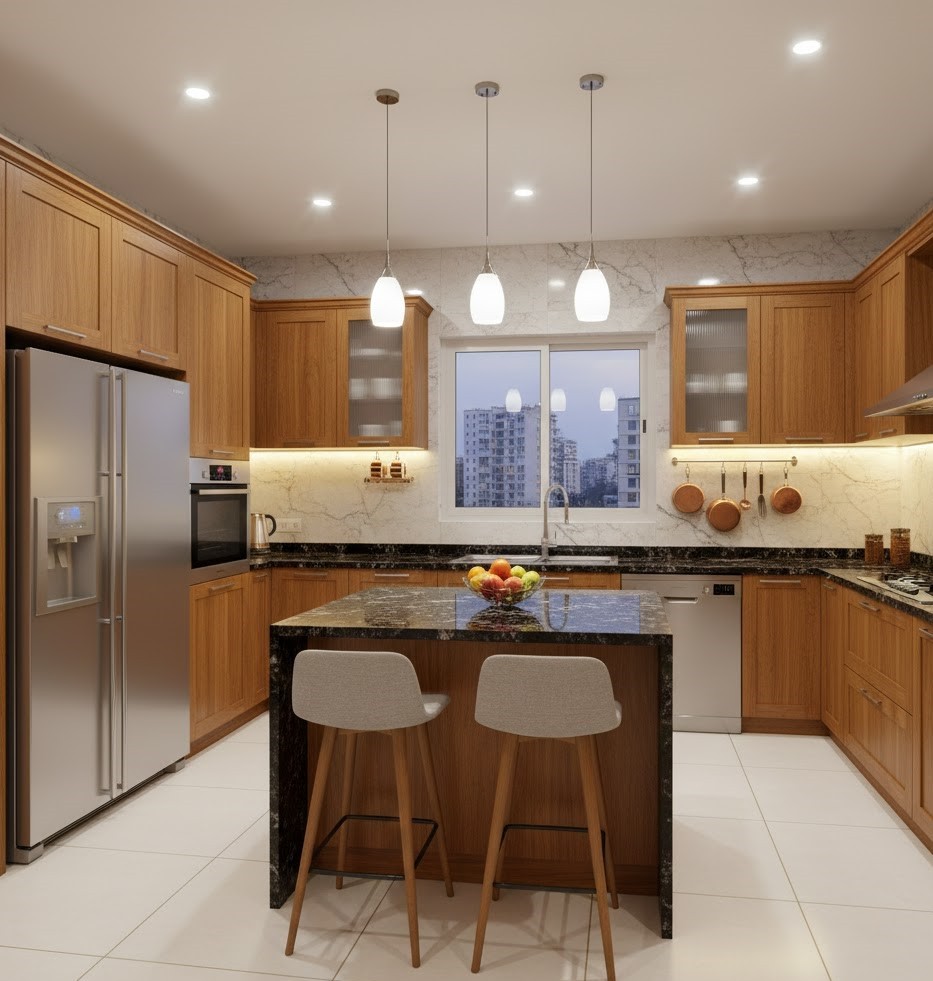





Granite has long been a preferred surface for Indian kitchens, but its role has evolved significantly. Today, a granite kitchen slab is no longer chosen only for durability. It is selected for its visual depth, natural character, and ability to anchor modern kitchen design.
In contemporary homes, granite slabs are used thoughtfully. Instead of overpowering the kitchen, they are curated to complement cabinetry, lighting, and layout. The focus has shifted from “using granite” to using the right granite slab design in the right way.
This guide explores stylish granite kitchen slab designs that work beautifully in modern Indian kitchens, with a focus on colour, pattern, finish, and overall design intent.
Granite Kitchen Slab Designs
Granite kitchen slabs are chosen today not just for durability, but for their natural depth, texture, and design impact.
Modern kitchens use granite thoughtfully, ensuring it complements cabinetry, lighting, and layout rather than overpowering the space.
Light granite slabs help kitchens feel open and bright, while dark slabs add depth and sophistication when balanced with good lighting.
Neutral and mid-tone granite offers versatility and understated elegance across different kitchen styles.
Subtle patterns suit minimalist kitchens, while bold granite works best as a statement on islands or main counters.
Polished finishes feel refined and reflective, while honed finishes offer a softer, more understated look.
The right granite slab is always selected in relation to cabinet colour, kitchen layout, and natural light.
In essence:
A granite kitchen slab is a design anchor. When chosen with intent, it adds timeless character and balance to modern Indian kitchens.
Why Granite Remains Relevant in Modern Kitchens
Granite continues to be a strong choice for kitchen countertops because it balances natural beauty with everyday practicality.
From a design perspective, granite offers:
Unique patterns that cannot be replicated
Natural depth and movement
A grounded, premium feel
Compatibility with both modern and transitional kitchens
When chosen carefully, a granite kitchen slab adds character without visual clutter.
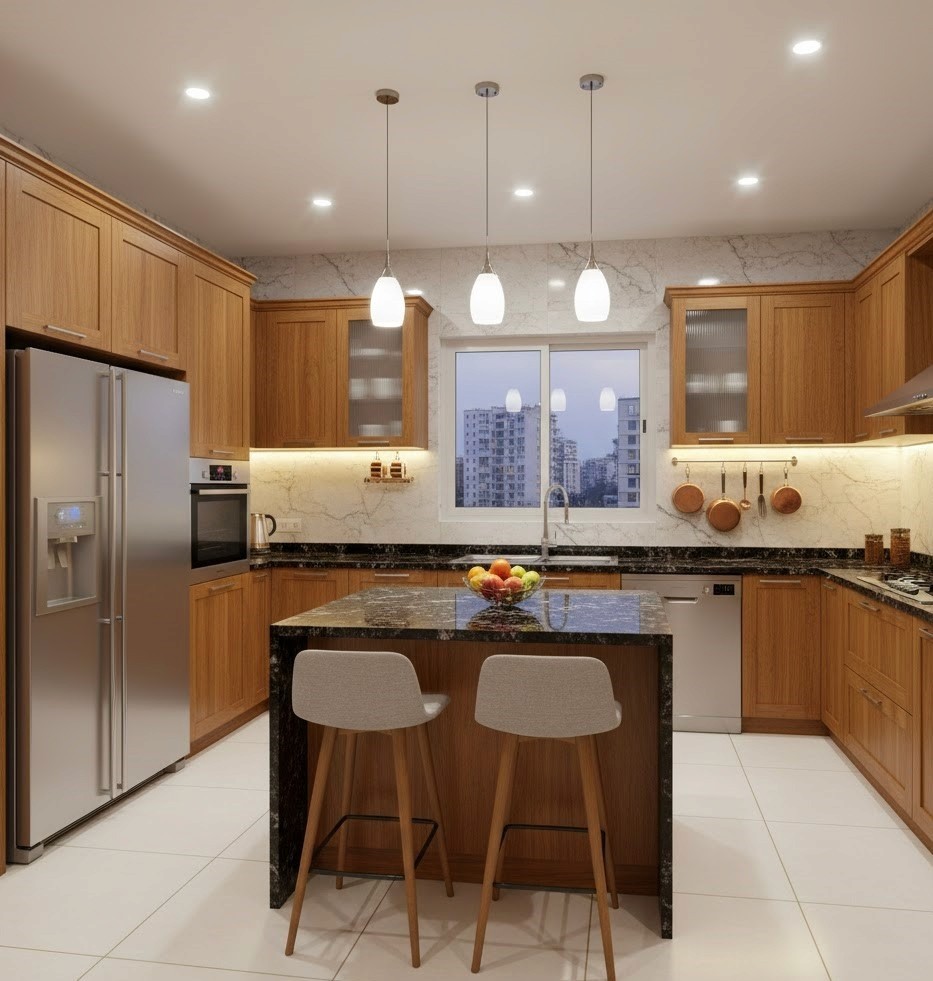
Granite Kitchen Slab Designs Based on Colour Family
Colour is often the first filter homeowners apply when selecting a granite slab. In modern kitchens, colour choices tend to be intentional and restrained.
Light-Coloured Granite Kitchen Slabs
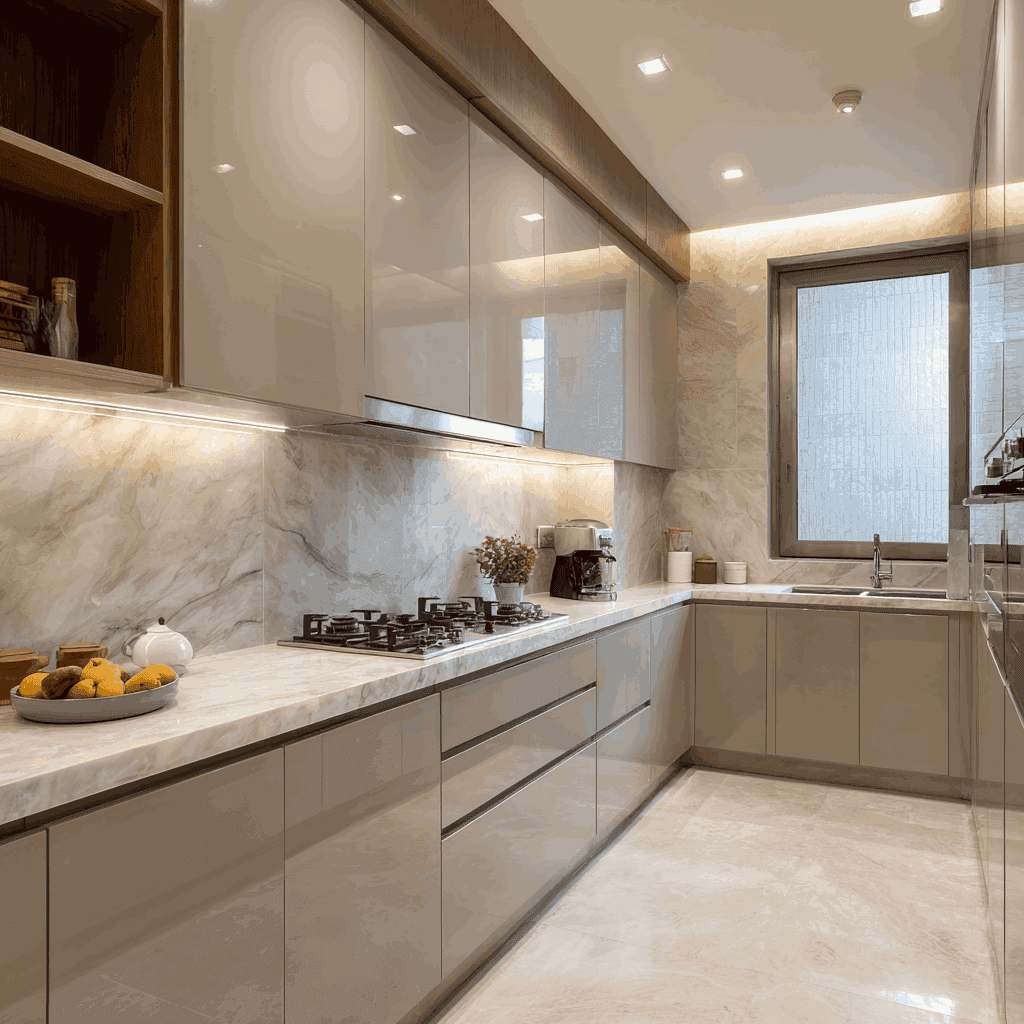
Light granite slabs are popular in contemporary kitchens because they keep the space feeling open and bright.
Design characteristics:
Soft movement rather than heavy contrast
Works well with light or pastel cabinetry
Enhances natural and artificial lighting
Light granite kitchen slabs suit compact kitchens and homes that prioritise an airy aesthetic.
Dark Granite Kitchen Slab Designs
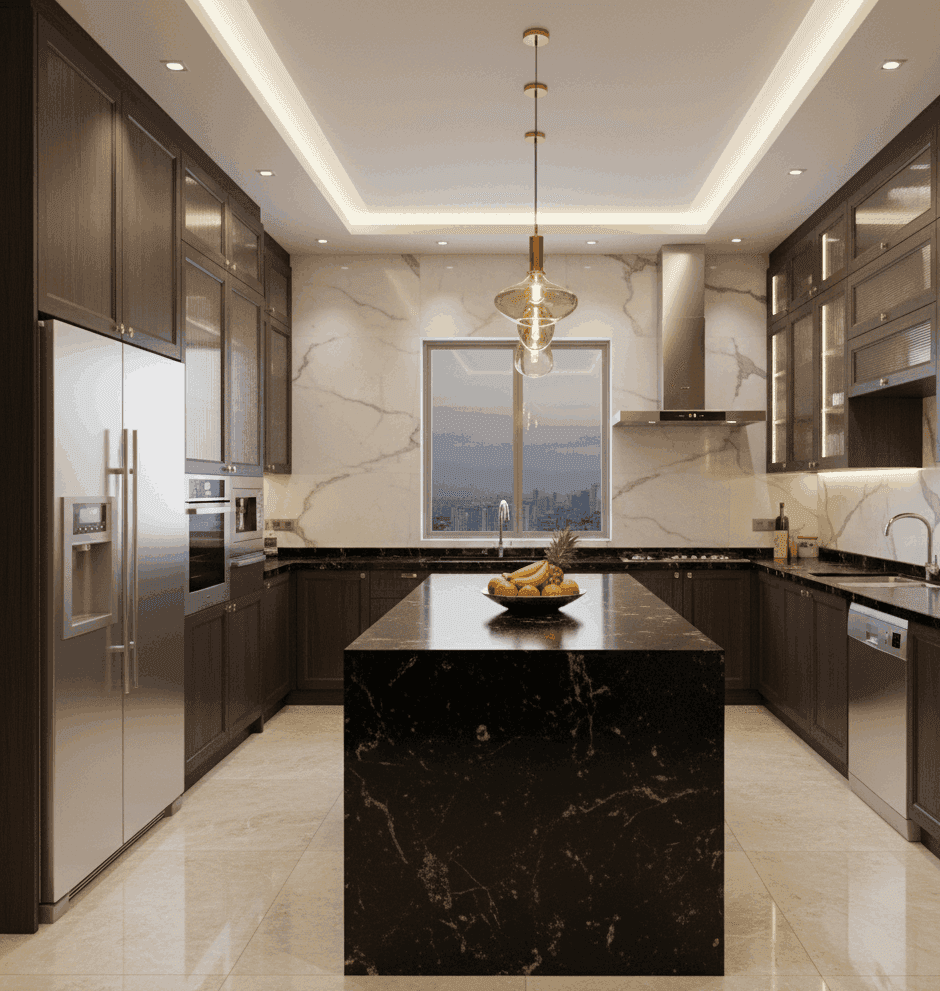
Dark granite slabs bring depth and sophistication to kitchens.
Why designers use them:
Create strong contrast with light cabinets
Anchor large kitchens visually
Feel bold yet timeless
In modern kitchens, dark granite works best when balanced with good lighting and clean cabinetry lines.
Neutral and Mid-Tone Granite Slabs
Mid-tone granite slabs sit comfortably between light and dark extremes.
Design advantages:
Versatile across design styles
Forgiving in day-to-day use
Easy to coordinate with different finishes
These slabs are often chosen for kitchens that aim for understated elegance rather than dramatic contrast.
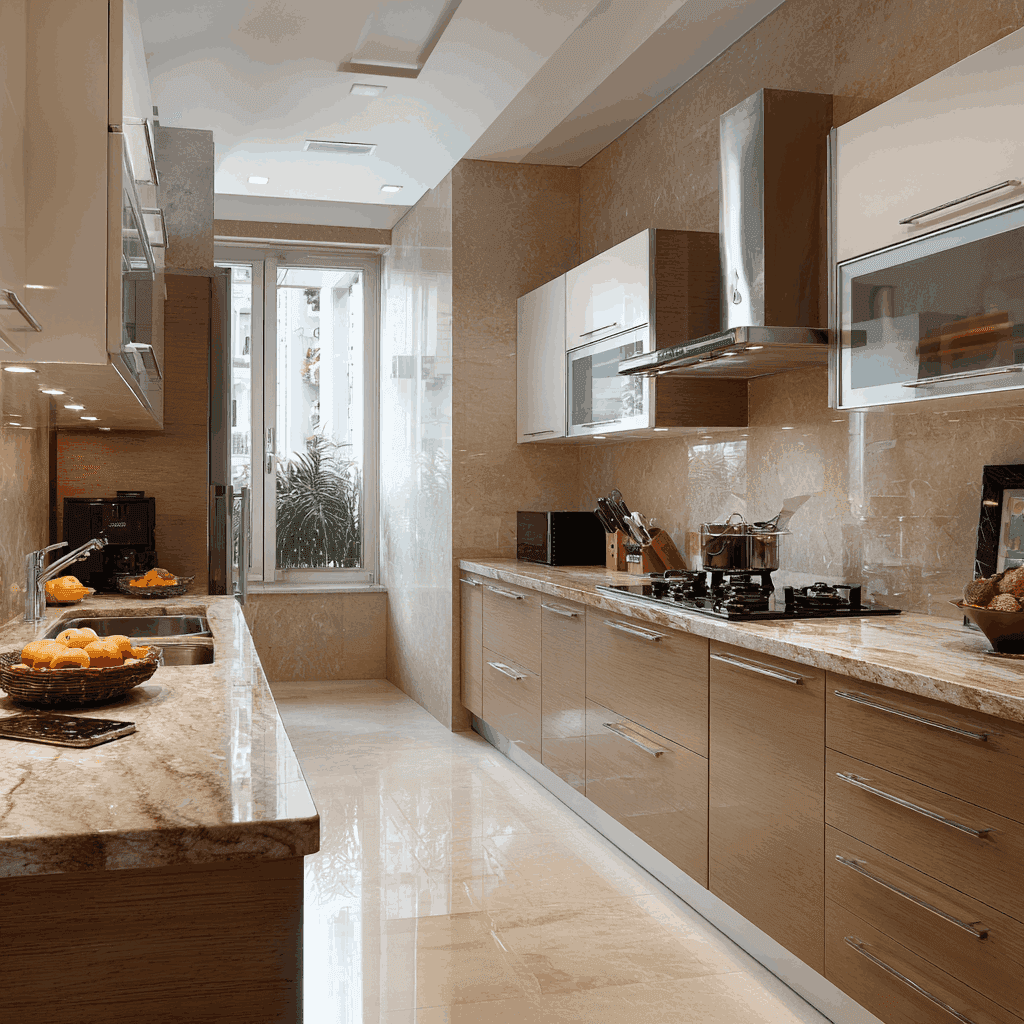
Granite Kitchen Slab Designs Based on Pattern and Movement
Beyond colour, pattern plays a crucial role in how a granite slab is perceived.
Subtle Pattern Granite Slabs
Subtle granite patterns feature gentle speckling or soft veining.
Why they work well:
Support minimalist kitchens
Do not compete with cabinetry or backsplashes
Age gracefully over time
These granite kitchen slab designs are ideal for modern homes that value simplicity.
Bold and Dramatic Granite Slabs
Some granite slabs feature strong veining or high contrast patterns.
Design intent:
Used as statement surfaces
Often paired with simple cabinets
Best suited for larger kitchens
Designers typically limit bold granite to one dominant surface to avoid visual overload.
Granite Kitchen Slab Finishes and Their Visual Impact
Finish affects how granite interacts with light and how refined it feels.
Polished Granite Kitchen Slabs
Polished finishes enhance colour depth and reflect light.
Best suited for:
Modern kitchens with clean lines
Homes that prefer a refined, premium look
Spaces where brightness is important
Honed Granite Kitchen Slabs
Honed granite has a softer, matte appearance.
Design appeal:
Understated and elegant
Works well in contemporary and transitional kitchens
Reduces glare
Honed finishes are often chosen for kitchens that prioritise subtlety over shine.
Granite Kitchen Slabs in Different Kitchen Layouts
Straight and Parallel Kitchens
Granite slabs with subtle patterns work best to maintain visual continuity along long counters.
L-Shaped Kitchens
Granite with moderate movement helps define corners without visual breaks.
Island Kitchens
Island counters are ideal for showcasing more expressive granite slab designs, as they naturally act as focal points.
Matching Granite Kitchen Slabs With Cabinetry
A granite kitchen slab should always be selected in relation to cabinets.
Light cabinets pair well with dark or neutral granite
Dark cabinets work best with lighter granite slabs
Textured cabinets benefit from simpler granite patterns
The goal is balance, not competition.
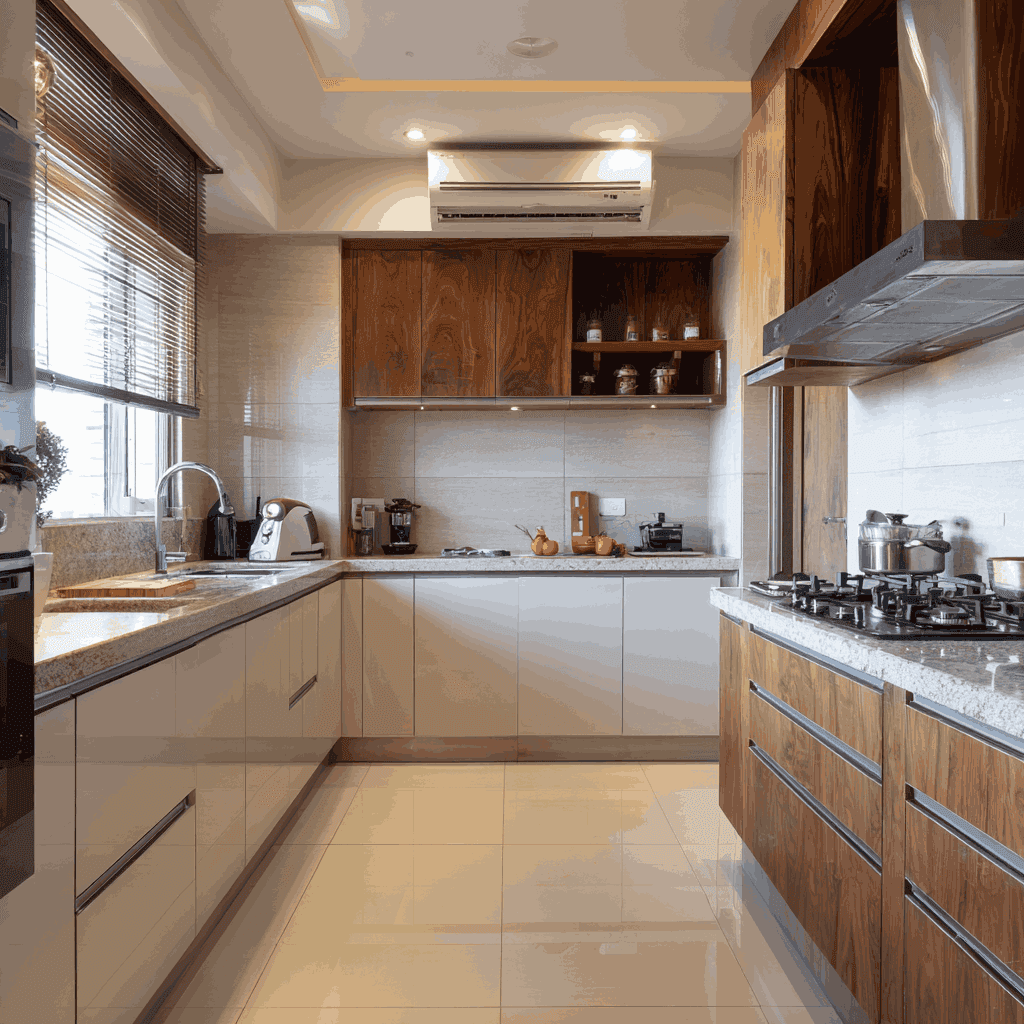
Natural Light and Granite Kitchen Slab Selection
Lighting significantly influences how granite appears.
Well-lit kitchens can handle darker slabs comfortably
Low-light kitchens benefit from lighter granite
Directional lighting enhances natural stone movement
Designers always assess granite samples under actual kitchen lighting before final selection.
Common Mistakes to Avoid When Choosing Granite Kitchen Slabs
Professionals typically avoid:
Choosing granite in isolation without cabinet context
Overly busy patterns in small kitchens
Ignoring how slabs look under different lighting conditions
Using multiple contrasting granite slabs in the same kitchen
A cohesive approach ensures long-term satisfaction.
Why Granite Works Well for Indian Kitchens
Indian kitchens demand surfaces that can handle:
Frequent cooking
Heat exposure
Regular cleaning
Granite continues to perform well under these conditions while offering timeless visual appeal.
Final Thoughts on Granite Kitchen Slab Designs
A granite kitchen slab is more than a countertop. It is a design anchor that influences the entire kitchen’s look and feel.
When chosen with intention, granite slabs bring depth, character, and balance to modern kitchens without feeling dated or overpowering.
At Tint Tone and Shade, we help homeowners select granite kitchen slab designs that align with their kitchen layout, cabinetry, and lifestyle, ensuring the final result feels cohesive and enduring.
Frequently Asked Questions on Granite Kitchen Slab Designs
1. Why is granite still popular for modern kitchens?
Granite remains popular because it offers a rare combination of natural beauty, durability, and timeless appeal. Unlike manufactured surfaces, every granite slab is unique, which adds depth and character to modern kitchens without relying on trends or decorative elements.
2. Is granite suitable for contemporary and minimalist kitchen designs?
Yes. Granite works very well in contemporary and minimalist kitchens when the colour, pattern, and finish are chosen carefully. Subtle patterns, neutral tones, and honed or refined polished finishes help granite integrate seamlessly into clean, modern spaces.
3. How do I choose the right granite kitchen slab colour?
Granite colour should always be selected in relation to:
Cabinet colour and finish
Kitchen size and layout
Natural and artificial lighting
Light granite suits smaller or low-light kitchens, while darker granite works well in spacious or well-lit kitchens. Mid-tone granite offers balance and versatility.
4. Are dark granite kitchen slabs a good idea?
Dark granite slabs can look extremely elegant and timeless, but they require adequate lighting and clean cabinetry lines. When balanced well, dark granite adds sophistication and visual depth rather than heaviness.
5. What type of granite pattern is best for small kitchens?
For small kitchens, subtle or fine-grain patterns work best. They keep the space visually calm and prevent the countertop from dominating the kitchen. Busy or high-contrast patterns are better reserved for larger kitchens or islands.
6. Can bold granite slabs be used in modern kitchens?
Yes, but with restraint. Bold granite slabs are best used as:
Island countertops
Single focal surfaces
Designers usually avoid using bold granite across all counters to maintain balance and avoid visual overload.
7. What is the difference between polished and honed granite in terms of design?
Polished granite enhances colour depth and reflects light, making kitchens feel brighter and more refined.
Honed granite has a matte finish that feels softer and more understated, reducing glare and creating a calmer aesthetic.
The choice depends on the desired mood and lighting conditions.
8. How does kitchen layout affect granite slab selection?
Kitchen layout plays a major role:
Straight or parallel kitchens benefit from consistent, subtle granite to maintain continuity.
L-shaped kitchens work well with granite that has moderate movement to define corners naturally.
Island kitchens allow more expressive granite slabs to act as focal points.
9. Should granite slabs match kitchen cabinets exactly?
Exact matching is not necessary and often not desirable. The goal is visual harmony, not sameness. Granite should complement cabinet tones and textures rather than compete with or duplicate them.
10. How important is lighting when choosing granite?
Lighting is critical. Granite can look very different under showroom lights versus actual kitchen lighting. Designers always recommend assessing granite samples under:
Natural daylight
Task lighting
Ambient lighting
This ensures the slab looks balanced throughout the day.
11. Is granite practical for Indian cooking habits?
Yes. Granite performs well in Indian kitchens because it can handle:
Frequent cooking
Heat exposure
Regular cleaning
Its durability combined with natural aesthetics makes it suitable for Indian lifestyles.
12. Can granite slabs make a kitchen look dated?
Granite looks dated only when:
Heavy or busy patterns are overused
Colours are poorly matched with cabinetry
Design balance is ignored
When selected thoughtfully, granite remains timeless rather than trend-bound.
13. What are common mistakes people make when choosing granite kitchen slabs?
Designers commonly avoid:
Choosing granite without considering cabinet colour
Using overly busy patterns in small kitchens
Mixing multiple contrasting granite slabs
Ignoring how granite looks in real lighting conditions
Avoiding these ensures long-term satisfaction.
14. Is granite suitable only for countertops?
While granite is most commonly used for countertops, it can also be used selectively for:
Backsplashes
Island sides
Accent surfaces
These applications should always be intentional and limited.
15. How do designers approach granite slab selection?
Designers approach granite selection holistically, considering:
Kitchen layout
Cabinet finish
Lighting conditions
Overall design language
Granite is treated as a design anchor, not an isolated surface.
Similar Topic