Modern TV Unit Design Ideas for Living Room (2026 Trends)
Tips
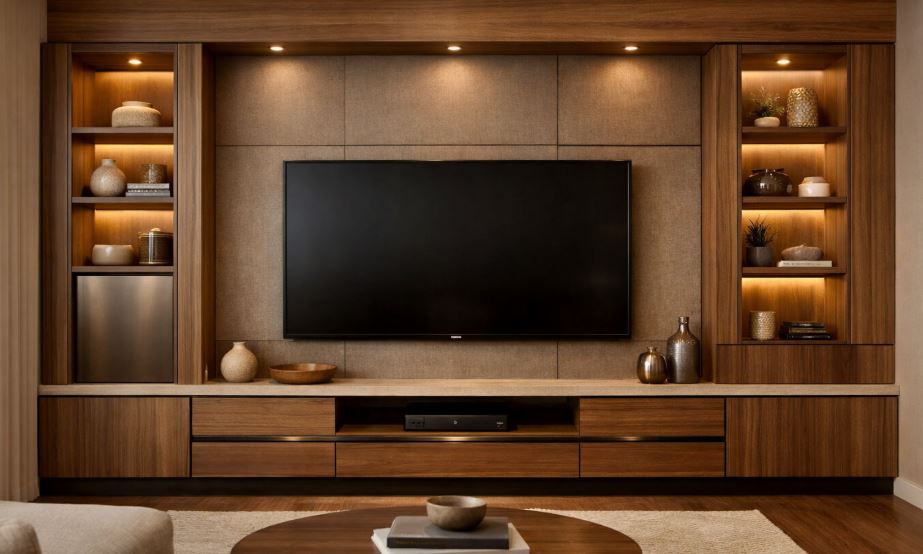

A modern TV unit design not only serves a functional purpose but also acts as a focal point in your living room. When planning a TV unit design, it’s important to start with a clear goal. To begin with, it should effectively conceal extra cables, keeping the space neat and clutter-free, while also offering practical storage for your tech essentials.
From there, you can decide whether you want it to be a standalone piece or double up as a display unit. Once these needs are defined, choosing the right design becomes much more intentional and aligned with your space.
Here are some ideas that are becoming increasingly sought-after for TV units in 2026:
Wall-Mounted TV Unit Design With Cabinets
A modern TV unit design should be simple, clean, and warm. It should make your space feel inviting. Use materials like wooden panels and soft metals to add warmth and personality. These elements rope in a lot of texture without overdoing the design.
When choosing a color palette for your modern TV unit in your main hall, stick to neutrals or warm tones. They create a space that feels easy, lived-in, and welcoming. Next, choose clean horizontal and vertical lines to keep the overall look fuss-free, structured, and elegant. Use soft lights inside cabinets to make it a focal point of your display.
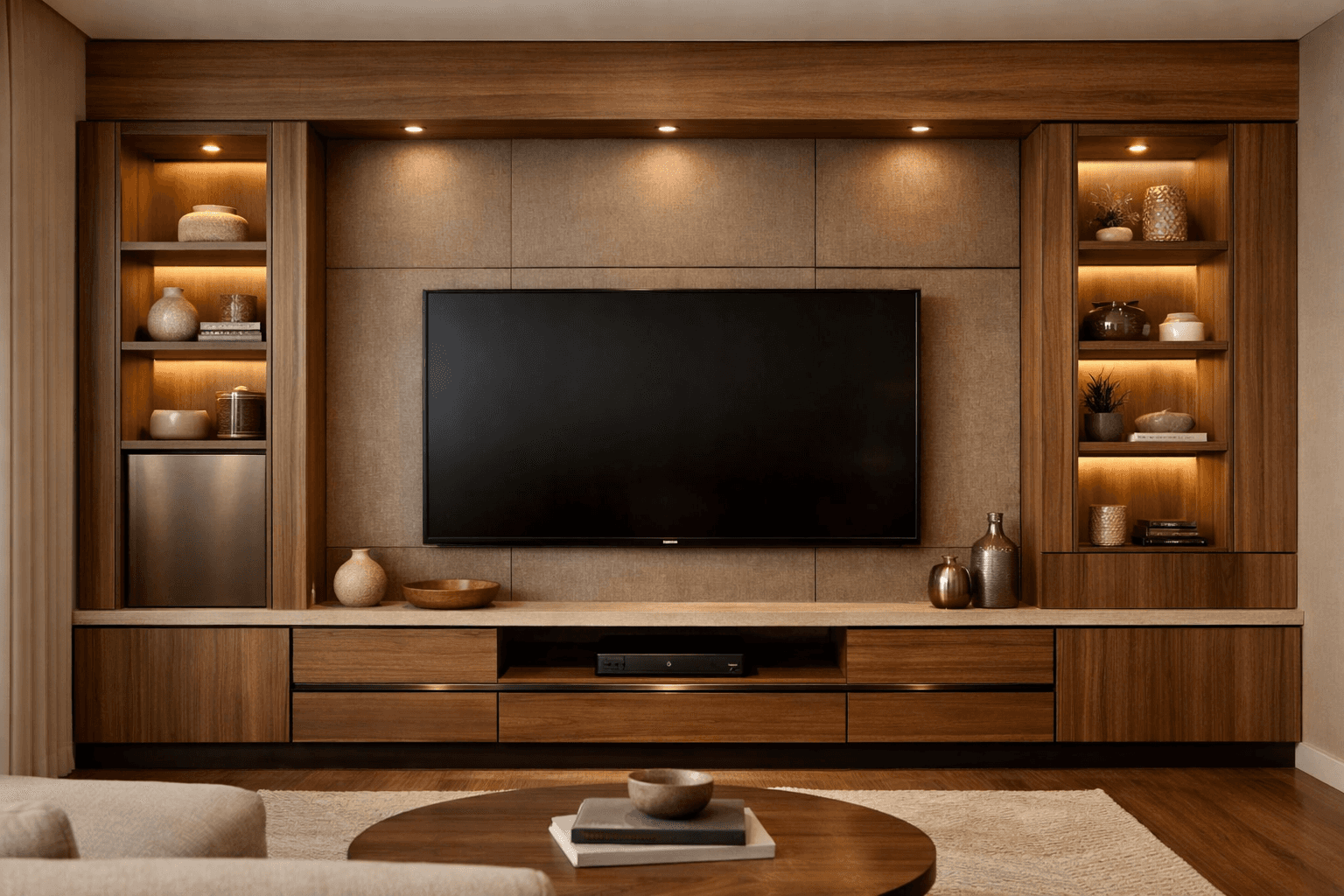
Wall-Mounted TV Unit 2026
Low- Shelf TV Unit Design
If you have a small living room, a low-shelf TV unit is a great option, as it can make your space look bigger and double as storage. Start with a clear goal for what you intend to store there, and design accordingly. Open spaces for plants and books, and a closed space to hide away set-top boxes and game consoles, are a good way to start building your TV unit.
Use materials like wood veneers or matte laminates to add a touch of warmth, without making the space look jarring. Clean lines and minimal hardware would make the space look clutter-free and well-organized.
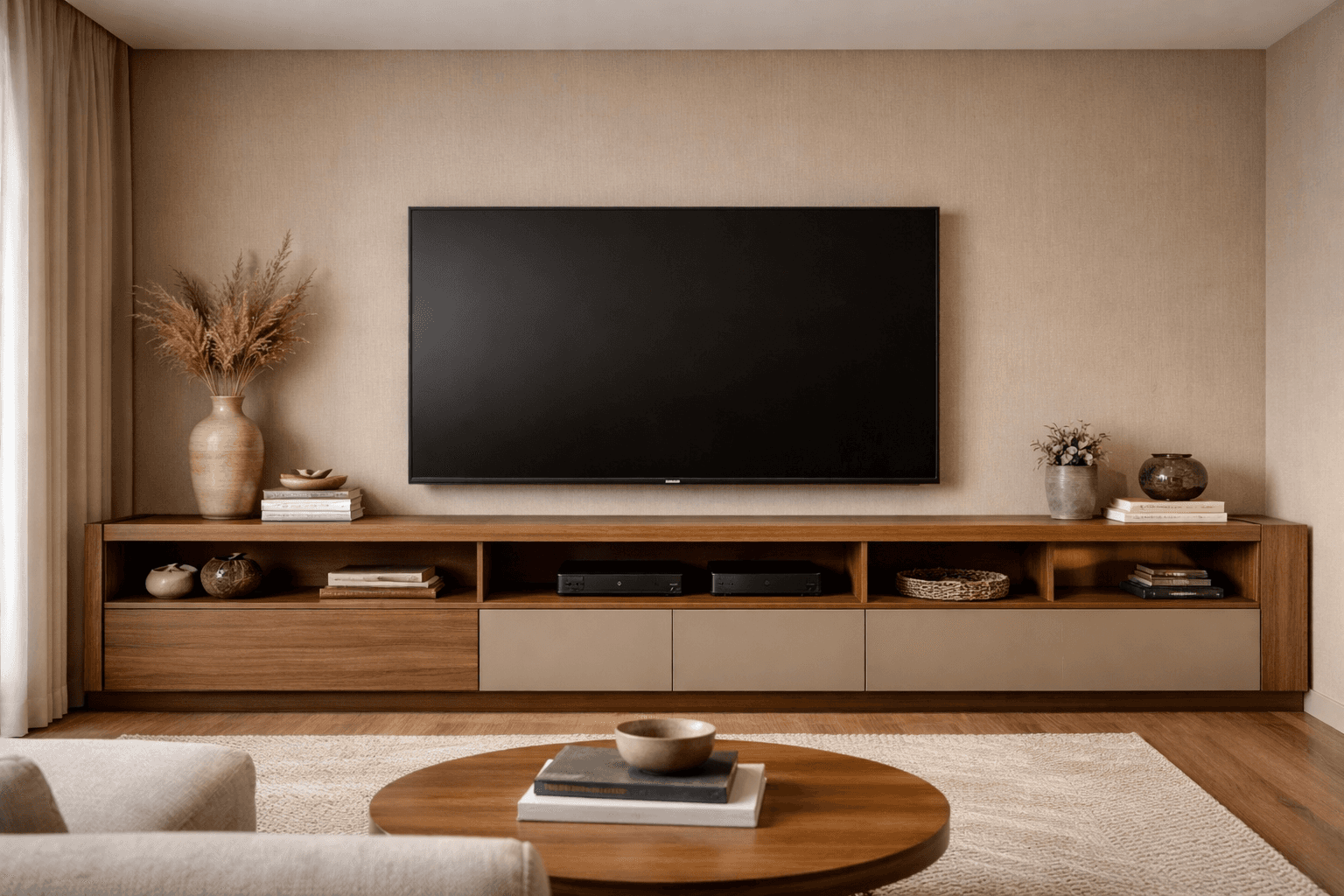
Low Shelf TV Unit 2026
Standalone TV Unit Design
If you live in a small house, like a studio or a one-bedroom, it makes complete sense to go for a standalone TV unit.
Choose warm wood tones like walnut, teak, or oak for a cozy, contemporary feel, or go for matte laminates in neutral shades such as white, beige, or grey for a clean, modern aesthetic. You can combine closed cabinets to hide set-top boxes, wires, and miscellaneous items, with a few open shelves for decor pieces, books, or plants. Add soft LED strip lighting behind the panel or under the shelves to highlight the TV wall and create a subtle, ambient glow.
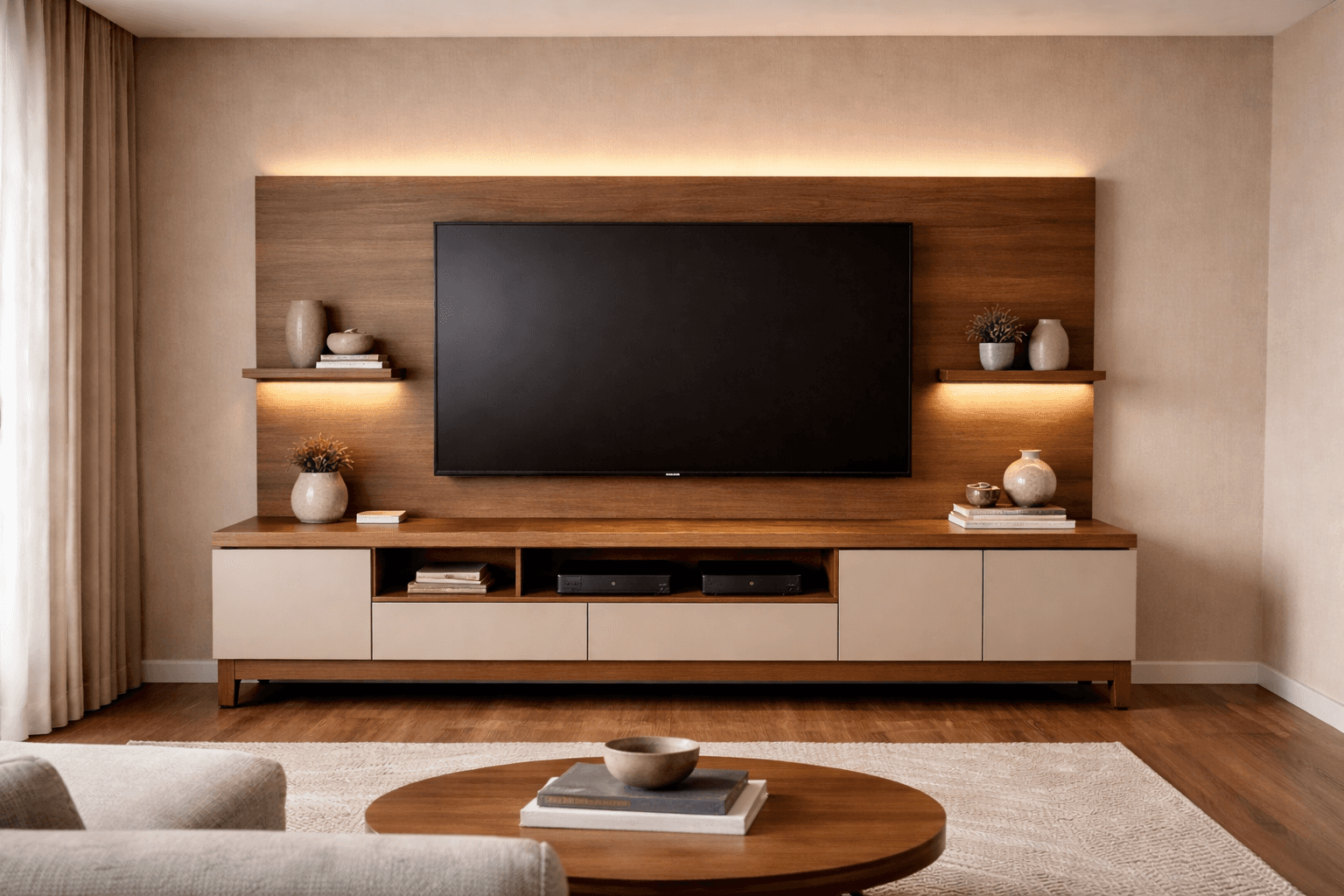
Standalone TV Unit 2026
Industrial Style TV Unit
The industrial-style TV unit brings a modern, rugged aesthetic to your living room and is best suited for a casual or industrial style setup. It is inspired by warehouses and uses materials such as reclaimed wood, steel, and wrought iron.
Choose a brick or a textured wall and build your TV unit against this. Start with raw wood and metal finishes to bring in that industrial character. You can keep the base functional with closed cabinets to tuck away wires and devices, while adding open metal or wooden shelves to display books, speakers, or minimal decor. Leave some elements slightly exposed, like frames or brackets, to stay true to the style.
For lighting, use subtle warm LEDs or even metal-finish fixtures to highlight the unit, keeping the overall feel understated, practical, and effortlessly rugged.
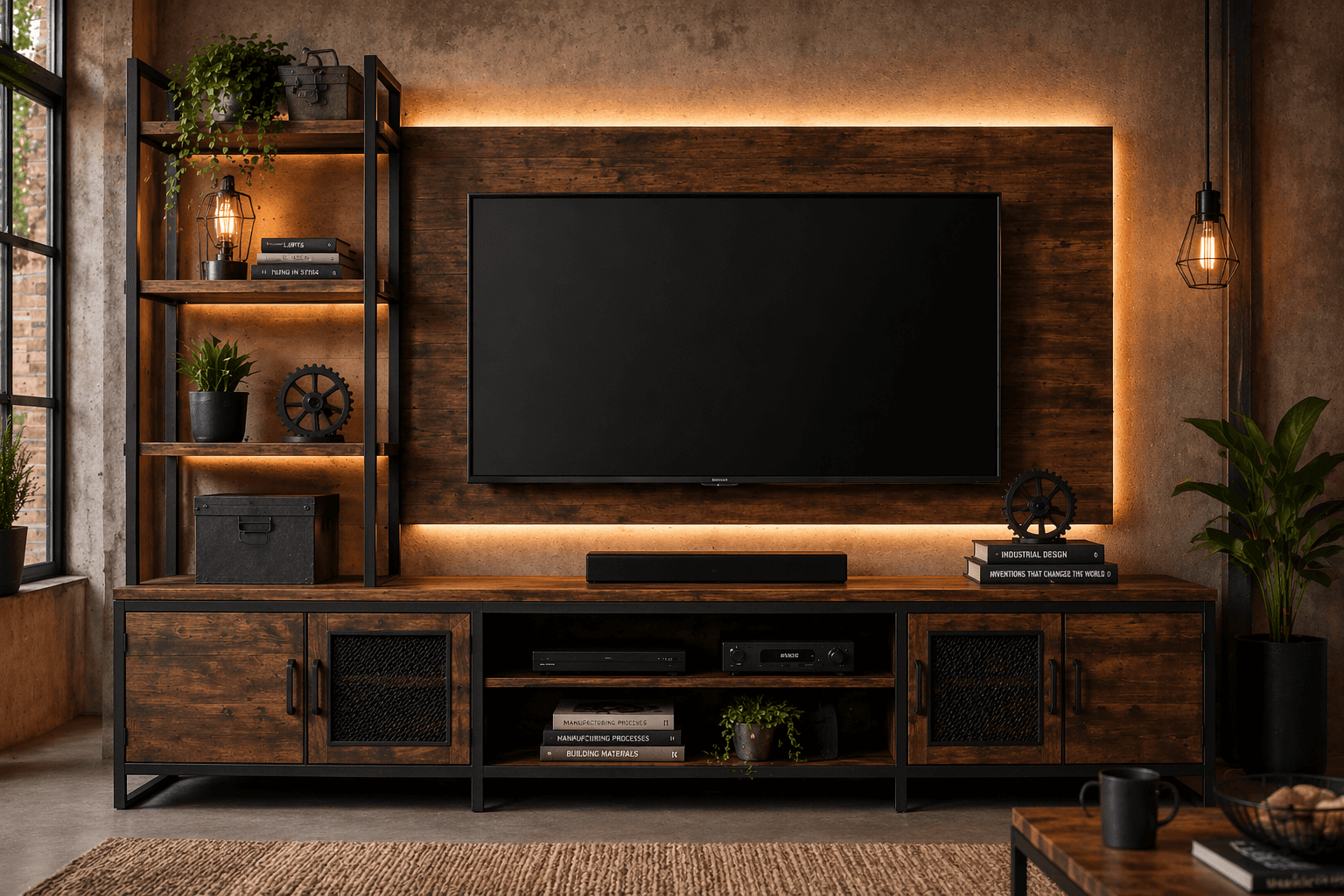
Industrial Style TV Unit 2026
Corner TV Unit Design
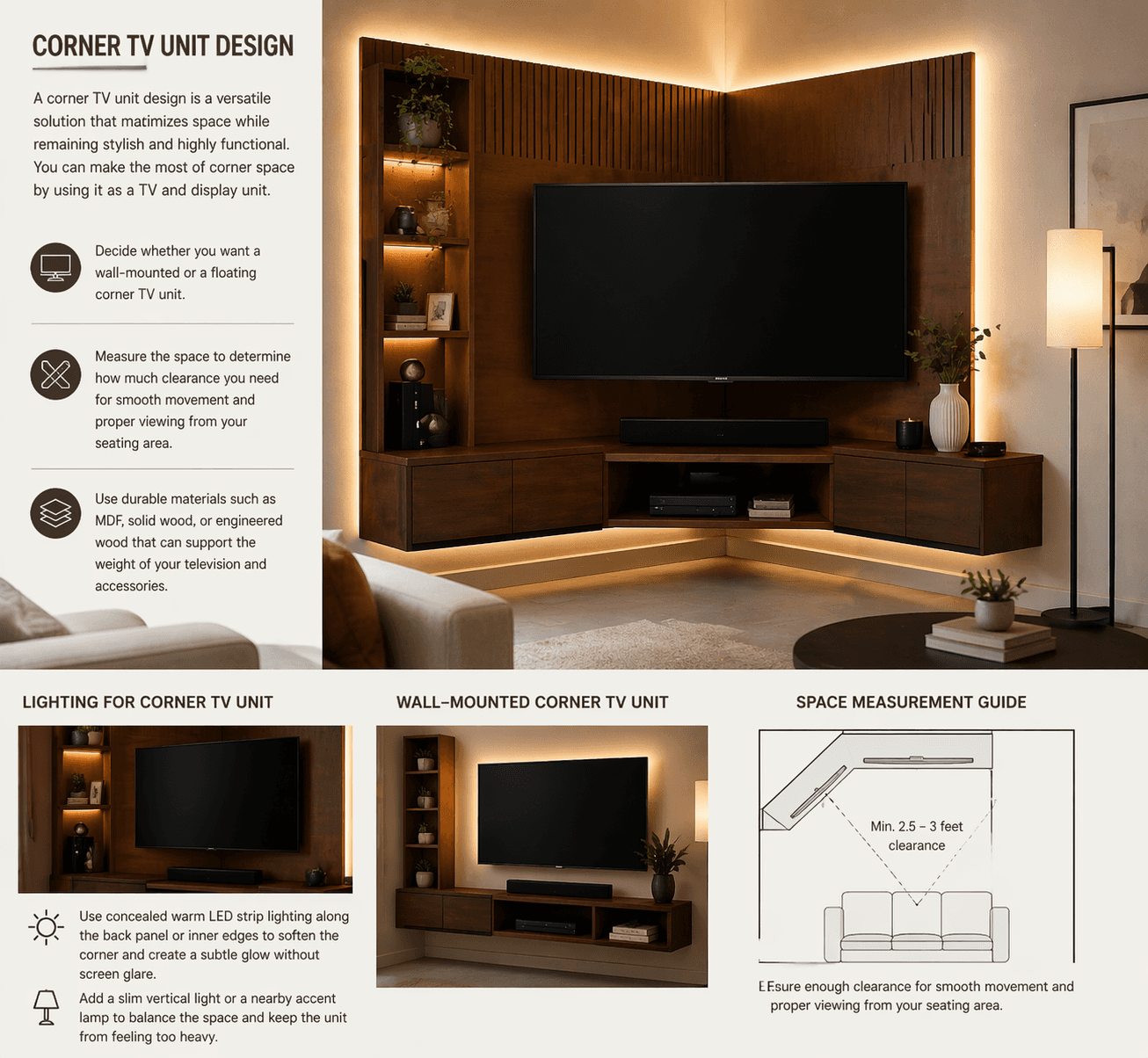
Choose a corner TV unit design if you’re looking for a versatile solution that maximizes space while remaining stylish and highly functional. You can make the most of corner space by using it as a TV and display unit.
Decide whether you want a wall-mounted or a floating corner TV unit. Next, measure the space to determine how much clearance you need for smooth movement and proper viewing from your seating area. Use durable materials such as MDF, solid wood, or engineered wood that can support the weight of your television and accessories.
Use concealed warm LED strip lighting along the back panel or inner edges to soften the corner and create a subtle glow without screen glare. Add a slim vertical light or a nearby accent lamp to balance the space and keep the unit from feeling too heavy.
Common Mistakes To Avoid In Your TV Unit Design
A TV Unit should blend seamlessly with the rest of your home, and not look like a standalone relic. Here are some tips to follow so that your TV Unit design looks like it's a part of your home:
Too many open shelves
They tend to collect clutter quickly, making the unit look busy rather than intentional. A balanced mix of open and closed storage keeps the space visually calm.
Overly bulky cabinets
Heavy, oversized cabinets can dominate the room and make the space feel smaller. Keeping proportions light and well-scaled helps maintain a clean, airy look.
Random colors unrelated to the room
When the TV unit doesn’t align with the room’s palette, it feels disconnected. Sticking to a cohesive color story makes the space feel more put-together.
Exposed wiring
Visible cables instantly take away from an otherwise well-designed space. Concealed wiring keeps the unit neat and elevates the overall finish.
Treating the TV unit as standalone furniture
When designed in isolation, it often feels like an afterthought. Integrating it with the wall and overall design language creates a more seamless, premium result.
Designing a TV Unit That Works for You
A well-designed TV unit anchors your living room, sets the tone for the space, and keeps everyday clutter out of sight. Whether you prefer a sleek wall-mounted unit, a compact low-shelf design, a character-filled industrial look, or a smart corner unit, the key is balance: thoughtful storage, concealed wiring, warm lighting, and a palette that flows with the rest of your home.
By avoiding common mistakes like too many open shelves, bulky cabinets, mismatched colors, and exposed cables, your TV unit can feel like a natural extension of your interiors rather than an afterthought. When done right, it brings function, style, and comfort together in one cohesive focal point.
If you’re planning to update your living room or are starting from scratch, now is the perfect time to rethink your TV unit design.
Want ideas tailored to your home’s size, layout, and style?
Not sure which materials, finishes, or layout will work best for your space?
Book a consultation with our design experts to create a space that’s perfectly aligned with your lifestyle.
Frequently Asked Questions (FAQs)
1. What is the ideal height for a TV unit?
The center of the TV should align roughly with your eye level when seated. This keeps viewing comfortable and reduces strain over time.
2. Should I choose a wall-mounted or floor-standing TV unit?
Wall-mounted units feel lighter and more modern, while floor-standing units offer more storage. The right choice depends on your space and storage needs.
3. How do I keep my TV unit looking clutter-free?
Use a mix of closed cabinets for storage and limit open shelves to a few curated pieces. Concealed wiring also makes a big difference.
4. Which materials work best for a TV unit?
Engineered wood, MDF, or solid wood are all reliable options. The choice depends on your budget, durability needs, and finish preference.
5. How important is lighting in a TV unit design?
Very. Subtle, indirect lighting like LED strips enhances the look, adds depth, and prevents harsh glare while watching.
6. Can a TV unit also be used for display?
Yes, but it’s best to keep it minimal. A few well-chosen decor pieces can add character without making the unit feel cluttered.
7. What colors work best for a modern TV unit design?
Neutrals and warm tones are a safe choice. They blend well with most interiors and create a calm, cohesive look.
8. How do I make my TV unit look more premium?Focus on clean lines, concealed details, consistent materials, and a design that integrates with the overall space rather than standing out awkwardly.
Similar Topic