Modern Bedroom Door Design Ideas for Indian Homes
How to Guides



Modern Bedroom Door Design Ideas for Indian Homes
Bedroom doors act as psychological thresholds, separating rest from movement and privacy from activity.
Modern bedroom door design prioritises restraint, proportion, and cohesion rather than ornamentation.
Doors are best evaluated in layers: appearance first, then opening mechanism, followed by finish and colour.
Panelled, flush, grooved, glass-integrated, and concealed doors each serve different spatial and visual needs.
Hinged doors feel familiar and secure, while sliding and pocket doors support openness and space efficiency.
Finish and colour choices should respond to natural light availability, room size, and desired calmness.
Door design should subtly change based on bedroom type such as master, guest, children’s, or elder’s rooms.
Visual alignment between bedroom doors and wardrobes is essential for a composed interior.
Designers avoid overly glossy, decorative, or high-contrast doors in bedrooms to preserve a restful atmosphere.
In essence:
A well-designed bedroom door does not draw attention to itself. It quietly supports privacy, calm, and comfort, becoming a seamless transition into rest rather than a visual statement.
A bedroom is not a space designed to be seen first. It is designed to be felt last. It holds rest, privacy, pause, and retreat. Every design choice inside it should quietly support that purpose. And yet, one of the most underestimated contributors to this experience is the door design bedroom spaces rely on every single day.
Bedroom doors are thresholds. They separate movement from stillness, sound from silence, and public life from private ritual. In well-designed homes, bedroom doors do not demand attention, but they anchor the room psychologically. Their form, opening style, finish, and relationship with light determine whether a bedroom feels calm or unsettled.
This guide explores modern bedroom door design ideas through a professional interior design lens. The ideas are structured the way designers actually approach decisions, starting with appearance, then function, and finally refinement through finish and light.
Why Bedroom Door Design Needs a Different Design Language
Unlike main doors or living room doors, bedroom doors are not meant to announce arrival. They are meant to soften transition.
An effective bedroom door design strategy achieves:
visual quietness,
a sense of enclosure without heaviness,
continuity with walls and wardrobes,
and psychological separation without drama.
Doors that are too bold, decorative, or contrast-heavy can interrupt the restful quality of a bedroom. This is why modern bedroom door design prioritises restraint, proportion, and cohesion over ornamentation.
Bedroom Door Designs Based on Appearance
Appearance defines how a door occupies visual space. This is always the first design decision.
Panelled Bedroom Door Designs
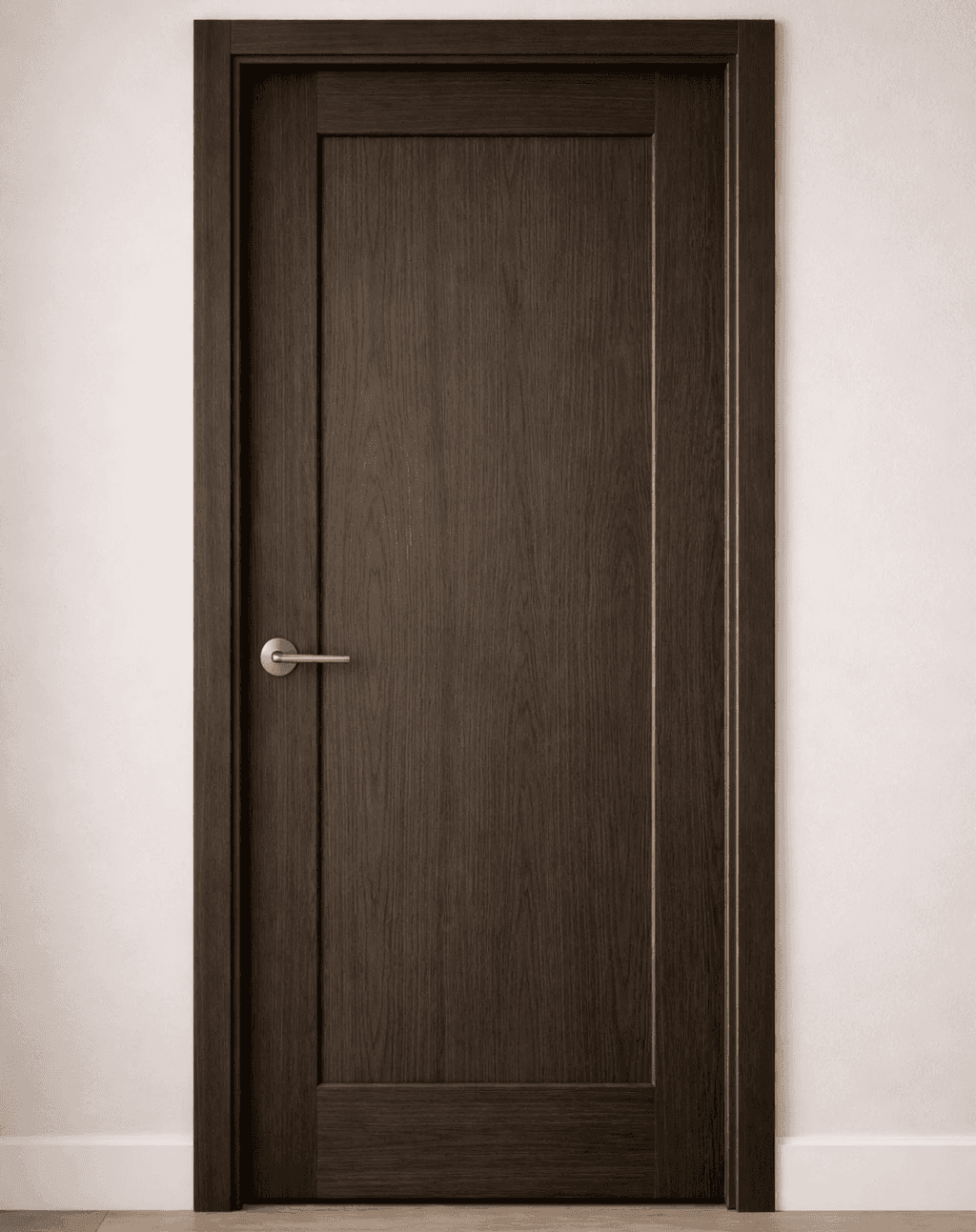
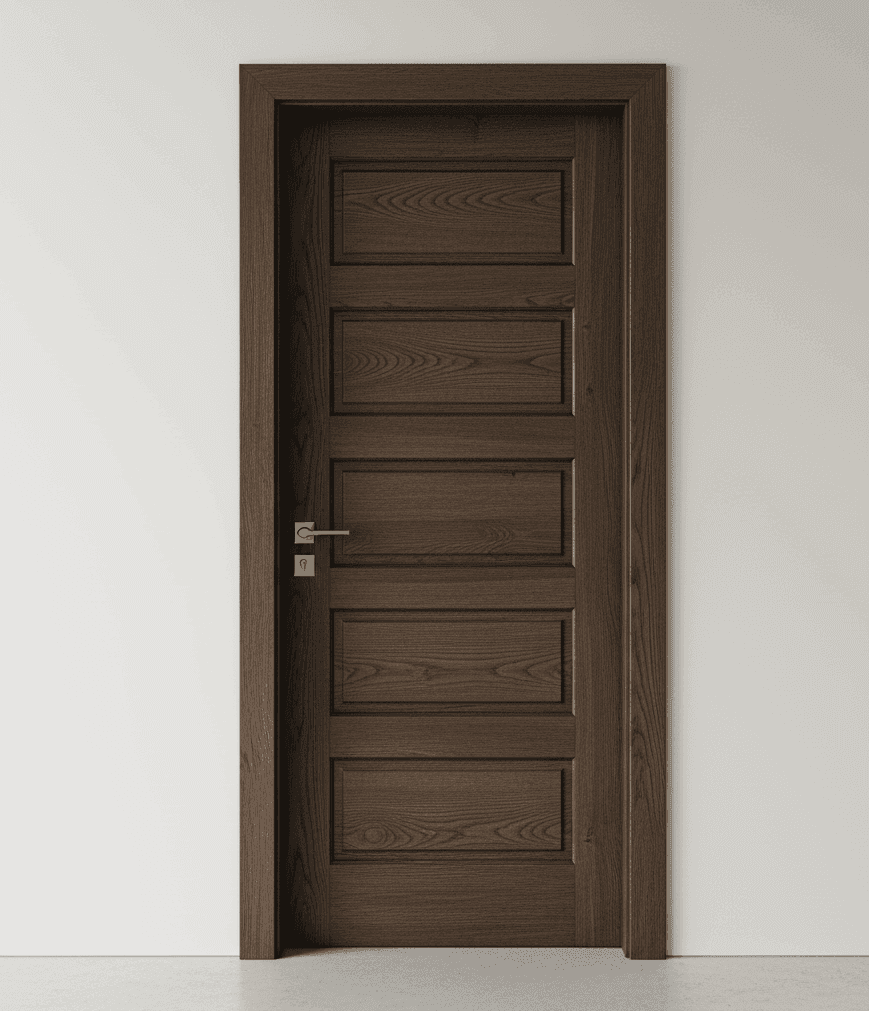
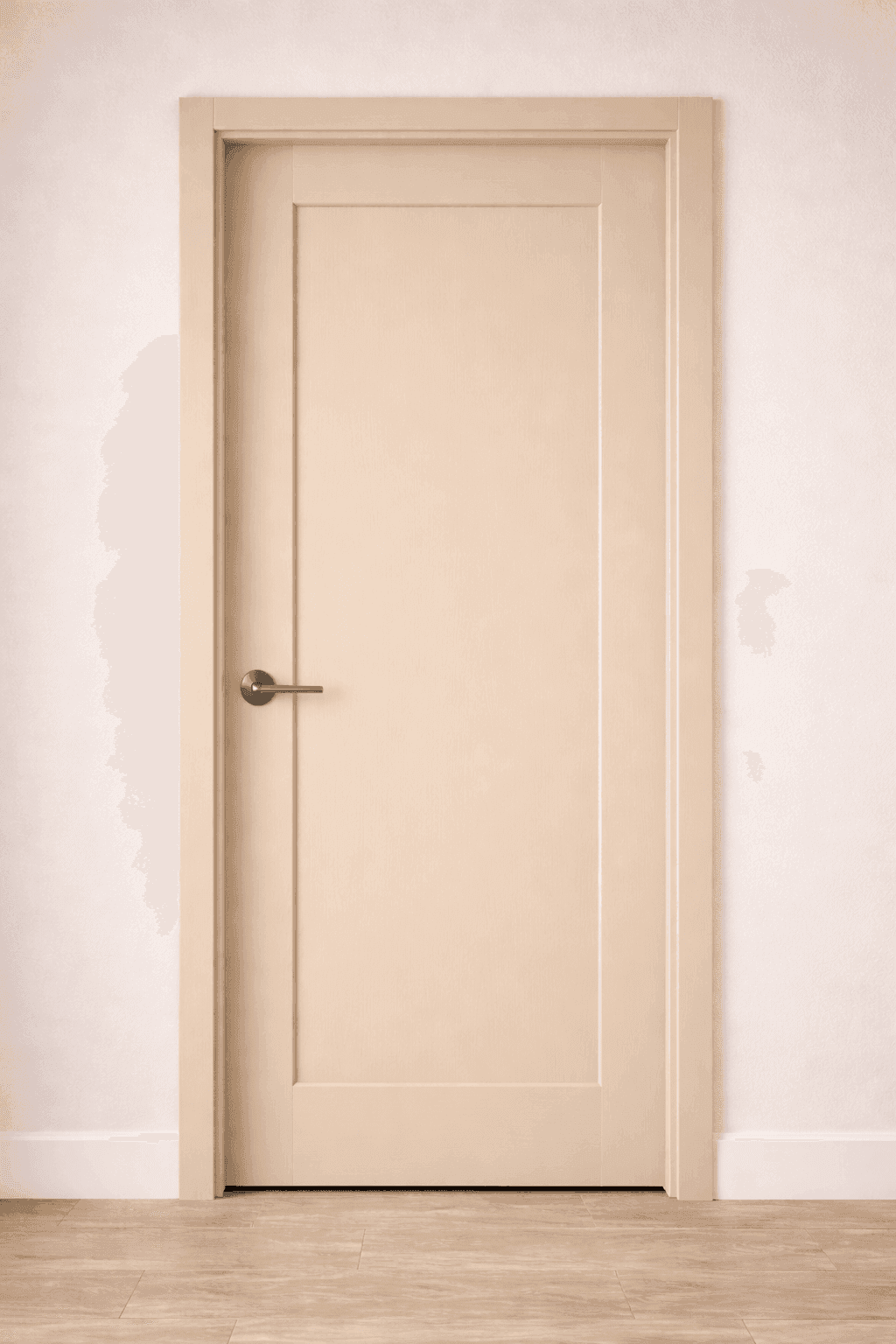
Panelled doors remain relevant because they offer structure without excess. In modern interiors, panels are flatter and cleaner, focusing on proportion rather than decoration.
Single-panel doors feel calm and uninterrupted, making them ideal for minimalist bedrooms. Two-panel designs add subtle rhythm without visual noise. Vertical panels draw the eye upward and help bedrooms feel taller, while horizontal panels create a grounded, relaxed mood.
Designers often use panelled doors when a bedroom needs quiet structure without competing with furniture or wall treatments.
Flush Bedroom Door Designs
Flush doors are defined by restraint. Their flat surface allows them to visually recede into the wall plane, making them ideal for contemporary homes.
In bedrooms, flush doors support calm by reducing visual interruption. They work especially well in compact apartments where reducing visual breaks helps spaces feel larger and more cohesive.
This style suits homes where the architecture and layout are meant to lead, not surface detailing.
Grooved and Linear Textured Bedroom Doors
Grooved doors introduce texture through fine linear detailing rather than depth. Vertical grooves subtly enhance height perception, while horizontal grooves emphasise width and ease.
This design approach is popular in modern bedrooms where colour is kept minimal and texture carries visual interest. The key is discipline. Grooves should remain fine, evenly spaced, and secondary to the room’s overall calm.
Glass-Integrated Bedroom Door Designs
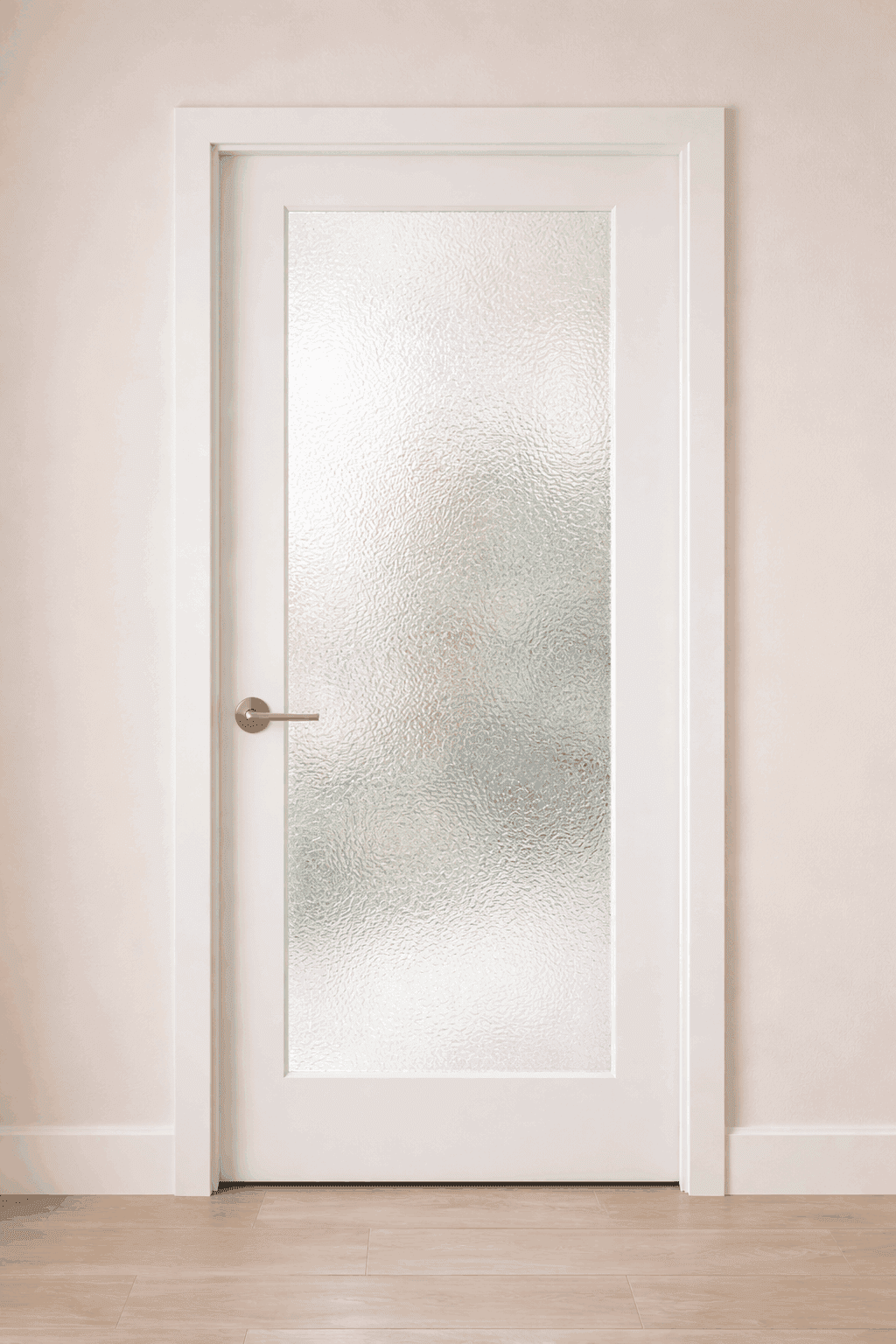
Glass in bedroom doors is never about transparency. It is about light movement.
Frosted or textured glass panels allow daylight to travel into bedrooms without compromising privacy. This is particularly effective in urban homes where bedrooms borrow light from corridors or adjacent spaces.
Designers favour narrow inserts or upper sections to keep the door visually light while maintaining enclosure.
Concealed and Hidden Bedroom Doors
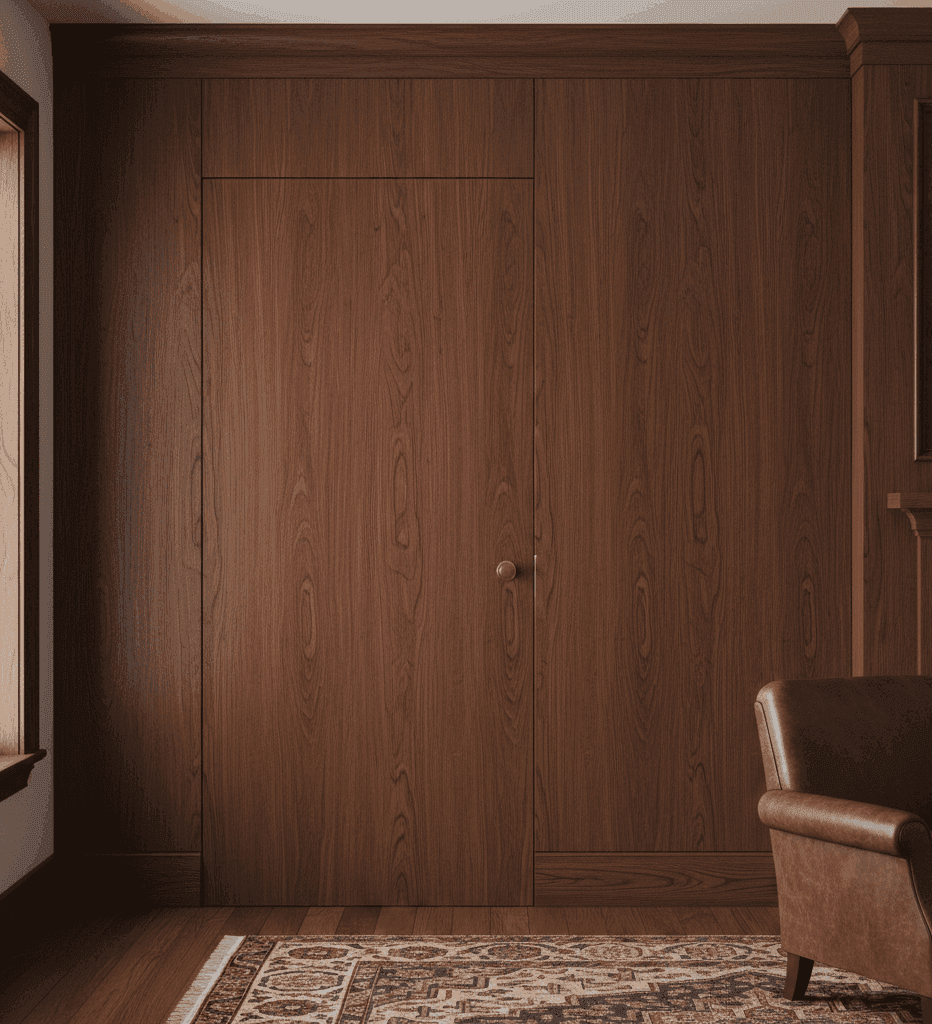
Concealed doors align with wall finishes to reduce visual breaks. In bedrooms, this creates a sense of architectural continuity and visual calm.
This approach works especially well when doors sit between wardrobes, wall panels, or feature walls. The door becomes part of the surface rather than a separate object, reinforcing serenity.
Bedroom Door Designs Based on Opening Mechanism
Once appearance is defined, function becomes the next layer of decision-making.
Hinged Bedroom Doors
Hinged doors remain the most common bedroom choice because they provide a clear sense of closure and privacy. Psychologically, hinged doors feel secure and familiar.
From a design perspective, they offer flexibility. Hinged doors support almost every appearance style and work well across bedroom sizes, making them a reliable and adaptable option.
Sliding Bedroom Door Designs
Sliding doors change how space is perceived. By eliminating the swing arc, they reduce spatial interruption and allow smoother circulation.
In bedrooms, sliding doors are often used where space is limited or where the door connects to dressing areas or balconies. Visually, they feel lighter and more contemporary, supporting openness without sacrificing privacy.
Pocket Bedroom Doors
Pocket doors disappear completely when open, making them the most visually discreet option. They are often associated with refined modern interiors because of the seamless experience they create.
In bedrooms, pocket doors help maintain visual calm and allow rooms to function without visible barriers when open.
Double and Bi-Fold Bedroom Doors
Double and bi-fold doors are typically used in larger bedrooms or master suites. They create flexibility between sleeping and dressing zones.
When open, they invite light and movement. When closed, they offer clear separation. This dual behaviour suits bedrooms that shift between private and semi-open use.
Bedroom Door Designs Based on Finish and Colour
Finish and colour refine the design. They should always support form and function.
Light and Neutral Bedroom Door Finishes
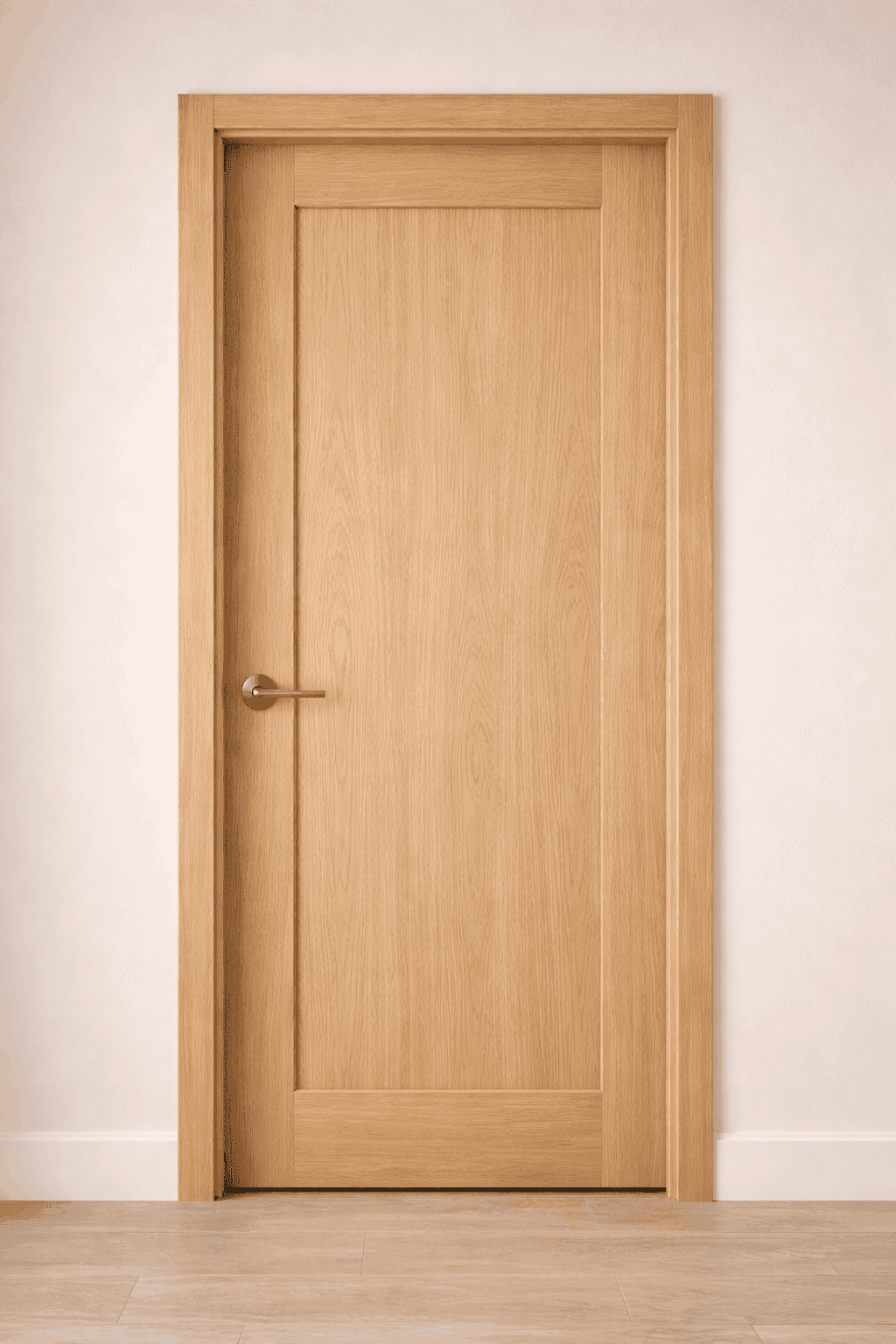
Light finishes help bedrooms feel open and restful. Whites, soft greys, beige tones, and light wood shades reflect light and reduce visual weight.
These finishes are especially effective in compact bedrooms or rooms with limited daylight. They also offer long-term flexibility as interior palettes evolve.
Dark and Statement Bedroom Door Finishes
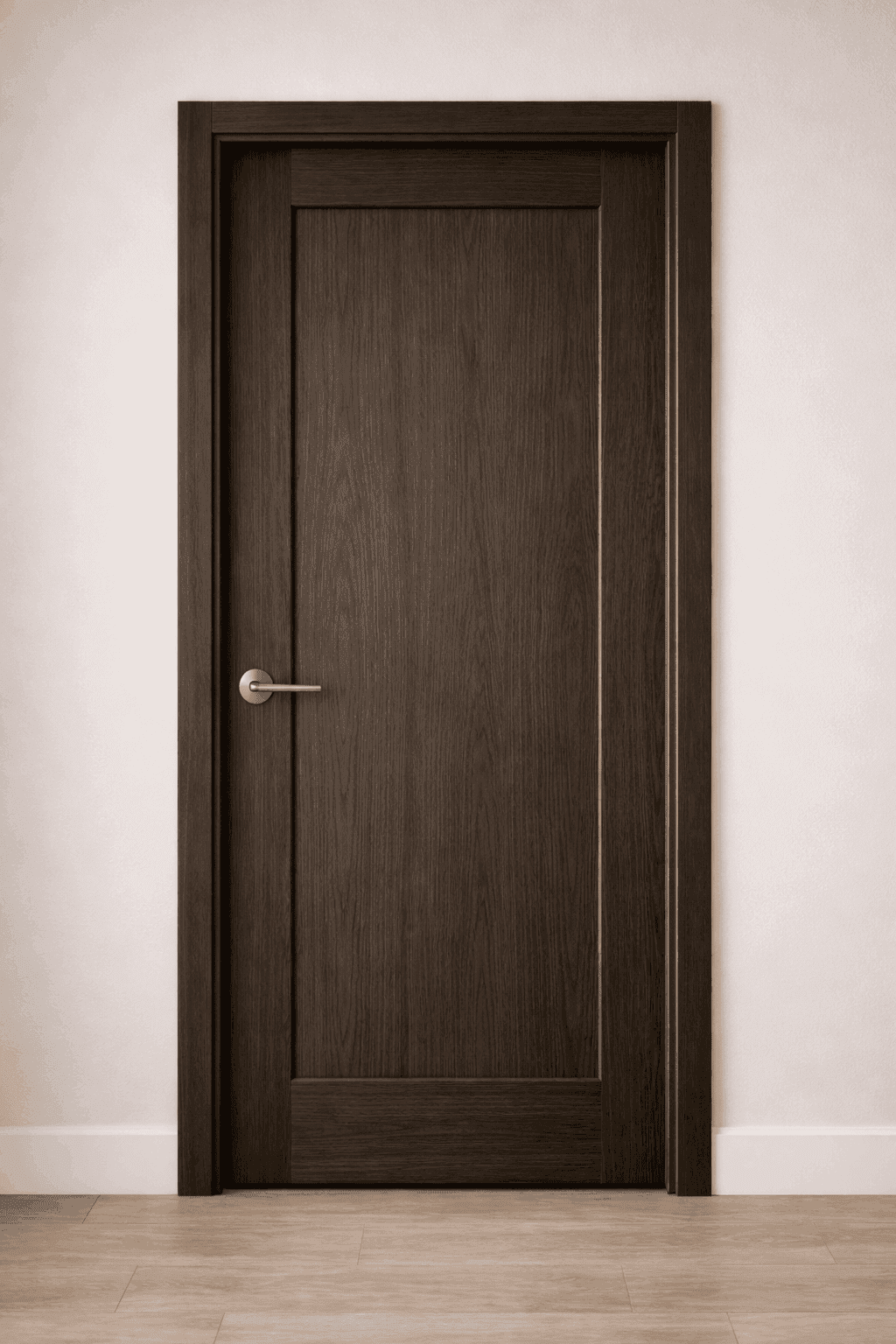
Darker finishes add depth and definition. Charcoal, deep brown, navy, and muted green tones bring contrast and structure.
In bedrooms with sufficient lighting, darker doors feel grounded and intentional rather than heavy. Balance with lighter walls and soft furnishings is essential.
Muted Colour Doors for Bedrooms
Muted colours introduce personality without disturbance. Shades like sage green, dusty blue, greige, and taupe support calm and work beautifully in bedrooms.
These colours are often chosen for master bedrooms and guest rooms where subtle individuality is desired.
Bedroom Door Design Logic by Bedroom Type
Not all bedrooms function the same way, and experienced designers rarely apply a single door strategy across every room. Door design should subtly respond to who uses the bedroom and how it is experienced daily.
Master Bedroom Door Design
The master bedroom demands the highest level of privacy and psychological separation. Doors here are designed to feel grounded and reassuring rather than visually expressive.
Designers typically favour:
Solid-looking appearances that convey enclosure
Muted or neutral finishes that support rest
Designs that visually blend with walls or wardrobes
The goal is to create a quiet threshold that reinforces the sense of retreat.
Guest Bedroom Door Design
Guest bedrooms benefit from neutrality and adaptability. The door should feel welcoming without asserting a strong personality.
Design logic here focuses on:
Familiar opening styles
Calm finishes that suit a wide range of interiors
Visual simplicity that does not overpower the room
A well-chosen guest bedroom door feels considerate rather than personalised.
Children’s Bedroom Door Design
In children’s bedrooms, visual softness and clarity take precedence. Doors should feel approachable and easy to understand, avoiding heavy or dramatic expressions.
Designers often lean towards:
Simple appearances without excessive detailing
Lighter or mid-tone finishes
Designs that feel friendly rather than formal
As children grow, neutral and restrained door designs adapt more easily to changing tastes.
Elder’s Bedroom Door Design
Bedrooms for elders prioritise familiarity, clarity, and ease of perception. Doors here should feel intuitive rather than experimental.
From a design standpoint:
Conventional opening styles feel more comfortable
Overly concealed or visually complex designs are avoided
Visual contrast is used carefully to ensure clarity
The emphasis is always on comfort and confidence rather than novelty.
How Bedroom Doors Should Relate to Wardrobes
Bedroom doors and wardrobes occupy the same visual zone, yet they are often designed in isolation. This can create unnecessary visual clutter.
Experienced designers approach doors and wardrobes as part of a single composition.
Visual Alignment and Continuity
When door and wardrobe finishes align, the room feels calmer and more cohesive. This does not mean they must be identical, but they should belong to the same visual family.
Misaligned tones or competing textures often make bedrooms feel busier than they are.
When Blending Works Best
Blending door finishes with wardrobes works particularly well in:
Compact bedrooms
Minimalist interiors
Rooms where storage occupies a large visual footprint
Here, visual continuity helps the room feel larger and more composed.
When Subtle Contrast Is Acceptable
In larger bedrooms, slight contrast can work if it is intentional and restrained. The key is hierarchy. One element should lead, while the other supports.
Designers avoid letting both the door and wardrobe compete for attention.
How Natural Lighting Shapes Bedroom Door Design
Light determines how a door is experienced throughout the day.
Bedrooms with abundant daylight can support darker finishes and textured detailing without feeling enclosed. Natural light softens depth and contrast.
Rooms with moderate light benefit from mid-tone colours and matte finishes that adapt well from morning to evening.
Bedrooms with limited daylight require lighter finishes and minimal detailing to avoid visual heaviness. In such spaces, simplicity becomes functional, not just aesthetic.
Light direction also matters. East-facing rooms enhance warm tones, while north-facing rooms benefit from slightly warmer door finishes.
The Psychological and Acoustic Role of Bedroom Doors
Beyond aesthetics, bedroom doors play a subtle psychological and acoustic role.
Even before a door is closed, its appearance influences how quiet and private a space feels.
Perception of Sound Separation
Doors that appear solid and visually grounded are subconsciously associated with better sound insulation. Lightweight or overly decorative designs often feel less secure, even if they function adequately.
This perception matters in bedrooms, where a sense of quiet is as important as actual sound control.
Opening Type and Privacy Perception
Hinged doors tend to feel more private and familiar, while sliding doors feel lighter and more open. Neither is inherently better, but the choice affects how enclosed the bedroom feels psychologically.
Designers choose opening styles based on how much separation the occupant expects to feel.
Bedroom Door Trends Designers Are Cautious About
Not every trend suits bedroom environments. Experienced designers often deliberately avoid certain styles, even when they are popular.
High-Gloss Bedroom Doors
Highly reflective finishes draw attention and amplify light, which can disrupt the calm atmosphere bedrooms require.
Overly Decorative or Cutwork Designs
Excessive detailing may look impressive initially but often feels intrusive in private spaces over time.
Strong Contrast Doors That Demand Attention
Doors that sharply contrast with walls can dominate the bedroom visually, shifting focus away from rest and comfort.
Statement Doors in Compact Bedrooms
In smaller rooms, statement doors reduce visual breathing space and make the room feel tighter than it is.
Design restraint consistently outlasts trends in bedroom interiors.
Final Thoughts on Modern Bedroom Door Design
A bedroom door should never compete with the room it serves. The best bedroom door design ideas support privacy, comfort, and calm without demanding attention.
Modern bedroom door design is about balance. Between openness and enclosure. Between visibility and discretion. Between expression and restraint.
When appearance, opening type, finish, and lighting are considered together, the result is not just a door, but a thoughtful threshold into rest.
Frequently Asked Questions on Bedroom Door Design
What type of bedroom door design works best for small rooms?
Minimal designs such as flush or subtly panelled doors in light or mid-tone finishes help reduce visual breaks and make small bedrooms feel more open.Are sliding doors suitable for bedrooms?
Yes, especially where space is limited or where the door connects to dressing areas. The choice depends on the level of privacy desired.Should bedroom doors match wall colour or contrast it?
Matching or closely related tones create visual calm. Strong contrast should be used selectively and only in well-lit, spacious bedrooms.How important is lighting when choosing bedroom door finishes?
Lighting significantly affects how door finishes are perceived. Natural light, direction of light, and time of day all influence colour and texture visibility.
Similar Topic