Granite vs Quartz: A Comprehensive Cost Comparison Guide for 2026
How to Guides





When homeowners start planning countertops they often type variations of “granite vs quartz price” into a search engine looking for a quick number. That’s understandable, but the real question isn’t which material is cheaper today it’s which material gives the best value for your needs. Price is an outcome of many design and technical choices; the long-term value depends on performance, maintenance, aesthetics, and how the material fits your kitchen’s layout and use patterns.
This guide walks through the factors that influence cost, the differences between granite and quartz in construction and behaviour, and practical decision frameworks designers use when advising clients.
Granite vs Quartz Countertops
The search for granite vs quartz price is really about value, not just cost.
Granite is a natural stone, offering unique patterns and strong heat tolerance, with some ongoing maintenance considerations.
Quartz is an engineered surface, valued for consistency, low maintenance, and predictable visual results.
Final investment is influenced by slab selection, fabrication complexity, layout, detailing, and installation, not just the material itself.
Granite suits homes that value natural variation and character.
Quartz suits kitchens that prioritise uniformity, ease of maintenance, and contemporary aesthetics.
Neither material is universally better. The right choice depends on kitchen usage, layout complexity, aesthetic goals, and long-term comfort.
In essence:
The granite vs quartz decision should be made based on how the kitchen will be used and lived in, rather than focusing only on price comparisons.
Quick primer: what are granite and quartz?
Granite is a natural igneous stone quarried as large slabs. Each slab has unique veining, pattern, and mineral variation. It is cut, polished, and installed as a natural slab.
Quartz (engineered stone) is a manufactured surface: natural quartz crystals are combined with resin binders and pigments, then compressed into engineered slabs. The result is a consistent, non-porous material available in a wide range of colours and patterns.
These fundamental differences, natural variation vs engineered consistency underlie nearly every other comparison.
What “granite vs quartz price” searches really mean
People asking about price generally want to understand:
How much will selection, fabrication, and installation add up to?
Which material gives better value for daily life and resale?
What hidden costs or maintenance obligations should I expect?
Answering those questions requires assessing cost drivers, not quoting numbers. The next section breaks those drivers down.
The cost drivers: what truly shapes the final cost
Material selection & rarity
For granite: slab rarity and visual character (unique veining, exotic stones) increase selection effort and perceived value.
For quartz: colour consistency and specialty finishes (e.g., translucent, textured) can increase slab cost.
Slab yield and waste
Granite slabs are natural and irregular; matching patterns across long runs or islands may require extra slabs and produce more waste.
Quartz slabs are manufactured uniformly, allowing tighter planning and less waste for matched spans.
Fabrication complexity
Cutouts for sinks, cooktops, integrated drains, and complex edge profiles add fabrication time and skill cost for both materials.
Granite’s natural fissures or veining can require more careful routing; quartz’s uniformity can simplify some processes.
Edge profiles & detailing
Complex edges (waterfall, ogee, knife edge) increase fabrication time. The material’s hardness affects tooling wear and labour intensity.
Seaming and joins
Large islands or long counters may need seams. The visibility of seams depends on slab pattern quartz seams often blend more uniformly; granite seams can be more or less visible depending on pattern and placement.
Transportation and handling
Heavy slabs require careful handling, specialised transport and protection. Remote locations or difficult access increase logistics cost.
Installation
Leveling, support framing, anchoring heavy slabs, and site cutting affect installation time and complexity. Kitchens with islands or complex layouts raise on-site effort.
Finishes and treatments
Honed, leathered or specialised surface finishes (some available for both materials) add to processing time and cost.
Long-term maintenance expectations
While not an upfront cost, expected maintenance (sealers for some granites, potential repairs) influences perceived lifecycle cost.
Understanding these drivers lets you predict relative investment without relying on static price lists.
Material comparisons: performance and implications for cost
Visual character & design flexibility
Granite
Strength: unique natural patterns each slab is a one-off; exotic veining can become the focal point.
Design impact: matching multiple pieces to keep continuous flow is harder; slabs with strong movement are often used sparingly (e.g., an island only).
Quartz
Strength: uniformity and breadth of palettes you can plan exact colour and pattern continuity across surfaces.
Design impact: easier to create visual consistency between counters, islands, and splashbacks.
Cost implication: If you want a matched, uniform look across long spans, quartz often reduces selection and waste costs. If you want a statement natural slab, granite can be worth the selection and yield trade-offs.
Durability: heat, scratches, and daily wear
Granite
Naturally hard and heat tolerant. Localised extreme heat is still discouraged but everyday hot pots on trivets are generally safe.
Variability in hardness across slabs; some natural fissures can require care.
Quartz
Highly scratch and stain resistant due to resin content and non-porous surface. Heat tolerance is good but not equal to stone extreme, direct heat can damage resin components.
Cost implication: Quartz often reduces lifecycle cost from stains and maintenance in busy kitchens. Granite’s heat tolerance may be beneficial in heavy cooking scenarios, but potential repairs for fissures or chips may be costlier.
Porosity and maintenance
Granite
Naturally porous to varying degrees. Some granites are denser than others; regular sealing is recommended for many types to control staining.
Quartz
Low to non-porous; generally does not require sealing and resists liquids and staining well.
Cost implication: Granite’s sealing and periodic upkeep add time and small recurring expense; quartz requires less routine maintenance, which some homeowners treat as “value.”
Repairability
Granite
Can often be repaired invisibly with skilled stonework for chips or cracks, but repairs can be specialised and visible depending on pattern.
Quartz
Repairable, but matching the engineered resin and finish across a patch can be difficult; some repairs are more noticeable.
Cost implication: Both materials are repairable, but repair complexity and success depend on the damage and slab pattern consider access to skilled installers.
Lifespan and visual ageing
Granite
Ages naturally; many homeowners appreciate how the stone develops patina and character.
Quartz
Maintains a stable, consistent appearance over time and resists fading from most household conditions.
Cost implication: Granite’s aesthetic aging is often valued; quartz’s stability appeals if you want a consistent, timeless look.
Environmental and sustainability considerations
Granite
Natural extraction has environmental impact (quarrying, transport). Local sourcing helps reduce embodied energy.
Quartz
Engineered manufacturing consumes energy and resin binders; however, much quartz uses a high proportion of natural quartz (some manufacturers also use recycled content).
Cost implication: Sustainability priorities may influence perceived value; material choice can affect lifecycle assessments and homeowner preferences.
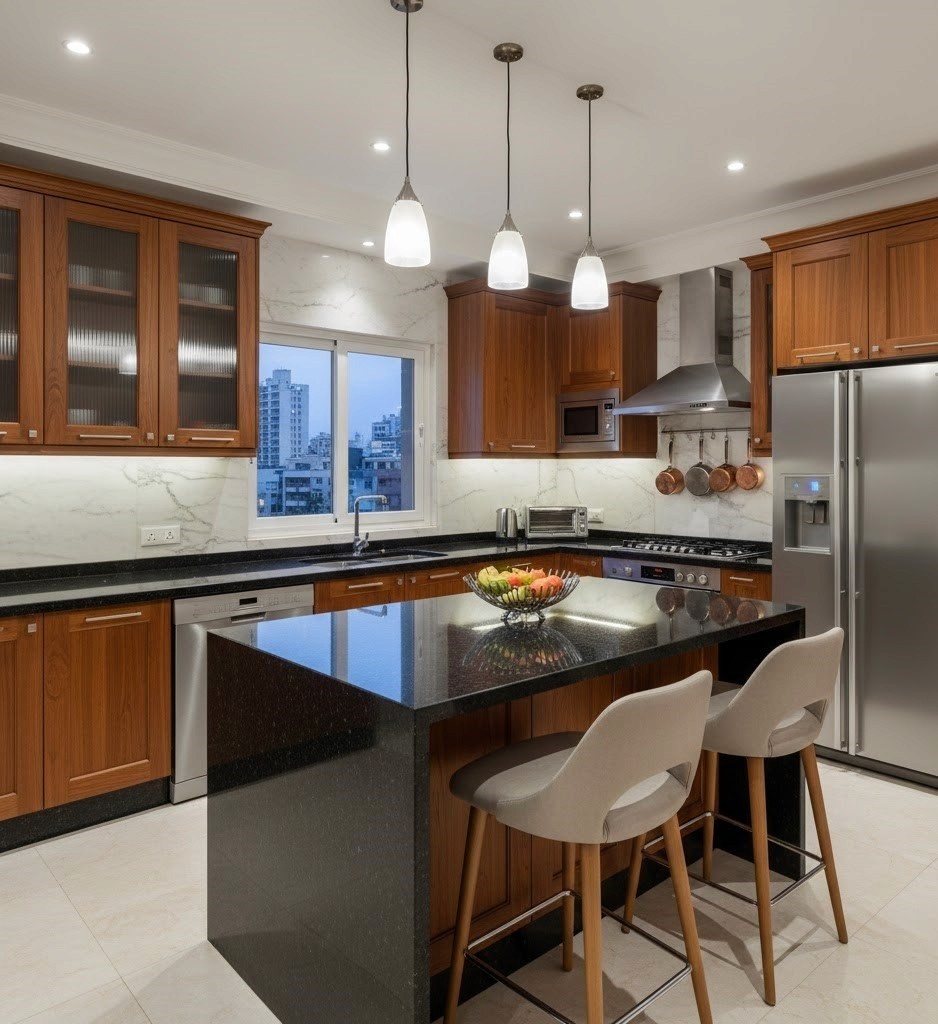
Fabrication & installation realities that affect final bills
Templating & precision: Modern fabrication requires precise templating. Complex cutouts, undermount sinks, and integrated drains require accurate measurements and on-site adjustments.
Support structures: Large slabs and waterfall edges need reinforced cabinetry or substrate support hidden structural work increases the install scope.
Seam placement strategy: For granite, seam placement must consider pattern flow. For quartz, seams are less visually disruptive but still a structural necessity for spans beyond slab lengths.
Site cutting vs shop cutting: Cutting on site increases time and potential for waste; good preplanning reduces surprises.
All these practical issues are handled by good fabricators; your final invoice reflects not only slab cost but the planning, skill, and risk mitigation built into the project.
Where granite or quartz adds perceived value (resale & market fit)
Granite
Often perceived as a premium, natural choice; unique slabs can be selling points on properties seeking character or traditional luxury.
Quartz
Perceived as modern, hygienic, and low-maintenance attractive to buyers wanting contemporary, easy-care kitchens.
Value is local and buyer dependent: high-end bespoke granite suits certain buyers; consistent quartz surfaces appeal to others. Think about the likely buyer profile for your home when choosing.
Suitability by kitchen type and lifestyle
Heavily used family kitchens
Quartz’s low-maintenance, stain resistance, and visual consistency make it a practical choice for busy households.
Chef kitchens or high-heat usage
Granite’s natural heat tolerance and stone character suit serious cooking spaces but always use trivets and avoid direct flame contact.
Open plan homes
Quartz’s consistency helps create a unified look across open layouts where counters integrate visually with living areas.
Traditional or heritage homes
Granite’s natural stone character matches traditional aesthetics and period materials.
Edge cases & specialty considerations
Large islands with waterfall edges
Quartz is often favoured for waterfall continuity. Granite can be used but may require matching slabs and more structural coordination.
Backsplash to ceiling
Quartz allows matching slab backsplashes easily; granite can be dramatic but requires careful slab selection to avoid jarring pattern changes.
Laundry, wet rooms, outdoor kitchens
Granite is more tolerant of outdoor thermal cycles; quartz manufacturers publish guidance on outdoor suitability check specific material properties.
Lifecycle costs: maintenance expectations (non-numeric)
Granite
Periodic sealing and occasional polishing may be recommended depending on stone density. Stain repair and resealing are maintenance items to plan for.
Quartz
Minimal routine maintenance (regular cleaning with mild cleaners), occasional specialist polishing for scratches if needed.
Over the lifetime of the surface, quartz often requires less ongoing attention; granite may need periodic intervention but can last a lifetime with care.
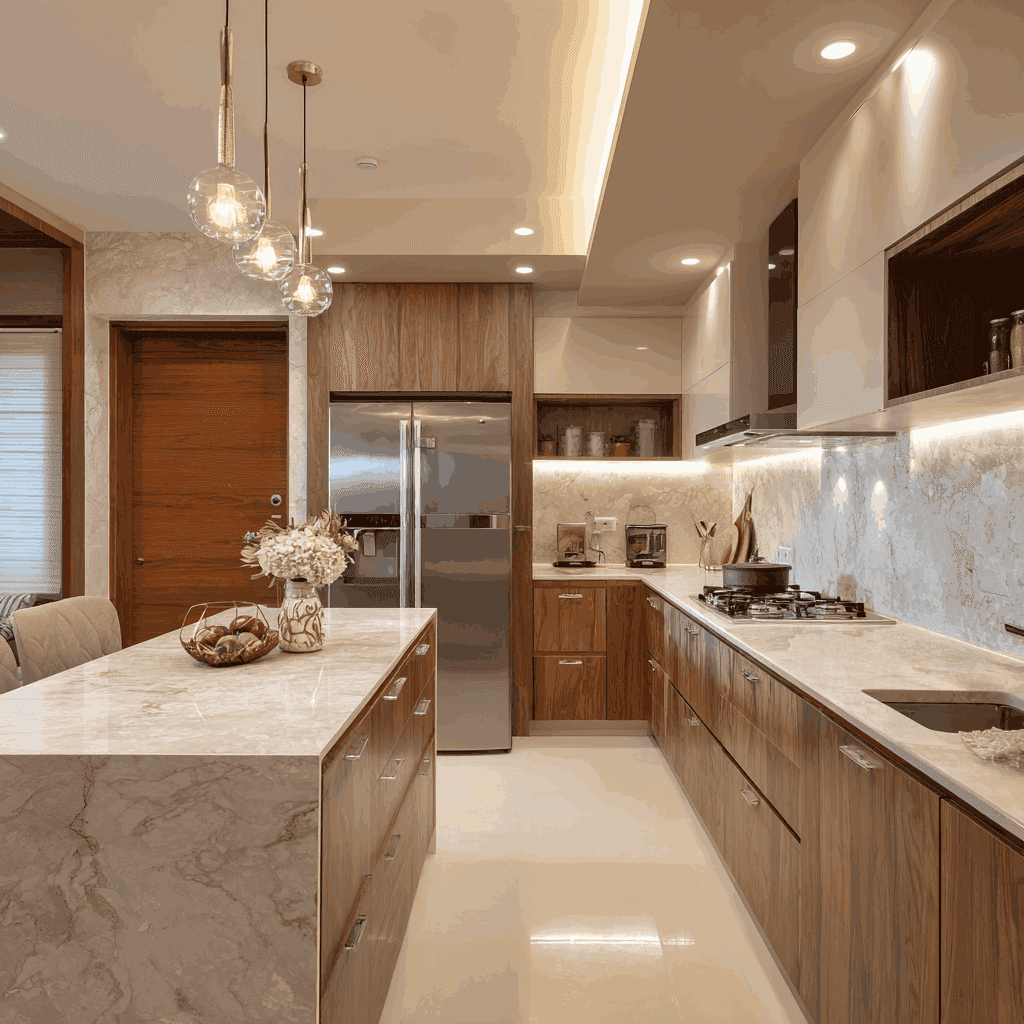
Decision framework: how designers recommend choosing
Start with use case
How much cooking happens? Are you heavy on oils, colours, and daily spills? Do you have kids or entertain often?
Decide on visual priority
Do you want a single, striking natural slab or a controlled, consistent palette?
Consider layout complexity
Long spans, islands, and waterfall edges favour quartz for consistency. Small runs or a single island can be dramatic in granite.
Plan for long-term maintenance comfort
If you prefer low maintenance, quartz reduces chores. If you appreciate stone upkeep and aging, granite rewards care.
Evaluate fabrication logistics
Slab availability, matchability, and the skill of local fabricators affect both outcome and timeline (logistics details, not schedule).
Factor resale and market
Consider what buyers in your area expect from kitchens: natural stone or engineered convenience?
Sustainability preferences
If embodied energy and quarry impacts matter, ask suppliers about quarry locations, recycled content (for quartz), and lifecycle statements.
Use this sequence to weigh tradeoffs rather than aiming for a single material “winner.”
Practical selection checklist (what to confirm with your fabricator/design team)
Slab sample under your kitchen lighting (morning and evening)
Mock-up of seam locations and edge profile samples
Confirmation of sink/hob cutout tolerances and support framing
Recommended sealant or maintenance schedule (for granite)
Warranties and workmanship guarantees (fabrication & installation)
Transport and site access requirements
How patching/repair is handled in case of accidental damage
These confirmations avoid surprises and ensure the material choice fits the project realities.
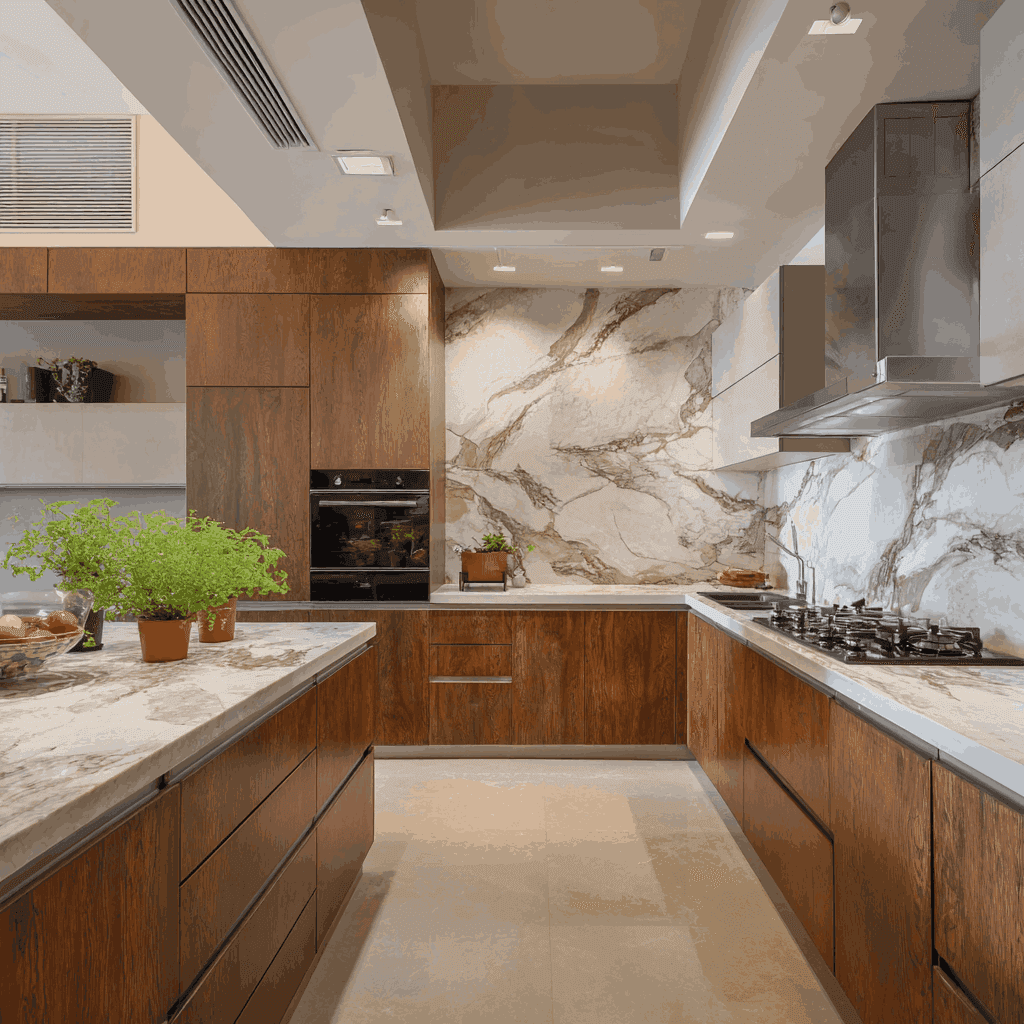
Closing thoughts
Searching for “granite vs quartz price” is a sensible beginning, but the smarter question for homeowners is: Which material gives the right combination of design, durability, and lifecycle value for my home? That choice depends on use patterns, required maintenance, layout complexity, and aesthetic priorities.
Choose quartz if you prioritise uniformity, low maintenance, and predictable seams across long runs.
Choose granite if you value natural uniqueness, stone character, and heat resilience and you accept the selection, sealing, and matching trade-offs.
Both materials are excellent when selected and installed with intention. Work with an experienced designer and fabricator to match material properties to your kitchen’s everyday reality that is the best way to translate the “granite vs quartz price” search into a satisfying, long-term investment.
Frequently Asked Questions
1. Are quartz countertops better than granite?
“Better” depends on priorities. Quartz offers consistent looks and low maintenance; granite offers natural uniqueness and potentially better heat tolerance. The right choice depends on aesthetics, use and maintenance comfort.
2. Which lasts longer, granite or quartz?
Both can last decades when properly installed and cared for. Quartz resists stains and fading; granite is very durable but may need occasional sealing depending on the stone.
3. Do granite countertops require sealing?
Many granites benefit from periodic sealing to control staining; sealing frequency depends on stone density and kitchen use. Your fabricator will advise.
4. Can quartz withstand hot pots?
Quartz resists typical kitchen use but prolonged direct high heat can damage resin components. Use trivets or hot pads for safety.
5. Are seams more visible in granite than quartz?
It depends. Quartz seams are typically less visible due to uniform patterning. Granite seams visibility depends on slab patterns and how well the fabricator matches veining.
6. Which is better for island waterfall edges?
Quartz is often chosen for waterfall continuity due to easier visual matching and slab availability, though granite can be used with careful slab planning.
7. Is one material better for resale value?
Local market preferences dictate resale impact. Both materials are accepted and respected; aligning with buyer expectations matters more than universal rules.
Similar Topic