Turnkey Interior Design vs Traditional Interior Design: Which Is Right For Your Home?
How to Guides
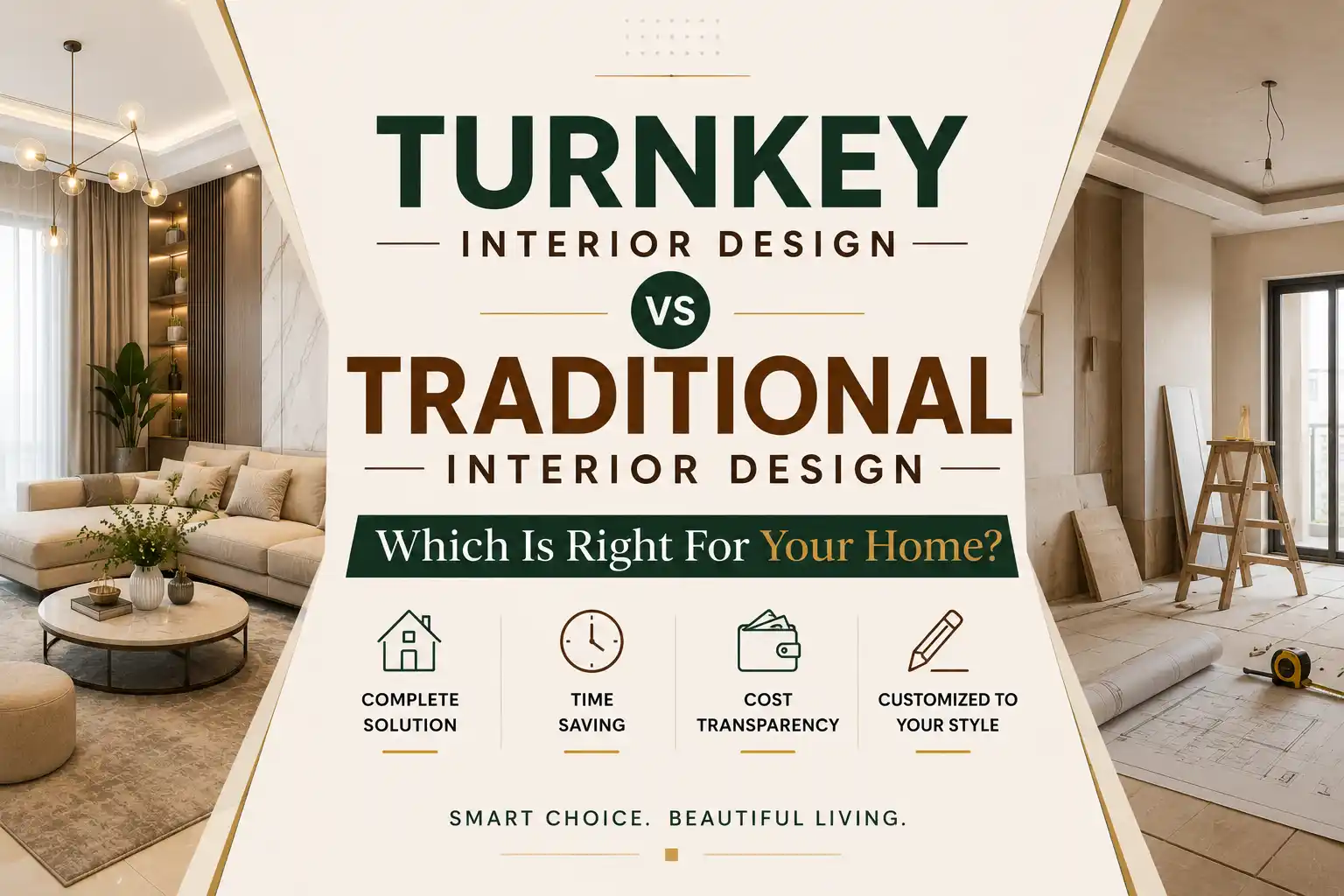




Are you planning to do interior design for your home? As a homeowner, one of the hardest decisions you face is whether to choose a turnkey interior design or a traditional one. The main differences between the two lie in who manages the project, how much time you need to invest, and how much responsibility you want to take on throughout the project.
For instance, if you are working with a tight schedule and prefer an end-to-end service, a turnkey interior is considered the best choice. In this model, the interior design firm handles everything from design and material procurement to execution and final handover, which saves a significant amount of time.
On the other hand, traditional interior design involves you in every decision, negotiating with vendors, and overseeing various aspects of the project yourself, giving you complete control from start to finish.
Understanding the strengths and limitations of both approaches can help you avoid unnecessary expenses, project delays, and miscommunication.
What Is Turnkey Interior Design?
Turnkey interior design is an end-to-end project model in which an interior design firm takes full responsibility for designing, managing, and executing your home's interiors. Instead of coordinating with multiple contractors, suppliers, and vendors, you work with one team that takes care of the entire process of your project.
The scope of a turnkey interior project includes concept design, material selection, bill of quantities (BOQ) preparation, minimal electrical work, factory manufacturing, installation, and final handover. Once the design is approved, the firm handles procurement, scheduling, quality control, and on-site execution even without your presence.
In a turnkey model, you pay an interior design firm and walk into a finished home; you don’t need to visit the site regularly, no vendor follow-ups, no material sourcing on your own.
This approach offers accountability managed by an interior firm rather than homeowners, making communication easier and reducing the risk of delays or coordination issues.
What Is Traditional Interior Design?
Traditional interior design involves your presence at every level of the project, and you have complete control throughout your home renovation or furnishing project. In this approach, you hire an interior designer to develop the creative aspects of the project, including concept designs, mood boards, layouts, material recommendations, drawings, and specifications.
Once the design phase is complete, you are responsible for bringing the design to execution. This often means hiring and coordinating contractors, carpenters, electricians, choosing materials and appropriate appliances, furniture vendors, and other service providers. Instead of working under a single contract, you will manage multiple agreements, including the designer's fee and payments to individual contractors and suppliers.
With traditional interior design, you have flexibility, but you need to coordinate with contractors and vendors yourself.
This model works well if you enjoy being actively involved in decision-making, want complete control over vendor selection, or already have a trusted contractor. However, it also requires excess time, coordination, and oversight to keep the project on schedule.
Turnkey vs Traditional Interior Design: Key Differences
Parameter | Turnkey Interior Design | Traditional Interior Design |
Scope | Design, Procurement, Execution, and final handover. | Design planning only; execution can be handled separately. |
Contracts | Single contract with only the interior design firm | Involves multiple contracts with the contractor and vendors. |
Coordination | The project was entirely managed by an interior design firm | Managed by the house owner while coordinating with contractors and multiple vendors |
Timeline | Runs on a planned schedule with fixed deadlines | Depends on the contractor and vendor coordination. |
Accountability | The interior design firm is responsible for the entire project | Responsibility is often shared among the homeowner, designer, contractor, and vendors. |
Cost Structure | Usually offered as a fixed-price package with scheduled payments. | Separate payment for each service provider. |
House Owner involvement | Lesser or moderate involvement while designing and selecting materials and furniture. | The house owner is required to be involved in every step of the project, from planning to execution, coordinating with contractors and vendors. |
Best For | Busy professionals, NRIs, and first-time homeowners | Homeowners seeking control or phased execution |
Is Turnkey Interior Design More Expensive Than Traditional?
Many homeowners assume that turnkey interior design is more expensive than traditional interior design because it offers end-to-end project management. However, that's not always true. While the upfront quote may appear higher, a turnkey model can often reduce your overall project cost through bulk material procurement, complete execution, and better coordination between design and construction teams.
When you choose a turnkey provider, material specifications, finishes, hardware, and furnishings are planned, and pricing is estimated from the outset. This reduces the risk of unexpected upgrades, duplicate materials, or unexpected expenses during execution. Since a single company manages the entire project, there is also less chance of miscommunication that can lead to delays or rework.
Meanwhile, a traditional interior design project involves a designer's fee, material costs, transportation, contractor markups, separate vendor margins, and labour wages. These individual costs can add up as additional charges.
Hidden Costs In Traditional Interior Design
Even if the initial amount estimate seems affordable, traditional interior design projects can involve several hidden charges:
Rework and corrections - for example, if your contractor doesn't follow the designer's drawings or material specifications accurately, you may need to pay for modifications and rework.
Material procurement delays- when you are coordinating multiple suppliers, they can lead to delivery delays, affecting project timelines, and that may increase labour costs.
Multiple site visits - in traditional interior design, regular site inspections, vendor meetings, and follow-ups require your time and can result in indirect costs, especially for busy professionals.
Price overruns - while calculating the overall expenses, it is difficult to handle, separating pricing from designers, contractors, and vendors.
Material wastage - Poor coordination between teams can lead to ordering errors, excess materials, or last-minute replacements.
No single point of accountability - When unexpected issues arise, responsibility is often shared among multiple people, which makes problems harder and more expensive to resolve.
These hidden expenses can gradually increase your overall project cost, making a traditional interior design project more expensive than it initially appears.
Which Model Gets Your Home Done Faster?
Turnkey interior design is a preferred choice if you want to complete your home interiors within your expected timeline, as it is managed by an interior design firm from design through procurement, execution, and installation; multiple activities can run simultaneously. Material sourcing, furniture production, and on-site work are coordinated by a single team, helping to reduce delays and improve efficiency.
Whereas in a traditional interior design project, the process is often more sequential. The designer completes the plans; soon after, you need to hire contractors, coordinate vendors, select and understand materials, and monitor execution. Any delay in one stage can affect the entire project deadline.
In most cases, a turnkey project can be completed within a few months after the design is finalized, while a traditional project may take a significantly longer time duration due to coordination challenges and dependency on multiple service providers.
If you are an NRI or living outside the project location, turnkey interiors are often a great choice because they require minimal on-site visits and supervision.
Traditional Vs Turnkey Interior Designer
Traditional interior design is considered a good choice when you want high control over how your home is designed and executed. If you already have a trusted contractor, carpenter, or execution team, hiring a designer separately can give you the flexibility to work with the people that you already know and trust.
This approach works well if you prefer to complete your interiors in phases rather than all at once. For example, you may choose to finish essential areas first and add furniture, decor, or custom elements over time based on your expenses and priorities.
Traditional interior design is also ideal if you want to be actively involved in material selection, vendor negotiations, and day-to-day project decisions. You have the freedom to compare products, choose suppliers, and make changes throughout the process.
If you have previously worked with a designer whose style you like, you can continue using their design services while bringing in your own contractors and labour team for execution, giving you maximum flexibility and control all over the project.
Turnkey Interior Designer
Turnkey interior design is often the better choice when convenience, speed, and accountability are your top priorities. An interior design firm manages the entire project; you don't have to spend time coordinating contractors, vendors, and suppliers.
A turnkey interior design is ideal for completing the project within an expected timeline and avoiding any delays caused by vendor coordination issues. If you are an NRI or live in another city, the project can be managed remotely with minimal on-site visits and supervision.
Since it is your first time doing interior design, turnkey interiors can simplify the process by providing access to design, material understanding and selection, procurement, execution, and project management under one contract. Instead of dealing with multiple service providers, you will have a single point of contact for updates, approvals, and issue resolution.
Most importantly, turnkey interiors are a good fit if you value your time and prefer a smooth experience over having complete control over every vendor and purchasing decision.
Planning Your Home Interiors? Get Expert Guidance from Tint Tone & Shade
Your choice entirely depends on how you want to spend your time, money, and energy during the interior design process. Turnkey interior design is often the best option if your priority is moving into a beautifully finished home on time, with one team handling everything from design to execution.
At Tint Tone & Shade, we provide complete interior design solutions for your every need. We specialise in delivering premium turnkey interior design that combines creativity, professional touch, and end-to-end service.
Our team ensures every detail is well-planned and executed, giving you a home that reflects your style while maintaining complete transparency about timelines, materials, and costs. Contact us today and bring your dream home to life.
Frequently Asked Questions
1. What does turnkey interior design include?
A turnkey interior design project covers everything from concept design and drawings to material procurement, civil work, furniture, lighting, and final styling. The homeowner receives a move-in-ready home without having to manage any individual vendor or contractor.
2. Is turnkey interior design worth it?
Yes, especially for homeowners who value time, accountability, and a timely process. While the upfront quote may appear higher than hiring a designer alone, the total cost often remains the same or lower when you factor in rework, delays, and coordination costs in the traditional model.
3. What is the difference between a turnkey contractor and an interior designer?
An interior designer creates the concept and specifications but typically does not manage execution. A turnkey contractor or full-service interior design firm handles both design and execution under a single contract, making it accountable for the outcome.
4. Which is better for flats in India, turnkey or traditional interior design?
For apartment interiors in metros like Chennai, Hyderabad, and Bengaluru, turnkey interior design tends to work better. Apartment projects have fixed scope, tight deadlines, and limited room for phased work, making the turnkey model's single-contract accountability reduce risk significantly.
5. Can I customize my design in a turnkey model?
Yes. Turnkey does not mean standard or pre-packaged. Most full-service interior design firms offer custom design as part of the turnkey structure. The difference is that they manage the full execution of your bespoke brief, not that they limit your design choices.
Similar Topic