False Ceiling Design Guide: Types, Cost & Materials
How to Guides
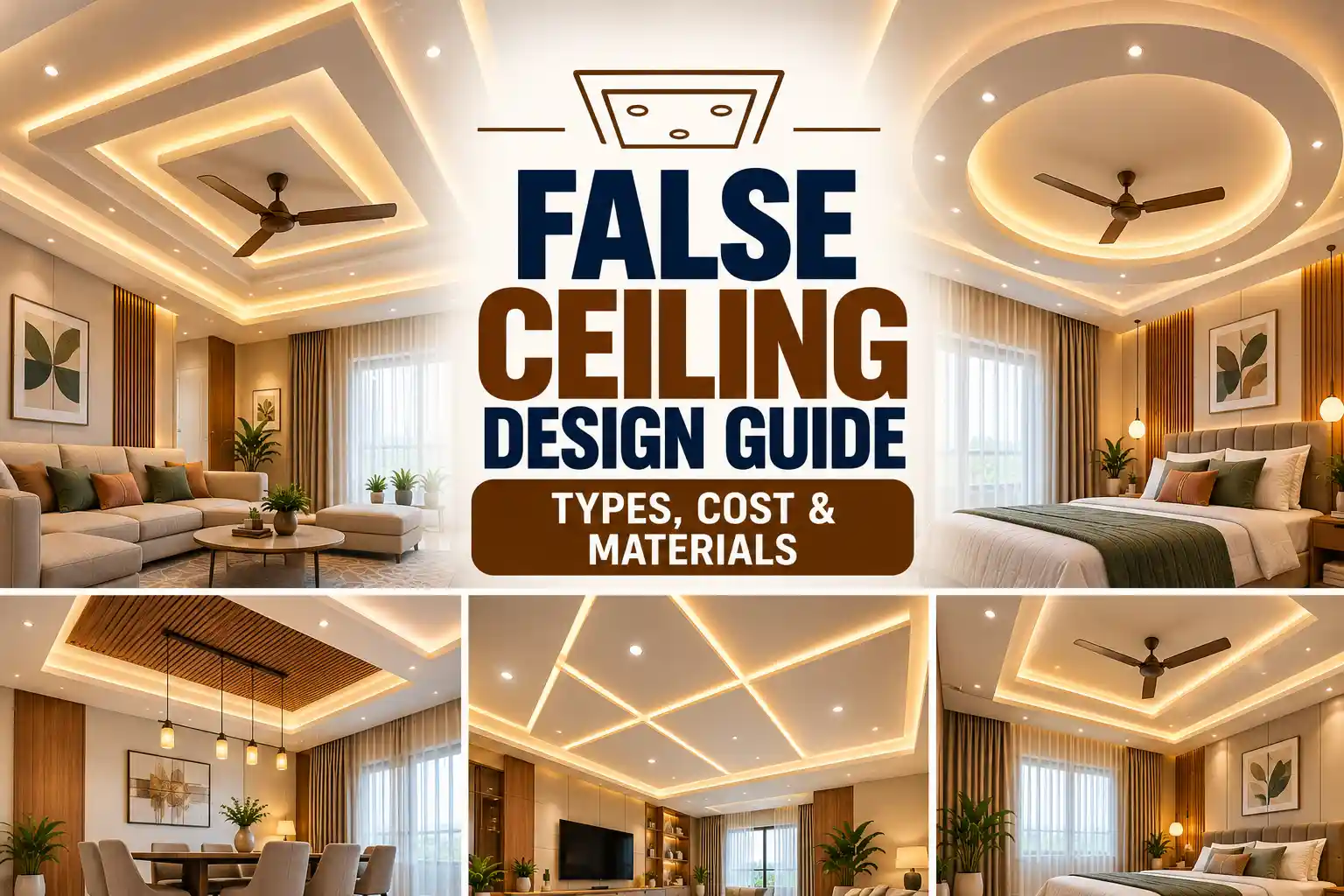




When you plan home interiors, you probably spend more time choosing the right furniture, colour, and finishes. But have you thought about what happens when you look up? You design your home with selected decor but leave the false ceiling empty, which makes your home feel incomplete.
A right false ceiling can completely transform your ordinary home into a well-designed space.
Types of False Ceiling Design
False ceilings can be designed in many ways; instead of choosing the design based on the reference image, consider how it works with your space.
Floating Ceiling Design
If you want to create a visual impression of a partition between the upper and lower ceiling, a floating ceiling design would be the right choice. Combining this design with concealed lighting around the edges adds more layers and further elevates the entire space.
Layered Ceiling Design
If you want to make your space feel more luxurious, consider a layered ceiling design, which consists of two or more layers to create more depth. This false ceiling design is well suited for larger spaces. This ceiling can work well in areas such as the living room, master bedroom, and dining areas.
Linear Ceiling Design
If you prefer a contemporary look, a linear ceiling design would be the right choice. It is designed with straight lines, grooves, or parallel elements to create a strong visual pattern. You can combine this design with recessed and concealed lighting to create a more modern appearance.
Feature Ceiling
If you want to make your ceiling a focal point in your bedroom, a feature ceiling is the perfect choice. Instead of keeping your entire ceiling uniform, this ceiling design lets you highlight a specific area with different materials, lighting, or patterns.
Wood-Accent Ceiling
If you prefer a warm ambience, a wooden accent ceiling would be the right choice; add a wooden accent in the false ceiling. This brings warmth and a contemporary look to your entire house; it works well with the neutral wall and subtle accent.

False Ceiling Materials
The choice of false ceiling materials can determine the ceiling's appearance, durability, finish quality, and maintenance requirements.
Gypsum Board
If you want greater design flexibility, gypsum board is often the preferred option. It can be used for recessed, layered, floating, and other custom designs. Its smooth surface gives a more refined look.
Plaster of Paris
If you want to create a decorative ceiling, plaster of Paris offers flexibility in shaping different patterns and design elements. It can be used to create curves, borders, moldings, and decorative elements.
PVC Panels
If you prefer a lightweight and low-maintenance ceiling material, PVC panels would be a better option. They are available in different finishes and can be used to create a neat ceiling surface.

What Determines the Final False Ceiling Cost?
There are several cost-driving factors, including design preferences, materials, room size, lighting, and finishing requirements.
Ceiling Design
A basic ceiling design usually costs less than one with multiple layers, curves, patterns, and other design elements. The cost may vary based on your design scope and preference.
Material Selection
Gypsum is the most preferred option. If you want more design flexibility, consider POP; it works well with wooden finishes.
Lighting Requirements
When you are customizing your ceiling with multiple recessed lights, concealed trims, and layered lighting, it will require additional cost.
Room Dimensions
Depending on your room size, the material requirements may change; the room shape can also influence the final cost.
Ceiling Height
Your current ceiling height can affect both the design and installation. The existing ceiling height can determine how much layering and detail you can introduce in the design.
Finishing Quality
Painting, joints, smooth surfaces, and detailed finishing all contribute to the final appearance and cost.
How to Plan False Ceiling Lighting
A good false ceiling starts with the right lighting plan; for a living room, it may require recessed lighting, layered lighting, and accent lighting to highlight he architectural features.
For your bedroom false ceiling design, use warm, soft lighting to create a gentle atmosphere.
For a dining room, the dining table itself may become the centre of the lighting plan. By choosing the right light placement, brightness, and colour temperature for each space, you can create interiors that feel comfortable, functional, and visually appealing.
Design Your Perfect False Ceiling With Tint Tone and Shade
The right false ceiling can completely transform the look and feel of your entire house, adding depth, character, and the perfect lighting to every room. The key is to choose a design that completely matches your interiors.
At Tint Tone & Shade, we have a decade of experience in creating personalised home interiors across Chennai, Bangalore, and Hyderabad. If you are planning your home interiors in 2026, start with the details that matter every day. A well-planned home is one that continues to work beautifully long after the project is complete.
Contact us today to book your consultation.
Frequently Asked Questions
1. Which false ceiling design is best for a modern home?
Floating, layered, and linear false ceiling designs are popular choices for modern homes. Choose a design that complements your room size, interior style, and lighting requirements.
2. Which material is best for a false ceiling?
Gypsum board is a popular choice for its smooth finish and design flexibility. POP works well for decorative details, while PVC panels are suitable for lightweight, low-maintenance ceilings.
3. How much does a false ceiling cost?
The cost of a false ceiling depends on the design complexity, material, room dimensions, lighting requirements, and finishing quality. Detailed designs with multiple layers and concealed lighting generally cost more than simple ceilings.
4. Which false ceiling design is best for a bedroom?
A floating or feature ceiling can add visual interest to your bedroom. Pair it with warm, concealed lighting to create a comfortable and relaxing atmosphere.
5. How do I choose the right false ceiling lighting?
Consider the purpose of each room before selecting your lighting. Use recessed and layered lighting in living rooms, soft warm lighting in bedrooms, and focused lighting above dining tables to create a balanced look.
Similar Topic