Wardrobe Design Guide: Dimensions, Materials & Storage Ideas
How to Guides






Have you ever opened your wardrobe and felt like there was no space, even though it was not full? The problem is often not the storage requirement; it deals with how the space is planned and organised.
A well-planned wardrobe makes it easier to see, reach, and organise everything you use regularly. By giving everyday clothes a convenient place, using awkward corners wisely, and keeping seasonal items out of the way, you can make better use of the same wardrobe space without adding more compartments.
Start With the Right Wardrobe Dimensions
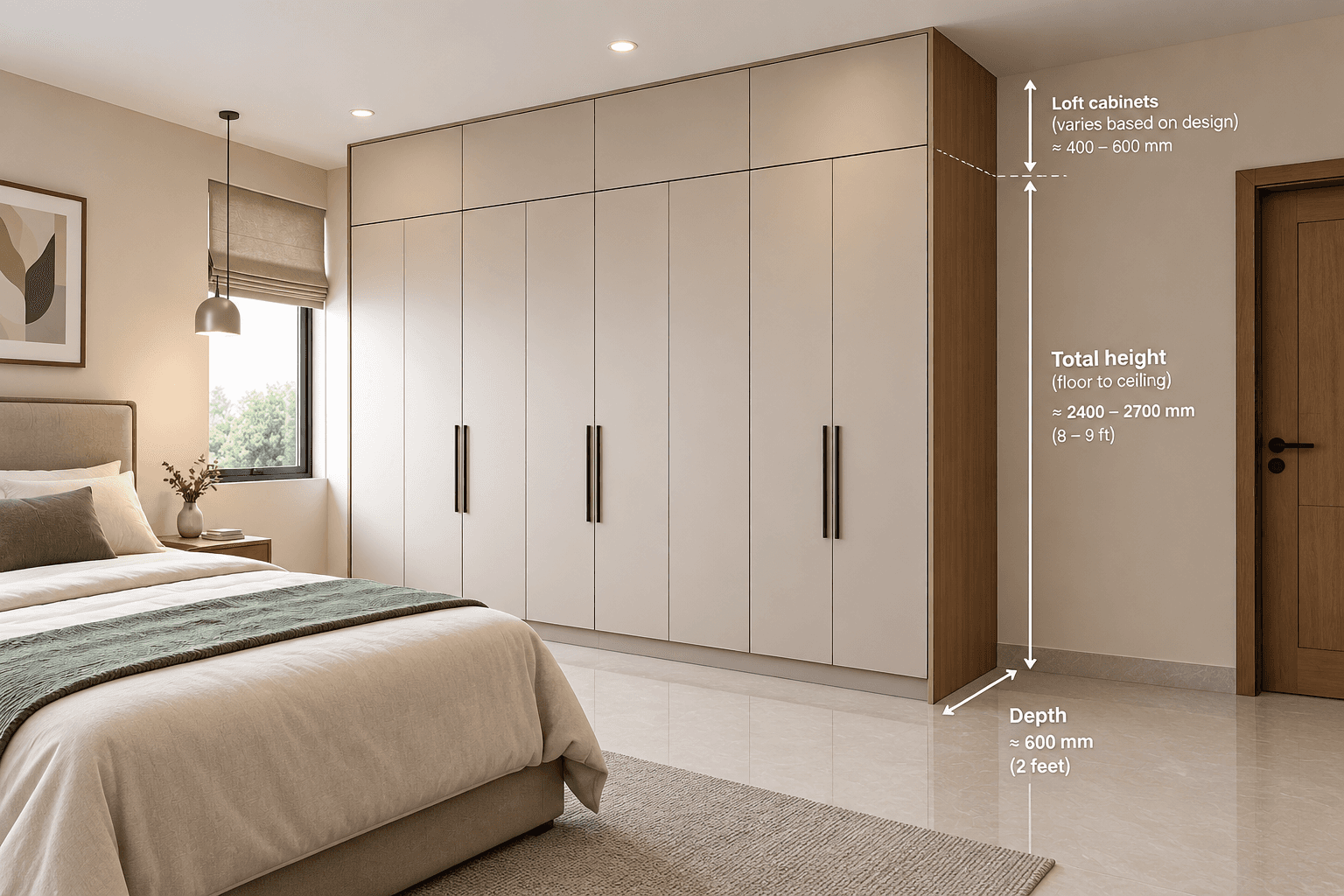
Getting the right wardrobe dimensions is the first step in planning a wardrobe. Plan wardrobe height based on ceiling height, storage needs, and whether you want loft cabinets. A typical full-size wardrobe is around 600 mm (2 feet) deep.
Instead of relying on a fixed measurement, consider your entire bedroom layout; the wardrobe should allow enough space for movement, furniture placement, and opening the shutters.
Think About What Goes Inside Before Choosing the Design
The wardrobe's exterior may catch your eye, but the internal layout determines how useful it will be. Take a quick look at what you own: do you have more shirts than dresses? Do you need a specific place for sarees? Where can you put your shoes? The number of handbags you own, or whether you prefer folding clothes or hanging them.
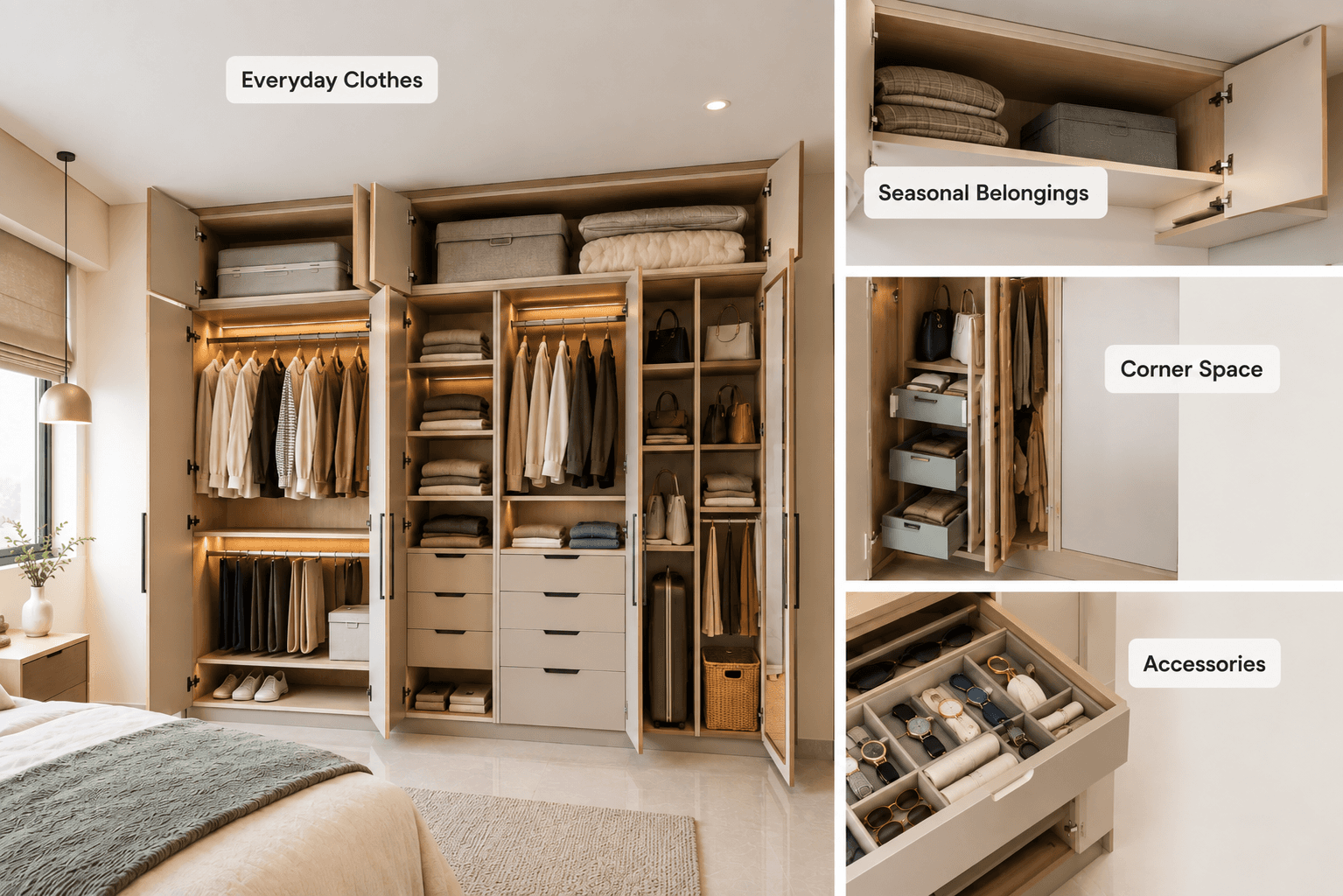
These simple questions can help you to understand how to design your wardrobe; an internal layout can include a long hanging section for ethnic wear, short hanging areas for shirts, drawers for small folded items, a dedicated section for bags and footwear, and adjustable shelves for folded clothes. Instead of filling the wardrobe with accessories, plan each section around how you use it.
Choosing the Right Material for Your Wardrobe
The right wardrobe material depends on where it is used and how much moisture the space is exposed to. A proper built-in wardrobe should balance strength, durability, and storage requirements.
Carcass Material
For the wardrobe carcass, the preferred choice is MR-grade plywood. It is generally suitable for dry bedroom areas and offers good structural strength and screw holding. If your wardrobe is placed near moisture-prone areas such as a washroom, consider BWP plywood.
Wardrobe Shutters
For a wardrobe shutter, HDHMR is the best choice because it offers a smooth, dense surface and works well with finishes such as laminate, acrylic, and paint.
Back Panel Material
The wardrobe panel doesn’t carry any structural load; it depends on the design and construction. Thinner boards such as MDF and HMR can be used for the back panel.
Storage Ideas That Make Everyday Life Easier
Plan your wardrobe based on your storage requirements without adding more compartments; you can create a better storage solution with easy access.
Keep Everyday Clothes Within Reach
Place frequently used clothes within easy reach; use higher shelves for items you use occasionally.
Make Use of Corners and Narrow Sections
If your bedroom is compact, the narrow sections and corners can be designed with pull-out drawers, accessory drawers, baskets, or vertical compartments for bags, scarves, and other small essentials.
Dedicated Separate Space for Accessories
Small accessories can quickly make the wardrobe messier; you can make dedicated drawers to organise watches, jewellery, belts, ties, and other accessories.
Separate Seasonal Items
Seasonal items such as winter clothing, extra blankets, luggage, and other belongings can be placed in upper cabinets and loft sections, while keeping the everyday storage easier to access.
What Should You Consider Before Finalizing Your Wardrobe?
Before finalising the wardrobe design, look beyond the wardrobe itself.
Bedroom Layout:
Make sure the wardrobe doesn’t interfere with the movement of doors, windows, beds, and other furniture.
Storage Habits:
Plan your wardrobe design around your storage needs and accessories; design the storage solution based on the clothes, accessories, and belongings you actually use.
Accessibility:
Keep everyday essentials within easy reach for quick, convenient access; store seasonal or less-used items in higher areas.
Lighting:
Add internal or external lighting to make the wardrobe as visible as possible; good lighting helps you to find and organise items more easily.
Maintenance:
Choose finishes that are easy to clean and can withstand regular use; simple, durable materials can make everyday wardrobe maintenance easier.
Design a Wardrobe With Tint, Tone, and Shade
The best wardrobe design is not necessarily a bigger one. With proper planning, the right dimensions provide comfortable storage, the right materials determine the look and durability, and proper internal planning makes everyday use easier.
At Tint Tone and Shade, we create personalised interior planning around your space, storage requirements, lifestyle, and design preferences. With proper planning and assistance with material selection, designing the space around your lifestyle, requirements, and preferences. Book a free consultation to design your dream home with us.
Frequently Asked Questions
1. What is the ideal depth for a wardrobe?
A standard wardrobe depth is typically around 600 mm (2 feet). The exact depth can vary depending on the bedroom layout and the type of storage required.
2. Is a sliding wardrobe suitable for a small bedroom?
Yes, Sliding shutters can be useful in compact bedrooms because they do not need additional floor space to open.
3. How can I get more storage without making my wardrobe bigger?
Use vertical space effectively. Loft cabinets, adjustable shelves, drawers, pull-outs, and dedicated accessory sections can help you organise more within the same footprint.
4. Which wardrobe material lasts the longest?
Durability depends on the material, hardware, usage, and maintenance. Plywood, MDF, and HDHMR can each be suitable for different wardrobe applications.
5. How do I plan a wardrobe for Indian clothes?
Consider the types of clothing you regularly wear. Sarees, ethnic wear, shirts, trousers, dresses, and accessories may require different combinations of hanging space, shelves, drawers, and dedicated storage.
Similar Topic