Best Living Room Colour Combinations for Indian Homes
Tips






Choosing the right colour combination can completely transform the look and feel of your living room. The right shades can make a space feel brighter, warmer, and even more luxurious. Finding the perfect palette for your home can sometimes feel overwhelming.
Especially for Indian homes, it is important to consider factors such as natural light, room size, furniture, flooring, and overall interior style when selecting colours. The right combination can bring both personality and elegance to your living room.
1. Teal and Warm Beige Living Room
The combination of teal and warm beige creates a perfect balance of calm and aesthetic appearance in your living room. Teal colour brings depth to the space while warm beige creates a calm background; to further enhance this, consider adding a feature wall, accent chairs, cushions, or artworks.
You can pair this colour combination with a wooden coffee table, a soft beige sofa, and warm lighting to make the space feel more elegant. This colour combination works particularly well with contemporary design and modern indian homes.

2. Maroon and Cream Living Room
Some of the colours have the potential to make the room feel rich instantly, and maroon is one of those colours. Maroon is a kind of deep shade, so it should be combined with lighter colours to keep the space balanced.
You can add a cream wall with a maroon accent wall, in sofas, curtains, and cushions. The cream colour keeps the room bright, while maroon colour adds warmth and depth. Wooden furniture makes this feel more elegant. Adding traditional artwork, patterned cushions, and warm pendant lighting can also complete the overall look.

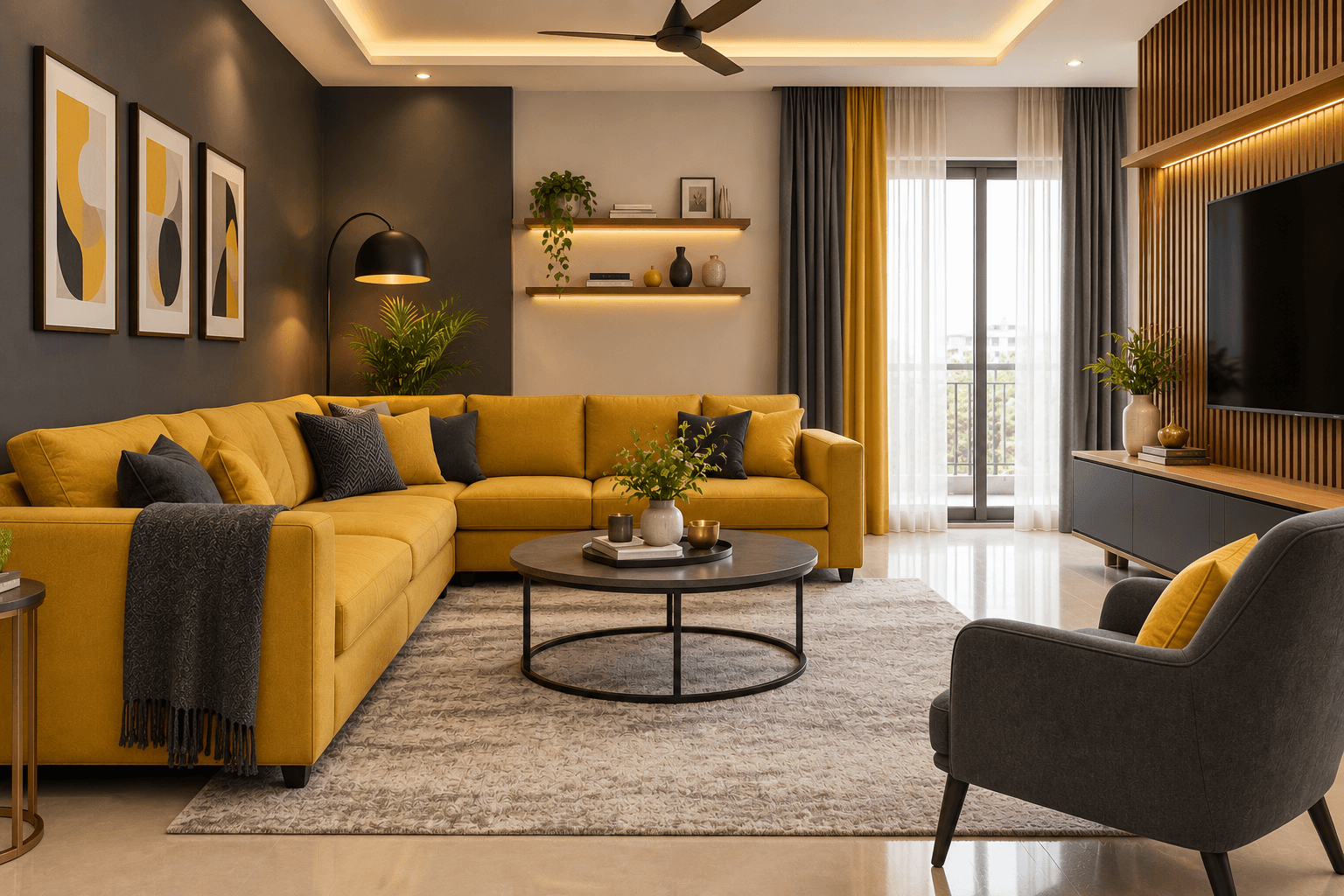
3. Mustard Yellow and Charcoal Grey
If you like to create your living room with a more luxurious touch, the combination of mustard yellow and charcoal grey would be the right choice; mustard yellow creates a strong look, while grey colour brings a warm tone. Instead of using mustard yellow across large surfaces, you can use it in an accent chair, cushion, curtains, or artworks.
Consider adding natural wood, warm lighting, and simple decorative elements to make a contrast and create a balanced living room. While keeping the rest of the decor simple so the colour will give a focal look.
4. Chocolate Brown and Ivory Living Room
The colour combination of chocolate brown and ivory is an ideal choice for creating a cosy living room. The richness of chocolate brown colour creates a rich look, while ivory keeps the space light and elegant. You can use ivory on the walls and curtains, or on large furniture pieces.
Meanwhile, chocolate brown colour can be used in sofas, rugs, and other decorative elements. This colour combination works especially well with warm lighting and natural materials, wooden finishes, and textured fabrics. Minimal decorative accessories can add a more personal touch to the space.

5. Taupe and Dusty Blue
If you want to make your living room feel warmer and more comfortable, consider the combination of taupe and dusty blue; taupe colour provides a warm neutral base, while dusty blue adds a soft touch to your living room. Use taupe for the main wall and furniture, and dusty blue for cushions, curtains, and rugs.
This colour combination works particularly well with contemporary, minimalist, and transitional interior design. This combination is suitable for the homeowner who wants the living room to feel relaxed and refined.

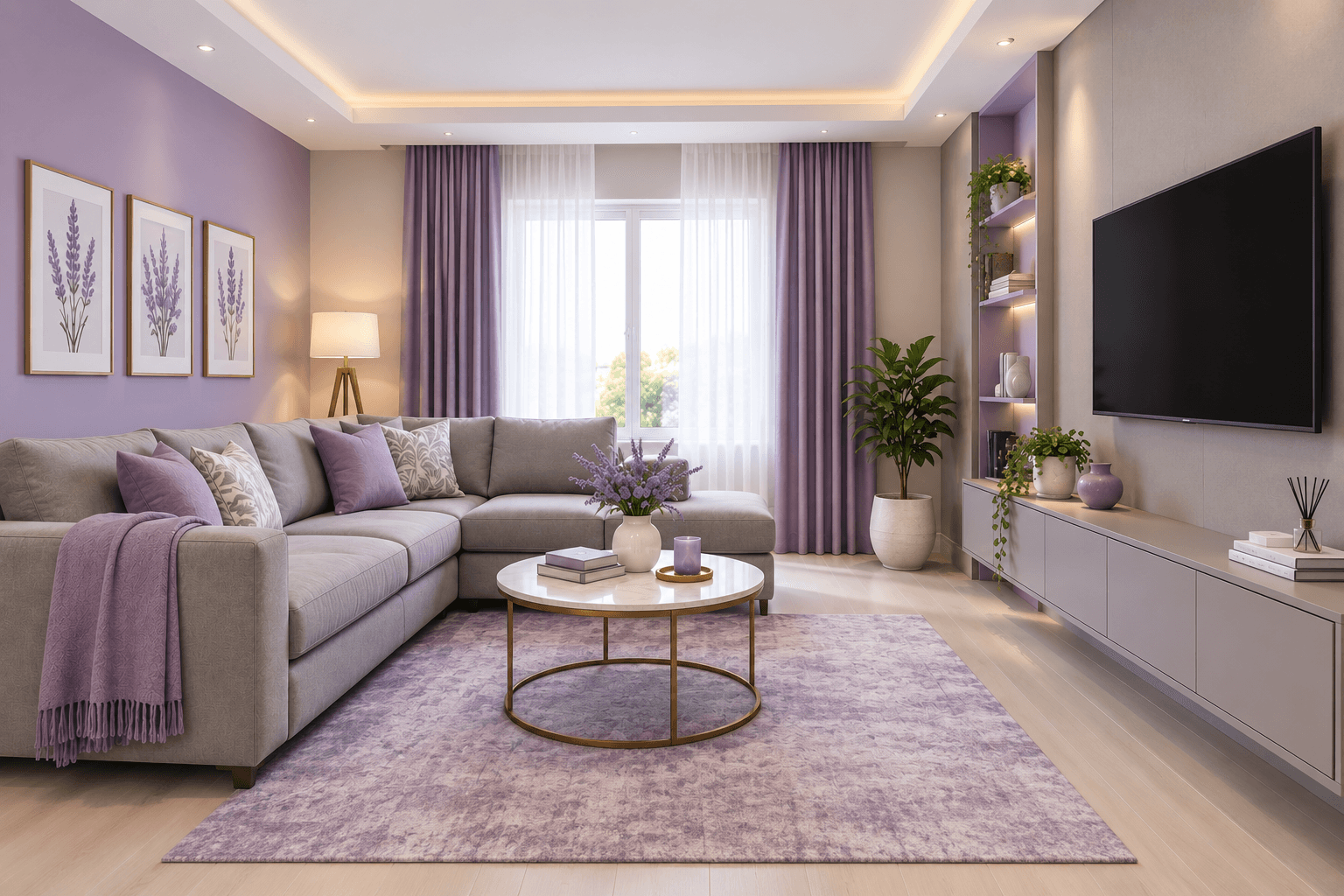
6. Lavender and Warm Grey
The colour combination of lavender and warm grey gives a softer look to your living room; it gives a contemporary look to the entire space. Lavender adds a subtle tone, while warm grey provides a neutral base. You can use grey colour on walls, sofas, or large furniture pieces.
You can use lavender colour for cushions, artwork, or feature walls to create a more sophisticated look; you can pair this combination with soft lighting and simple furniture. Warm lighting can further enhance the earthy character of rust orange, creating a cosy and inviting atmosphere.
7. Rust Orange and Light Beige
If you like to create an earthy, warm look with a soft neutral backdrop, consider the combination of rust orange to further enhance the elegance of the living room, while light beige colour creates a bright and balanced appearance. You can use light beige colour as the primary wall colour.
You can add rust orange colour in cushions, rugs, curtains, artwork, and other decorative accessories. Adding wooden furniture provides a natural texture to the colour palette. This colour palette can particularly work well with modern apartments and contemporary living rooms.

Design Your Living Room with Tint, Tone & Shade
Your living room sets the mood for your entire home. The right colours, furniture, lighting, and finishes can turn an ordinary space into one that feels warm and well designed. Creating a beautiful space involves more than just combining two colours. Wall shades, furniture, lighting, materials, textures, and décor all need to work together.
At Tint Tone & Shade, we create personalized home interiors that balance style, comfort, and functionality. Every design is planned around your lifestyle, preferences, and requirements, with attention to materials, finishes, and overall detailing.
Looking to give your living room a fresh new look? Connect with us and start planning a space that feels truly yours.
Frequently Asked Questions
1. Which colour combination is best for an Indian living room?
Teal and warm beige, maroon and cream, chocolate brown and ivory, and rust orange and light beige are excellent choices. The best combination depends on your room size, lighting, furniture, and preferred interior style.
2. Which colours make a living room look bigger?
Light and warm shades such as beige, ivory, cream, and soft grey can make a living room feel brighter and more spacious. Good natural lighting can further enhance this effect.
3. Can I use dark colours in a small living room?
Yes, dark shades such as maroon, charcoal grey, chocolate brown, or teal can be used as accent colours in smaller living rooms. Pairing them with lighter shades helps maintain visual balance.
4. What colour goes well with beige in a living room?
Beige works beautifully with teal, maroon, rust orange, dusty blue, brown, and other warm or earthy shades. The right choice depends on the mood and design style you want to create.
5. How many colours should I use in my living room?
Using two or three main colours is generally a good approach. One colour can act as the base, another can add depth, and an accent shade can bring personality without making the room feel overwhelming.
Similar Topic