Mistakes to Avoid While Designing Your Home Interiors
Tips
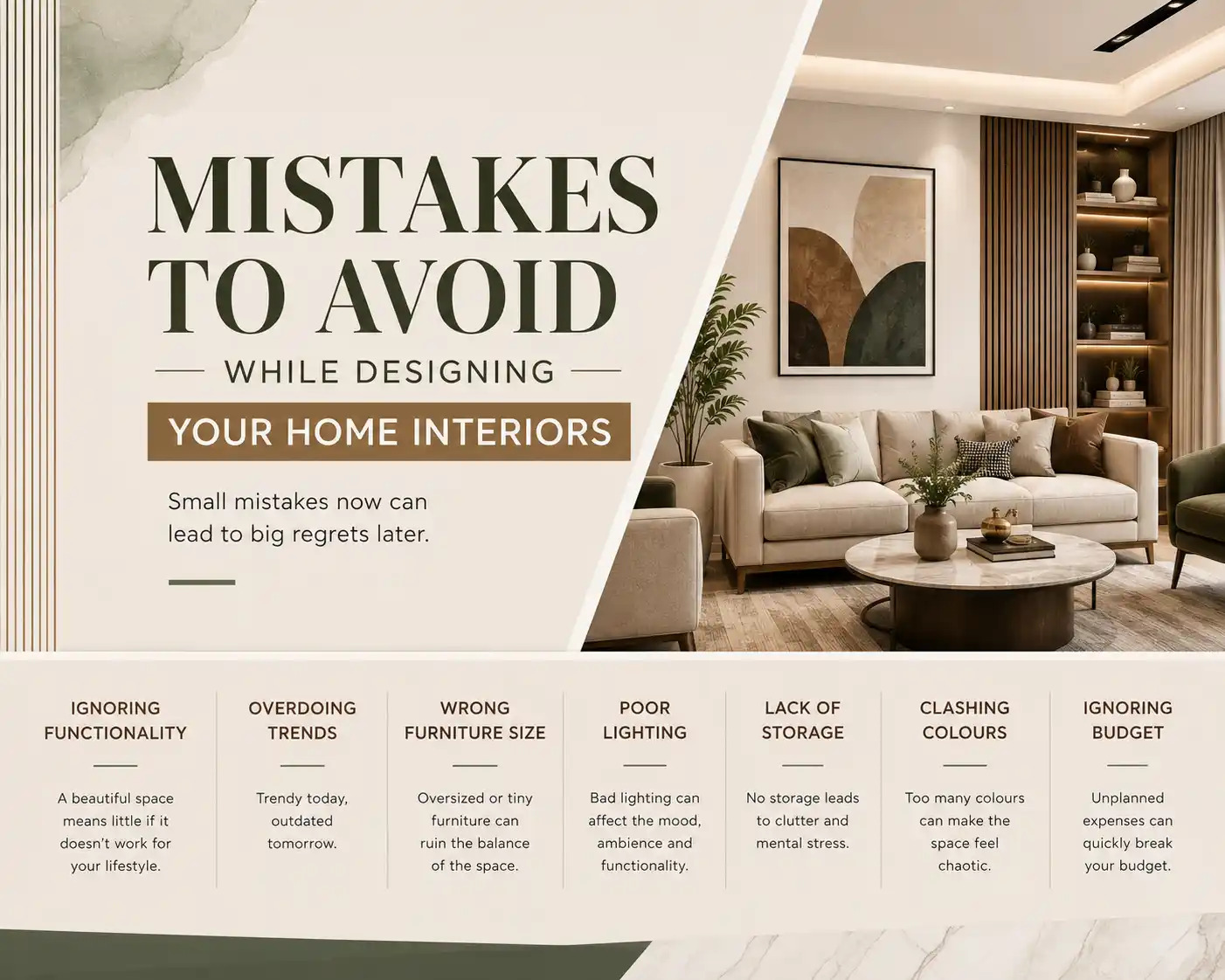




Designing a home is a series of decisions. Where should the wardrobe go? Which material is best for the kitchen? How much storage is enough? Where should the lighting be placed? Each choice may seem small on its own, but together they determine how comfortable, functional, and enjoyable your home will be.
The right decisions create a home that serves you for years. The wrong ones often lead to compromises, unnecessary expenses, and frustrations. Understanding the common mistakes before you begin can help you create a home that's both beautiful and functional.
Designing Without a Clear Plan
Every successful interior design project begins with proper planning. This is where many homeowners make a mistake: instead of planning, they start purchasing furniture and selecting finishes before understanding how they want the space to function. This major mistake often leads to mismatched design, insufficient layout, and overspending.
Before choosing furniture and finishes, understand your family's needs, daily routine, future requirements, and lifestyle. Create a room-by-room layout that includes furniture placement, lighting, electrical points, and storage requirements. A detailed plan helps to avoid unnecessary trouble and expenses in the future.
Ignoring Storage Requirements
Storage is one of the most important aspects of interior design. While an open space looks attractive at first, a lack of storage often leads to an unorganized appearance. Think beyond wardrobes; plan storage solutions in the kitchen, living room, bedrooms, and entryway.
There are many options to increase storage space: floor-to-ceiling wardrobes, loft cabinets, pull-out kitchen accessories, under-bed storage, and multifunctional furniture can maximize every inch of the room. The best storage solution can make your everyday life easy and organized.
Prioritizing Looks Over Functionality
A home should look beautiful as well as functional; selecting furniture or layout purely for aesthetics can reduce comfort and usability. For example, a stylish sofa cannot suit a home with children. Meanwhile, open shelving may require more maintenance than expected.
Design every room around how you actually want it: comfortable furniture, efficient layouts, and durable finishes to create an interior that lasts for the long term.
Poor Lighting Planning
Lighting has the power to transform an ordinary space into a visually appealing one; even the most luxurious interior can appear dull without proper lighting. A balanced lighting plan combines ambient lighting for overall brightness, task lighting for essential activities, such as cooking or reading, and accent lighting to highlight architectural features or decor.
Maximise natural lightings wherever possible, and plan electrical points before construction begins to avoid unnecessary expenses later.
Choosing the Wrong Materials
Select the materials based on how you will use those spaces; for example, if it is a kitchen, choose moisture-resistant materials like BWP. For the wardrobe and living room, add finishes that resist scratches.
While investing in quality plywood, hardware, and a countertop may cost more in the initial stage, it offers the best return on investment; it often saves money on repairs and replacements.
Buying Furniture Before Measuring the Space
The furniture that looks perfect in the showroom may not suit your home proportions; oversized furniture may make your home feel cramped, while pieces that are too small may leave the space looking incomplete.
Measure every room carefully before making purchases. Ensure there's enough circulation space and that furniture matches the room's dimensions. Planning furniture as part of the overall interior design results in a more balanced and functional layout.
Selecting a Low-Priced Designer
Choosing the lowest quotation can sometimes lead to compromises in material quality, workmanship, or project management. Instead of comparing prices alone, evaluate the complete value being offered.
Review the quality of materials, hardware brands, warranties, previous projects, and customer reviews. A reliable interior designer provides transparency, quality craftsmanship, and long-term value rather than simply the lowest cost.
Smart Planning Starts with Tint, Tone and Shade
Designing your dream home is one of the most significant investments you will make, and planning is the key to getting it right. By avoiding these common mistakes, you can create interiors that are beautiful, functional, and tailored to your lifestyle.
At Tint Tone and Shade, we believe every home deserves a design that balances style with functionality. From intelligent space planning and customized storage to premium materials and expert craftsmanship, our team helps homeowners create interiors that remain timeless and functional. If you are planning your dream home, we would be delighted to help you turn your vision into reality.
Contact us today to book your consultation.
Frequently Asked Questions
1. What is the biggest mistake homeowners make while designing interiors?
The most common mistake is starting without a clear plan. Proper planning helps optimize layouts, storage, budgeting, and functionality before execution begins.
2. How can I avoid overspending on home interiors?
Set a realistic budget, prioritize quality materials for essential areas, and compare detailed quotations rather than choosing the lowest price alone.
3. Why is storage planning important?
Well-planned storage keeps your home organized, reduces clutter, and improves everyday convenience without affecting the overall aesthetics.
4. Should I follow the latest interior design trends?
Use trends selectively through decor and accessories while keeping permanent design elements for long-term appeal.
5. Is hiring an interior designer worth it?
Yes. An experienced interior designer helps you avoid unnecessary expenses, optimize your space, select suitable materials, and manage your project efficiently, ensuring your home is both functional and visually appealing.
Similar Topic